
استمتع بـUnlimited مع Magzter GOLD
احصل على وصول غير محدود إلى أكثر من 9000 مجلة وصحيفة وقصة مميزة مقابل
يحاول ذهب - حر
PALs With The Poor
October 27, 2019
|THE WEEK
What Abhijit Banerjee and Esther Duflo have seeded is more than just a methodology

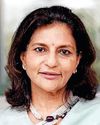
More than a decade ago, I met Abhijit Banerjee and Esther Duflo to discuss joining a small centre they had started at the Massachusetts Institute of Technology (MIT) called PAL, or the Poverty Action Lab. It was subsequently renamed J-PAL to recognise a generous endowment by an alumnus. After my master’s at the Delhi School of Economics, I had joined the IAS, attracted by the idea of working in development policy in the field. But I was often puzzled to see how so many of our key decisions were not based on any semblance of rigorous evidence. After a few years of working in the private sector, I was itching to go back to my roots. Talking to them in J-PAL’s three-room office, I was drawn to the huge potential of their very simple vision: What if policymakers in governments, NGOs, and foundations could base their decisions on scientific evidence rather than instincts, ideology or inertia?
Even though J-PAL was then only five years old, pioneers like Abhijit, Esther, Michael Kremer and Rohini Pande had already launched a number of field research studies in India and Kenya. Their studies would cement the role of randomised evaluations, or RCTs, as an important tool in the field of economics to understand what poverty alleviation programmes work or not, and why. And J-PAL, along with our partner organisation, Innovations for Poverty Action (IPA), had begun to work with a number of other economists to run their research in many countries to expand the knowledge base of what works or not in global development. The dilemma they faced when I met them was even more challenging: How do we make sure that the results of this research do not just stay in academic journals but actually make their way to the policymakers who need it most in their decision making? How could such evidence inform programmes that could be scaled up to reach millions?


هذه القصة من طبعة October 27, 2019 من THE WEEK.
اشترك في Magzter GOLD للوصول إلى آلاف القصص المتميزة المنسقة، وأكثر من 9000 مجلة وصحيفة.
هل أنت مشترك بالفعل؟ تسجيل الدخول
المزيد من القصص من THE WEEK

THE WEEK India
A KNIGHT TO REMEMBER
How the latest Game of Thrones prequel saved the franchise

4 mins
March 08, 2026

THE WEEK India
CURRENTS OF CHANGE
Kayakers on the Tawangchu river are transforming a frontier district
3 mins
March 08, 2026
THE WEEK India
Himalayan challenge
The upcoming parliamentary elections is a referendum on governance, institutional integrity and public trust
5 mins
March 08, 2026
THE WEEK India
Third Mumbai will be much bigger than what Mumbai is now
THE DIFFERENCE BETWEEN MUMBAI AND NAVI MUMBAI IS THAT NAVI MUMBAI IS PLANNED, AND HAS MORE OPEN SPACE, PLAY AREAS AND GREENERY. THIRD MUMBAI WILL BE BIGGER AND BETTER.
3 mins
March 08, 2026
THE WEEK India
AI dreams and blocked pipes
I can't see the clogged toilet pipes of the world's most expensive and advanced aircraft carrier, the USS Gerald R. Ford, currently stationed in the eastern Mediterranean on a mission to punish Iran into abject surrender, as anything but symbolic.
2 mins
March 08, 2026
THE WEEK India
Rejoinder to the column by Mahua Moitra
This is with reference to Ms Mahua Moitra's column, 'Hard questions for Hardeep' (March 1, 2026). The column dresses up insinuation as accountability, builds its narrative on inflated arithmetic, and invites the reader to mistake volume and vocabulary for evidence. The record does not support her leaps. But before we examine the substance of what she claims, the reader is entitled to consider who is making the claim—because the messenger, in this case, is the message.
8 mins
March 08, 2026
THE WEEK India
Open AI sesame
India needs more than a summit to open the doors to AI glory
5 mins
March 08, 2026

THE WEEK India
A global invocation
Auroville and Puducherry hosting Global Spirituality Mahotsav 2026
3 mins
March 08, 2026

THE WEEK India
Power of resistance
A durable democracy in Bangladesh needs an empowered, institutional and responsible opposition
2 mins
March 08, 2026
THE WEEK India
The pause that matters
In many parts of the world, including India, a quiet but pivotal shift is unfolding. Women are living longer, fuller lives, and daughters are outpacing their mothers in education, careers and ambition. Even so, one of the most important transitions in a woman's health journey is only now receiving the attention it deserves. Menopause is increasingly being understood not as an ending to be endured, but as a turning point shaping long-term health and vitality.
2 mins
March 08, 2026
Translate
Change font size