
Gå ubegrenset med Magzter GOLD
Få ubegrenset tilgang til over 9000 magasiner, aviser og premiumhistorier for bare
Prøve GULL - Gratis
The Joyful Contrarianism of Gordon Tullock
Reason magazine
|October 2019
Meet the Economist who understood Nascar Crashes, the Sale of Indulgences, and the Feeding Habits of Coal Tits.

What kind of crank wants to put bayonets in steering wheels, praises political corruption as “working out rather well,” and thinks that competition can be harmful and should be discouraged? Gordon Tullock, the late George Mason University professor of law and economics, made all those arguments with a (more or less) straight face, while also helping invent the then-new discipline of sociobiology. His insights have proven to be more durable, and more sensible, than his many critics expected.
To be fair, economists tend to value counterintuitive arguments, where surprising conclusions emerge from innocuous assumptions. In 2019, we will pass the 70th anniversary of the Communist takeover of China, an event that Tullock witnessed in person from the vantage point of his diplomatic post in Tientsin. That experience launched his thinking about the problem of governance, anarchy, and the importance of rules. Looking back, many of the insights that powered his work from that time—once dismissed not just as counterintuitive but as outlandish—have now become conventional wisdom.
There are lots of contributions worth examining, including his work on voting, bureaucracy, and constitutional theory. But those fit reasonably well into the “public choice” tradition, which Tullock helped found, and are easily accessible to those interested in that approach. I will consider three of Tullock’s less well-known, but probably even more important, insights— regarding safety regulation, corruption, and the rationality of evolved behaviors—and see how this work has stood the test of time. The three are very different, but they are unified by one feature that is the hallmark of the economic approach: In every case, Tullock reached a conclusion but pressed further to ask, “And then what?”
SAFETY REGULATIONS

Denne historien er fra October 2019-utgaven av Reason magazine.
Abonner på Magzter GOLD for å få tilgang til tusenvis av kuraterte premiumhistorier og over 9000 magasiner og aviser.
Allerede abonnent? Logg på
FLERE HISTORIER FRA Reason magazine

Reason magazine
A Nostalgic Read for Foreign Policy Elites
IF YOU WERE looking for a human avatar of America's unipolar moment, you couldn't do better than Michael McFaul. Picture a youthful, energetic McFaul with a newly minted Ph.D. bounding into the suddenly post-Soviet space of the early 1990s, full of bright ideas about democracy and faith in the end of history. As McFaul himself puts it, 1991 \"was a glorious moment to be a democratic, liberal, capitalist, multilateralist, and American....I was treated like a rockstar.\"

4 mins
January 2026

Reason magazine
TRUMP IS DEPORTING ENTREPRENEURS
THE TRUMP ADMINISTRATION'S MASS DEPORTATION EFFORT IS ROBBING THE U.S. OF IMMIGRANT BUSINESS OWNERS AND THEIR CONTRIBUTIONS.
9 mins
January 2026
Reason magazine
The First Information Revolution
PRINTING PRESSES AND LIBRARIANS INTERPRETED CENSORSHIP AS DAMAGE AND ROUTED AROUND IT.
11 mins
January 2026

Reason magazine
What Would Bill Buckley Do?
THE NATIONAL REVIEW FOUNDER'S FLEXIBLE APPROACH TO POLITICS DEFINED CONSERVATISM AS WE KNOW IT.
7 mins
January 2026
Reason magazine
MAHA Mandates Food Labels
BURDENSOME FOOD LABELING mandates were once the province of Democrats, who pushed for calorie count requirements on restaurant menus and insisted packaged food must feature warnings about genet- ically modified ingredients and trans fats. Now it's Republicans leading the charge- with equally foolish results.
2 mins
January 2026

Reason magazine
IS JAKE TAPPER DOOMED?
THE CNN ANCHOR ON THE WAR ON TERROR, THREATS TO FREE SPEECH, AND THE FUTURE OF MEDIA
14 mins
January 2026

Reason magazine
REPUBLICAN SOCIALISM
THE TRUMP ADMINISTRATION IS BUYING STAKES IN COMPANIES. THAT NEVER ENDS WELL.
13 mins
January 2026

Reason magazine
A Taste of Capitalism in Warsaw
WARSAW, POLAND, IS a living museum of economic systems. It's a city where concrete reliefs of stoic factory workers decorate a building that now houses a Kentucky Fried Chicken, where a Soviet-era apartment block stands beside a glass tower filled with coworking spaces.
2 mins
January 2026

Reason magazine
Robert Crumb's Roving Art and Life
IN THE SPRING of 1962, an 18-year-old Robert Crumb was beaned in the forehead by a solid glass ashtray. His mother, Bea, had hurled it at his father, Chuck, who ducked. Robert was bloodied and dazed, once again a silent and enraged witness to his family's chaos.”
5 mins
January 2026
Reason magazine
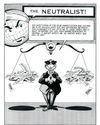
THE HOWARD ROARK OF COMICS
SPIDER-MAN CO-CREATOR STEVE DITKO WAS A GREAT EXAMPLE OF, AND DIRE WARNING TO, OBJECTIVIST POP ARTISTS.
12 mins
January 2026
Translate
Change font size