
Gå ubegrenset med Magzter GOLD
Få ubegrenset tilgang til over 9000 magasiner, aviser og premiumhistorier for bare
Arsenic: The "King of Poisons"
Rock&Gem Magazine
|October 2023
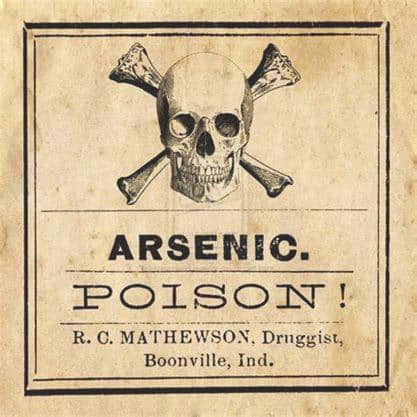
Few things are saddled with darker connotations than arsenic. Used throughout much of history as a human poison, arsenic has become inexorably linked with death.

From medieval times through the mid 1800s, members of Europe's ruling classes frequently used arsenic to dispose of one another. Fittingly, arsenic became known as both the "king of poisons" and, wryly, the "poison of kings." In France, arsenic was called "inheritance powder," alluding to its frequent use by impatient heirs to accelerate the demise of family members.
But there is more to arsenic than a sinister image. Specimens of arsenic's two most familiar minerals, realgar and orpiment, are widely collected for their crystalline beauty and bright colors. In powdered form, these same minerals have been used in medicine and as pigments in the celebrated paintings of many European masters.
THE METAL & ITS MINERALS
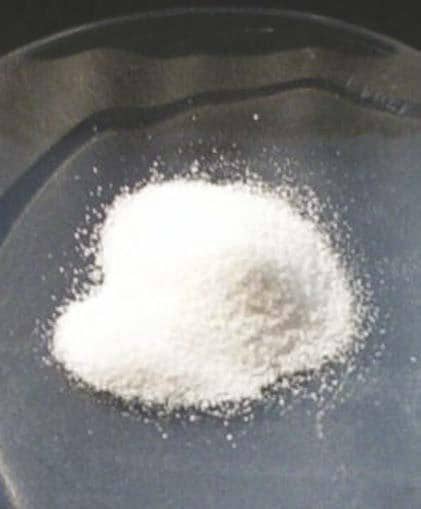
Elemental arsenic is dark-gray, brittle, and a poor conductor of electricity. As a semimetal, it exhibits both metallic and nonmetallic properties. Ranking 55th in crustal abundance, it is about as common as tin. Although occasionally found free in nature, most arsenic is a component of more than 250 minerals, the most abundant being arsenopyrite (iron arsenic sulfide), which forms opaque, prismatic crystals with a steelgray color and metallic luster.
Next in abundance are red realgar and yellow-orange orpiment. Both these arsenic sulfides crystallize in the monoclinic system; occur in close association, and share similar properties.
MEDICINE AND THE ARTS

Denne historien er fra October 2023-utgaven av Rock&Gem Magazine.
Abonner på Magzter GOLD for å få tilgang til tusenvis av kuraterte premiumhistorier og over 9000 magasiner og aviser.
Allerede abonnent? Logg på
FLERE HISTORIER FRA Rock&Gem Magazine
Rock&Gem Magazine
A New Amber Locality Fills a Gap
A sandstone quarry in central Ecuador has yielded the first significant deposit of Mesozoic amber from South America.

1 min
January / February 2026
Rock&Gem Magazine
Did "Left-Handed" Fish Leave Water Earlier than Thought?
Fossil evidence suggests that fish (or \"fishapods\") dragged themselves onto land during the middle Devonian Period.
1 min
January / February 2026

Rock&Gem Magazine
"Lab Quakes” Produce Surprising Results
When faults let loose and earthquakes result, the main effect we mortals experience is the violent shaking.
1 min
January / February 2026
Rock&Gem Magazine
This Egg is No Spring Chicken
How to date a dino egg
1 min
January / February 2026
Rock&Gem Magazine
Have we Already Mined the Critical Minerals We Need
Then why are we throwing them away?!
1 min
January / February 2026
Rock&Gem Magazine
One Toxic Worm
A critter that creates & tolerates orpiment!
1 min
January / February 2026
Rock&Gem Magazine
ROCK & GEM FIELD GUIDE: Silver
Silver (Ag) is a native element and one of Earth's most prized precious metals.
2 mins
January / February 2026
Rock&Gem Magazine
DINOSAURS OF THE HELL CREEK MUSEUM
In the Badlands of South Dakota, just outside the small town of Belle Fourche—pronounced “Bell Foosh”—a new attraction has taken shape that every dinosaur enthusiast should see. The Dinosaurs of the Hell Creek Museum is part hands-on exhibit, part science center and part active research lab.
3 mins
January / February 2026
Rock&Gem Magazine
The Lost Twins of Kongsberg
A Silver Story Resurfaced
3 mins
January / February 2026
Rock&Gem Magazine
Switzerland's ICE PALACE
Walk Inside a Glacier at The Top of Europe
7 mins
January / February 2026
Translate
Change font size