Prøve GULL - Gratis
HOW TO PHOTOGRAPH LOCAL WILDLIFE
BBC Wildlife
|Spring 2022
Photographic opportunities of the natural world are never far from home, even if you live in the city
-

BEAUTY IS IN THE EYE OF THE beholder is a fitting phrase for wildlife photography. For some photographers, it's all about capturing elephants and lions in the Serengeti, while others seek rare and obscure frogs deep in the Amazon, or polar bears and penguins at the frozen ends of the Earth.
But many wildlife photographers find plenty to point their lenses at without ever getting on a flight. The UK is incredibly rich in wildlife, with red squirrels, deer, Arctic hares, puffins and foxes among our most popular and commonly photographed species. The British weather also helps to produce evocative photos, particularly in winter - think Arctic hares curled into balls, bracing themselves against blizzards, or foxes' colourful orange coats against backgrounds of brilliant-white snow.
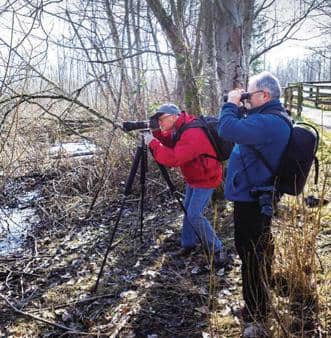
The UK isn't a country where charismatic megafauna simply falls into your lap. But, whether you're wandering through a national park or waiting to see what happens in your garden, we have an array of fascinating and characterful species that have great photographic potential. It could be a garden spider in its web, with the light catching the morning dew, or a blue tit buzzing to and from your garden feeder. Deer grazing the grassy stretches of parks can make elegant, charismatic shots, particularly in autumn, while relatively sedentary species, such as ducks and swans on ponds and rivers, open up all sorts of creative possibilities. It all boils down to simply getting out there and acquainting yourself with your local patch.
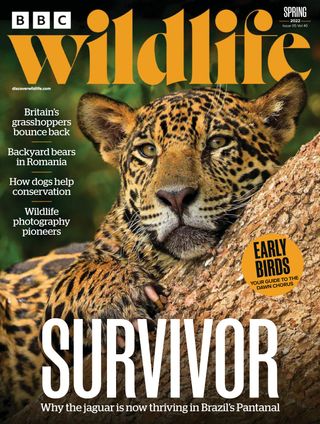

Denne historien er fra Spring 2022-utgaven av BBC Wildlife.
Abonner på Magzter GOLD for å få tilgang til tusenvis av kuraterte premiumhistorier og over 9000 magasiner og aviser.
Allerede abonnent? Logg på
FLERE HISTORIER FRA BBC Wildlife
BBC Wildlife
“Our canoe was nearly sunk by a hippo”
Hippos in Niger

3 mins
March 2026

BBC Wildlife
Why does Australia have such weird animals?
AUSTRALIA IS A LONG WAY FROM anywhere and has been for a very long time. The landmass definitively separated from the supercontinent of Gondwana around 40 million years ago and, since then, has existed - as a big blob in the middle of an even bigger ocean - in glorious geographical isolation.
2 mins
March 2026
BBC Wildlife
Which country has the fewest native animals?
AT AROUND 61KM² SAN MARINO, IN Europe, is one of the world's smallest countries. Entirely landlocked, it is surrounded by Italy.
1 min
March 2026

BBC Wildlife
Why do some species sunbathe?
RING-TAILED LEMURS ARE FAMED FOR their 'sun-worshipping' posture, legs and arms outstretched to reveal their pale bellies. Like humans, they do it to save energy and boost health. Sunlight is necessary to many bodily processes. As a source of vitamin D it's required to maintain bone and muscle health. It is also related to the production of serotonin, the chemical that regulates mood, sleep and stress response.
1 mins
March 2026
BBC Wildlife
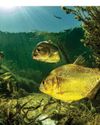
ALL YOU EVER NEEDED TO KNOW ABOUT THE Piranha
PIRANHAS HAVE A REPUTATION as some of the most dangerous freshwater hunters: terrifying predators capable of devouring a large mammal in mere minutes.
3 mins
March 2026
BBC Wildlife
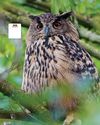
EAGLES LANDING
Eagle owls were once heavily persecuted. But thanks to a new initiative, these magnificent birds are reclaiming a wetland home
7 mins
March 2026
BBC Wildlife
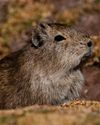
Do wild guinea pigs exist?
GUINEA PIGS, WHICH ARE NOT pigs and not from Guinea, are domesticated rodents that do not exist in the wild.
1 min
March 2026
BBC Wildlife
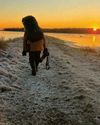
SNAP-CHAT: THE INSIDE WORLD OF WILDLIFE PHOTOGRAPHY
Boris Belchev on birds, batteries and battling bears with pop music
3 mins
March 2026
BBC Wildlife
Does anything live in the Bermuda Triangle?
THE BERMUDA TRIANGLE, IN THE NORTH Atlantic Ocean, has become infamous for the planes and ships that are said to have vanished without a trace while travelling through the area.
1 min
March 2026
BBC Wildlife
Do animals have different blood types?
HUMANS HAVE FOUR MAIN BLOOD GROUPS: A, B, AB and O.
1 min
March 2026
Translate
Change font size