
Magzter GOLDで無制限に
10,000以上の雑誌、新聞、プレミアム記事に無制限にアクセスできます。
PEANUT PROOF
Scientific American
|September 2025
Remarkable new treatments can free millions of kids and adults from the deadly threat of peanut allergy, tackling one of our fastest-growing medical problems
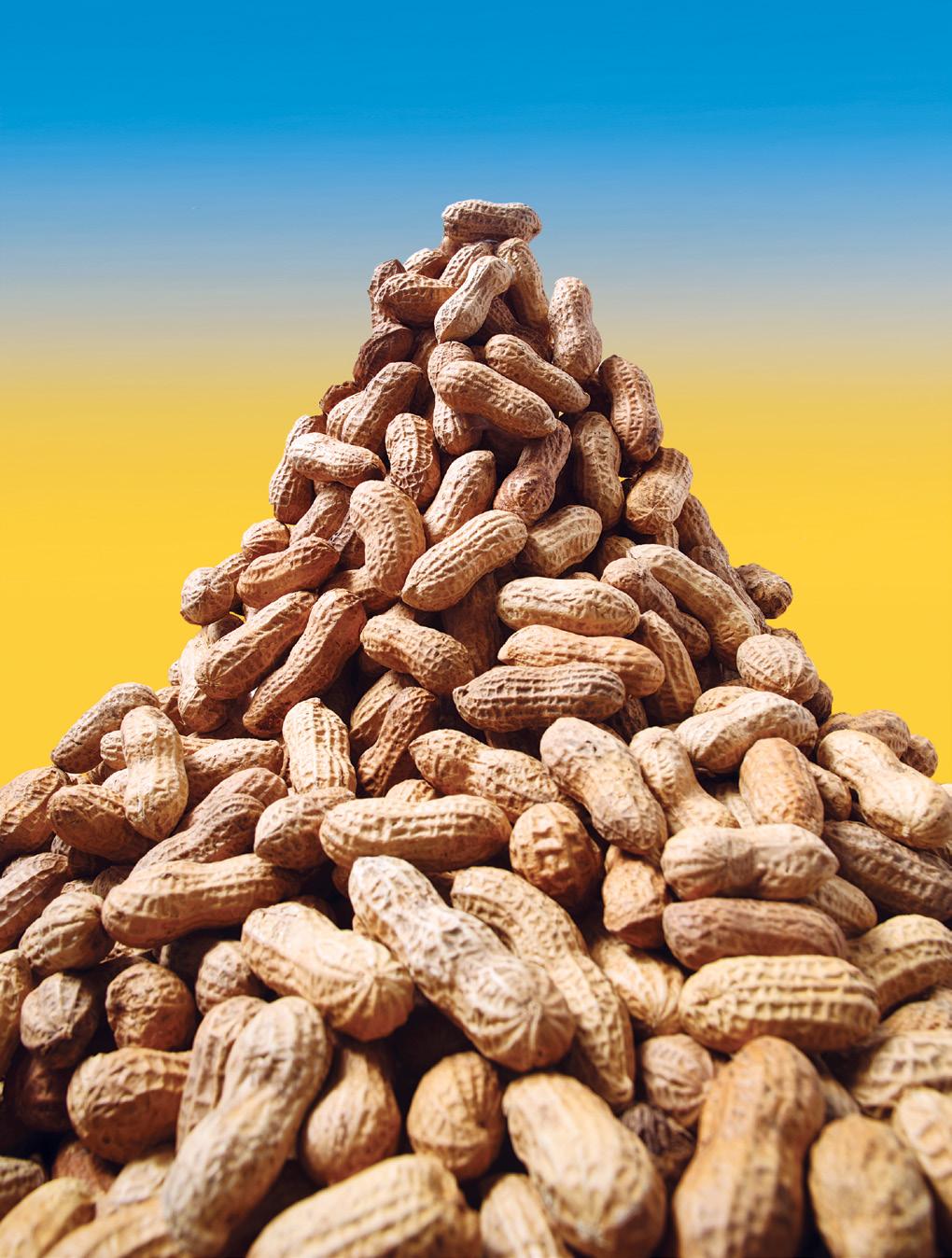
ANABELLE TERRY, A SLENDER, self-possessed 13-year-old, has heard the peanut butter story her entire life. At two and a half she ate nuts for the first time. Her mother, Victoria, had made a little treat: popcorn drizzled with melted caramel, chocolate and peanut butter. Anabelle gobbled it down. "And afterward, I felt really sick," she says. A few minutes later she vomited on the kitchen floor.
There was more trouble ahead. A visit to an allergist confirmed that Anabelle was severely allergic to the peanut butter in the dessert, as well as to most other nuts. It began a life upheaval familiar to families of kids with allergies: learning to decode labels, to carry an EpiPen, and to interrogate friends and their parents about the ingredients in a birthday cake.
Every once in a while, there would be a slip-up. It might be a snack that someone hadn't scrutinized or a food package that didn't list all potential allergens.
And every time, Anabelle's reactions got worse. Although she was just a schoolkid, she had to stay alert. "Eating lunch, all my friends would have PB&Js. And I'd be like, I'm going to sit a little bit farther away," she recalls. "And going over to friends' houses after school, we always had to make sure: 'Hey, would you mind making a nut-free meal?"" Most of that caution is in Anabelle's past now.
For the vast majority of patients, peanut allergy is an unpredictable, lifelong affliction. But thanks to a clinical trial that Anabelle entered when she was nine, she can now tolerate peanuts and tree nuts well enough to feel safe every day. The drug she received in that trial was approved for treating food allergies by the U.S. Food and Drug Administration last year, making it the second food allergy remedy to earn the agency's blessing since 2020.

このストーリーは、Scientific American の September 2025 版からのものです。
Magzter GOLD を購読すると、厳選された何千ものプレミアム記事や、10,000 以上の雑誌や新聞にアクセスできます。
すでに購読者ですか? サインイン
Scientific American からのその他のストーリー

Scientific American
Probiotic Hope and Hype
Despite their popularity, supplements with billions of \"good\" microbes help only a few illnesses, research shows

3 mins
January 2026
Scientific American
Mondays Really Are More Stressful
The start of the workweek can be a biologically measurable stressor, with consequences for long-term health that can stretch into retirement
4 mins
January 2026
Scientific American
Tiny Display
An e-paper breakthrough brings extremely high-resolution color
2 mins
January 2026
Scientific American
Fine-Feathered Snack
A bat's tracker documents a dramatic midair hunt
2 mins
January 2026

Scientific American
OUR ROBOTIC PICTURE
Will mechanical helpers ever be commonplace at home, at work and beyond?
11 mins
January 2026

Scientific American
"Use Your Words" Can Be Good for Kids' Health
Writing or expressing feelings can help adults mentally and physically. Kids are no different
5 mins
January 2026
Scientific American
Distant Diplomacy
Unrelated species “talk” and understand one another to avoid threats
2 mins
January 2026
Scientific American
Behind the Nobel
A 2025 winner reflects on the mysterious T cells that won him the prize
5 mins
January 2026

Scientific American
A Suite of Killers
Heart ailments, kidney diseases and type 2 diabetes actually may be part of just one condition. It's called CKM syndrome
10 mins
January 2026
Scientific American
Static Launch
Tiny worms leap toward their fruit fly hosts with an electric “tractor beam”
3 mins
January 2026
Listen
Translate
Change font size