Versuchen GOLD - Frei
PEANUT PROOF
Scientific American
|September 2025
Remarkable new treatments can free millions of kids and adults from the deadly threat of peanut allergy, tackling one of our fastest-growing medical problems
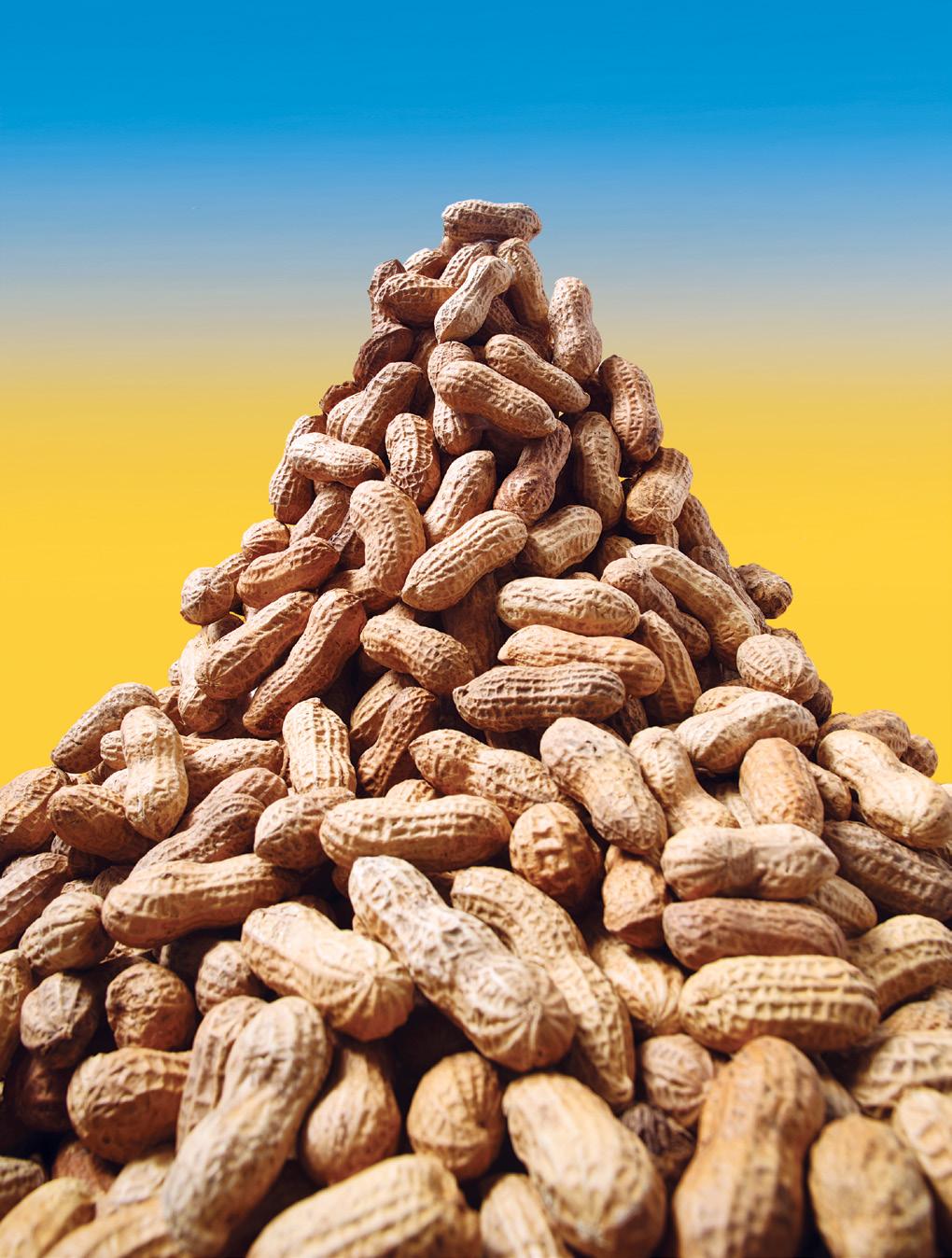
ANABELLE TERRY, A SLENDER, self-possessed 13-year-old, has heard the peanut butter story her entire life. At two and a half she ate nuts for the first time. Her mother, Victoria, had made a little treat: popcorn drizzled with melted caramel, chocolate and peanut butter. Anabelle gobbled it down. "And afterward, I felt really sick," she says. A few minutes later she vomited on the kitchen floor.
There was more trouble ahead. A visit to an allergist confirmed that Anabelle was severely allergic to the peanut butter in the dessert, as well as to most other nuts. It began a life upheaval familiar to families of kids with allergies: learning to decode labels, to carry an EpiPen, and to interrogate friends and their parents about the ingredients in a birthday cake.
Every once in a while, there would be a slip-up. It might be a snack that someone hadn't scrutinized or a food package that didn't list all potential allergens.
And every time, Anabelle's reactions got worse. Although she was just a schoolkid, she had to stay alert. "Eating lunch, all my friends would have PB&Js. And I'd be like, I'm going to sit a little bit farther away," she recalls. "And going over to friends' houses after school, we always had to make sure: 'Hey, would you mind making a nut-free meal?"" Most of that caution is in Anabelle's past now.
For the vast majority of patients, peanut allergy is an unpredictable, lifelong affliction. But thanks to a clinical trial that Anabelle entered when she was nine, she can now tolerate peanuts and tree nuts well enough to feel safe every day. The drug she received in that trial was approved for treating food allergies by the U.S. Food and Drug Administration last year, making it the second food allergy remedy to earn the agency's blessing since 2020.

Diese Geschichte stammt aus der September 2025-Ausgabe von Scientific American.
Abonnieren Sie Magzter GOLD, um auf Tausende kuratierter Premium-Geschichten und über 9.000 Zeitschriften und Zeitungen zuzugreifen.
Sie sind bereits Abonnent? Anmelden
WEITERE GESCHICHTEN VON Scientific American
Scientific American
Flashes in the Night
Celestial transients shine furiously and briefly. Astronomers are just beginning to understand them.

13 mins
January 2026

Scientific American
The Imperiled Orcas of the Salish Sea
The southern resident killer whales are on the brink. Now the scientists who study them are, too
17 mins
January 2026
Scientific American
The Reptile Sexpocalypse
The sex of many turtles, crocodilians, and other reptiles is determined by the temperature at which their eggs incubate. Global warming could doom them
11 mins
January 2026

Scientific American
A Suite of Killers
Heart ailments, kidney diseases and type 2 diabetes actually may be part of just one condition. It's called CKM syndrome
10 mins
January 2026
Scientific American
A Good Night's Sleep
Psychological data and brain scans show all the ways sleep can improve our lives, our bodies and our relationships
1 mins
January 2026
Scientific American
Behind the Nobel
A 2025 winner reflects on the mysterious T cells that won him the prize
5 mins
January 2026
Scientific American
Cable Quakes
Fiber optics that connect the world can detect its earthquakes, too
2 mins
January 2026
Scientific American
Inside Asteroid Family Trees
Asteroid origins can be hard to trace
4 mins
January 2026

Scientific American
Think Again
Chimpanzees can weigh evidence and update their beliefs like humans do.
3 mins
January 2026
Scientific American
Cracking the World's Most Famous Code
Solving the CIA's Kryptos puzzle took three parts math and one part sleuthing
6 mins
January 2026
Listen
Translate
Change font size