試す 金 - 無料
Mic Drop
Scientific American
|July/August 2025
To win trust and admiration, fix your microphone
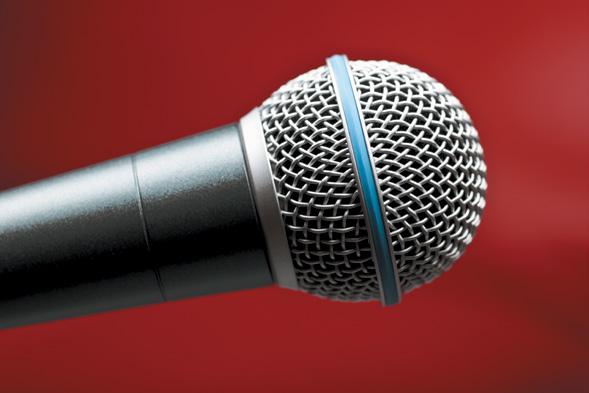
LIKE HUNDREDS OF MILLIONS of other people around the world, Brian Scholl, a psychologist and cognitive scientist at Yale University, spent much of the COVID pandemic on Zoom. But during one digital faculty meeting, he found himself reacting unexpectedly to two of his colleagues. One was a close collaborator with whom Scholl usually saw eye to eye, and the other was someone whose opinions tended to differ from his own. On that particular day, though, he found himself siding with the latter colleague. "Everything he said was so rich and resonant," Scholl recalls.
As he reflected afterward, Scholl realized there was a key underlying difference between the two men's delivery: the colleague with whom Scholl usually agreed had been using the junky built-in microphone of an old laptop, whereas the one with whom he typically disagreed had called in from a professional-grade homerecording studio. Scholl began to suspect that it was the quality of their sound, rather than the content of their arguments, that had swayed his judgment.
Research published earlier this year in the Proceedings of the National Academy of Sciences USA suggests Scholl's hunch was correct. In a series of experiments, he and his colleagues found that poor audio quality consistently caused listeners to negatively judge speakers in a variety of contexts-even if the message was exactly the same in all of them.

このストーリーは、Scientific American の July/August 2025 版からのものです。
Magzter GOLD を購読すると、厳選された何千ものプレミアム記事や、10,000 以上の雑誌や新聞にアクセスできます。
すでに購読者ですか? サインイン
Scientific American からのその他のストーリー

Scientific American
Dirty Little Secrets
Extremophile molds are invading art museums and devouring their collections. Stigma and climate change have fueled their spread

16 mins
February 2026
Scientific American
Archaeology Is Reviving the Smell of History
How reconstructing long-lost smells connects us to the past
6 mins
February 2026

Scientific American
Heal Injuries Faster
Toss out the old advice that rest is the best recovery strategy
4 mins
February 2026

Scientific American
Can a Time Capsule Outlast Geology?
A ridiculous but instructive thought experiment involving deep time, plate tectonics, erosion and the slow death of the sun
17 mins
February 2026
Scientific American
Fiery Amoeba
A newfound organism thrives in record-breaking heat
2 mins
February 2026

Scientific American
50, 100 & 150 Years
GIANT ATOMS
3 mins
February 2026

Scientific American
Nature's Tile Shop
Life keeps evolving these geometric patterns
2 mins
February 2026
Scientific American
Battle of the Breeds
A large dataset shows that some dog stereotypes are based in reality, and others might be unfair characterizations
1 min
February 2026
Scientific American
The Milky Way's Disk Keeps Getting Weirder
The disk of our galaxy is not flat but warped and waving
5 mins
February 2026
Scientific American
A Winning Loser
If the cards shown here are rearranged to form four new poker hands of five cards each, what is the low- est possible winning or tying hand?
1 min
February 2026
Listen
Translate
Change font size