試す 金 - 無料
Pluto: 10 years on
BBC Sky at Night Magazine
|July 2025
The New Horizons fly-by of this ancient, icy world continues to surprise a decade later. So what have we learned? Ben Evans investigates
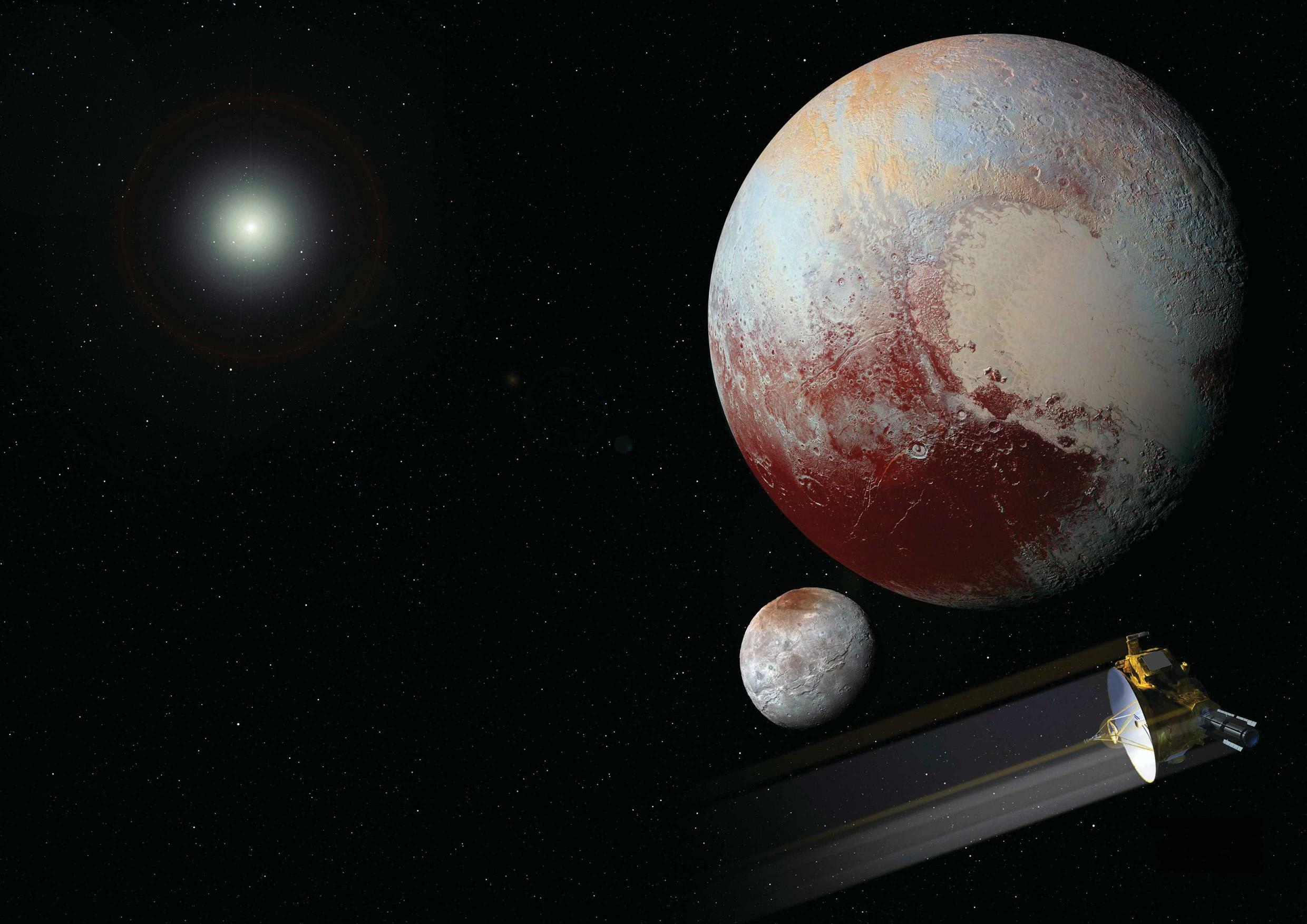
Ten years ago, Pluto emerged from the gloom at the Solar System's ragged edge - and a new world came in from the cold.
Five billion kilometres (3 billion miles) from Earth, on 14 July 2015, NASA's piano-sized New Horizons probe swept past the dwarf planet and glimpsed a crater-scarred landscape teeming with nitrogen glaciers, winding canyons, water-ice mountains and - maybe - a substantial ocean in liquid form.
 The title 'planet' has proven a thorn in Pluto's side. Discovered by Clyde Tombaugh in 1930 and named by schoolgirl Venetia Burney for the Roman god of the underworld, generations of children knew Pluto from classroom mnemonics as the Sun's ninth planet.
In 1978, Jim Christy discovered Pluto's moon, Charon. The name honoured both the mythical ferryman of the dead and Christy's wife, Charlene. Charon is half Pluto's size and an eighth of its mass.
The two bodies’ barycentre of mass lies outside them: like figure skaters, they synchronously circle an empty patch of space every 6.4 days in tight tidal lockstep, each perpetually presenting the same hemisphere to the other.
Pluto's identity crisis
Pluto's planetary downfall began in 1992, when astronomers discovered the Kuiper Belt, a disc of millions of icy planetesimals beyond Neptune. It furnishes a treasure trove of pristine relics geochemically unaltered since the Solar System's infancy. With 3,000 Kuiper Belt objects officially known today, the detection of several large icy bodies after 2003 prompted the International Astronomical Union (IAU) to redefine what constituted a planet. In 2006, Pluto, now recognised as part of the Kuiper Belt, was recategorised as a 'dwarf planet'. Pluto went from the smallest planet to the biggest Kuiper Belt object.

このストーリーは、BBC Sky at Night Magazine の July 2025 版からのものです。
Magzter GOLD を購読すると、厳選された何千ものプレミアム記事や、10,000 以上の雑誌や新聞にアクセスできます。
すでに購読者ですか? サインイン
BBC Sky at Night Magazine からのその他のストーリー
BBC Sky at Night Magazine
MOONWATCH
January's top lunar feature to observe

2 mins
January 2026
BBC Sky at Night Magazine
Speed up your processing workflow
How to use Photoshop's Actions tool to drastically cut your processing time
3 mins
January 2026

BBC Sky at Night Magazine
Chasing Canada's polar lights
With solar maximum peaking and a new Moon promising dark skies, Jamie Carter travels to Churchill, Manitoba to hunt the Northern Lights - and dodge polar bears – in Canada's far north
7 mins
January 2026

BBC Sky at Night Magazine
Beyond Pluto: The search for the hidden planets
Could one – or even two - undiscovered planets lurk at the edges of our Solar System? Nicky Jenner explores how close we are to finding the elusive 'Planet 9'
6 mins
January 2026
BBC Sky at Night Magazine
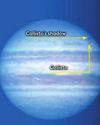
Jupiter moon events
Jupiter is a magnificent planet to observe.
2 mins
January 2026

BBC Sky at Night Magazine
What samples from space have taught us
Alastair Gunn explains what scientists have learnt in the 20 years since the first unmanned mission brought materials back from alien worlds
3 mins
January 2026
BBC Sky at Night Magazine
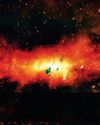
The Milky Way as you've never seen it before
This is the largest low-frequency radio colour image of our Galaxy ever assembled
1 min
January 2026

BBC Sky at Night Magazine
Merger of ‘impossibly' massive black holes explained
Scientists discover how enormous, fast-spinning black holes can exist after all
1 mins
January 2026
BBC Sky at Night Magazine
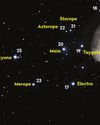
Lunar occultation of the Pleiades
BEST TIME TO SEE: 27 January from 20:30 UT
1 min
January 2026
BBC Sky at Night Magazine
The Universe's expansion may be slowing down
New study suggests current theories of dark energy could be wrong
1 mins
January 2026
Listen
Translate
Change font size