
Magzter GOLDで無制限に
10,000以上の雑誌、新聞、プレミアム記事に無制限にアクセスできます。
Our experts examine the hottest new research CUTTING EDGE
BBC Sky at Night Magazine
|October 2022
Tide lines show Moon's move
-

Marks left by tides 3.2 billion years ago suggest the Moon was once much closer
The gravitational pull of the Moon hauls up Earth's oceans into two bulges on opposite sides of the planet. As Earth rotates beneath these twin bulges, sea levels along the coastlines rise and fall, creating the tides. Much of the world's shores, including around the UK, experience two cycles of high and low tides roughly equal in magnitude every day.
The Sun's gravity also has an effect on the ocean's tides, and roughly twice a month (one lunar orbit), when both the Moon and Sun are in line with Earth, their gravitational effects combine to create a much larger range between high and low water, known as the spring tide. Conversely, when the Moon and Sun are at 90° to each other the tides are weaker, what's called a neap tide.
One factor that has affected the tides over longer timescales is that the rotation of Earth has decelerated over the planet's history, and the Moon has slowly spiralled ever further out in its orbit. Today we know, thanks to measurements taken by a device placed on the Moon by Apollo astronauts, called the Lunar Laser Ranging Experiment, that the Moon is drifting away at a rate of 3.8cm per year.
However, just after the Moon's formation, our satellite circled much, much closer, and each day on Earth was only around four hours long. But what's not clear is exactly how the Earth-Moon system has evolved over the 4.5 billion years since: how have the time Earth takes to rotate and the Moon takes to orbit changed over time? Computer modelling studies widely disagree. What's needed are some actual data points from Earth's deep history.
Sandstone tells a story


このストーリーは、BBC Sky at Night Magazine の October 2022 版からのものです。
Magzter GOLD を購読すると、厳選された何千ものプレミアム記事や、10,000 以上の雑誌や新聞にアクセスできます。
すでに購読者ですか? サインイン
BBC Sky at Night Magazine からのその他のストーリー
BBC Sky at Night Magazine
MOONWATCH
January's top lunar feature to observe

2 mins
January 2026
BBC Sky at Night Magazine
Speed up your processing workflow
How to use Photoshop's Actions tool to drastically cut your processing time
3 mins
January 2026
BBC Sky at Night Magazine
Chasing Canada's polar lights
With solar maximum peaking and a new Moon promising dark skies, Jamie Carter travels to Churchill, Manitoba to hunt the Northern Lights - and dodge polar bears – in Canada's far north
7 mins
January 2026
BBC Sky at Night Magazine
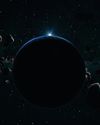
Beyond Pluto: The search for the hidden planets
Could one – or even two - undiscovered planets lurk at the edges of our Solar System? Nicky Jenner explores how close we are to finding the elusive 'Planet 9'
6 mins
January 2026
BBC Sky at Night Magazine
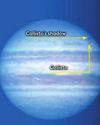
Jupiter moon events
Jupiter is a magnificent planet to observe.
2 mins
January 2026
BBC Sky at Night Magazine
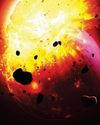
What samples from space have taught us
Alastair Gunn explains what scientists have learnt in the 20 years since the first unmanned mission brought materials back from alien worlds
3 mins
January 2026
BBC Sky at Night Magazine
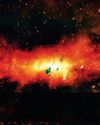
The Milky Way as you've never seen it before
This is the largest low-frequency radio colour image of our Galaxy ever assembled
1 min
January 2026
BBC Sky at Night Magazine
Merger of ‘impossibly' massive black holes explained
Scientists discover how enormous, fast-spinning black holes can exist after all
1 mins
January 2026
BBC Sky at Night Magazine
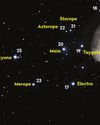
Lunar occultation of the Pleiades
BEST TIME TO SEE: 27 January from 20:30 UT
1 min
January 2026
BBC Sky at Night Magazine
The Universe's expansion may be slowing down
New study suggests current theories of dark energy could be wrong
1 mins
January 2026
Translate
Change font size