
Magzter GOLDで無制限に
10,000以上の雑誌、新聞、プレミアム記事に無制限にアクセスできます。
Diffraction spikes
BBC Sky at Night Magazine
|July 2025
Stars don't actually have spikes, but that's how we see them thanks to bending light
-
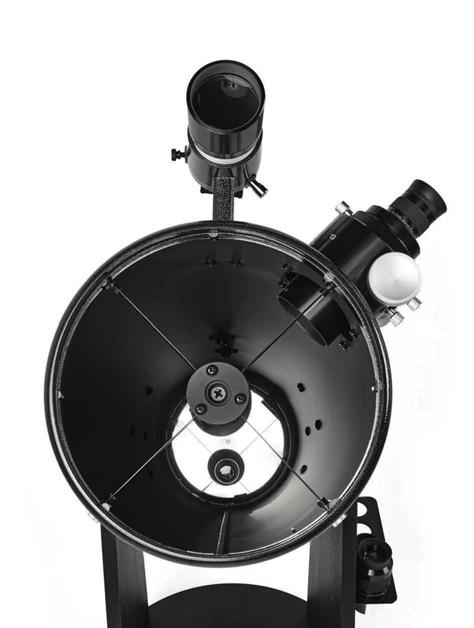
When it comes to astrophotography, stars can take many forms. They may appear as tight and bright pinpricks in some images or pointy crisscrosses with elongated lines radiating from their centre in others. The latter are called diffraction spikes and, depending on the photographer, they're either a blight on an image or a pleasing aesthetic.
Whatever your opinion, it's worth understanding what causes diffraction spikes. They are not the result of poor focus or your camera sensor, but rather down to how light from a star interacts with the internal mirrored structure of a reflecting telescope.
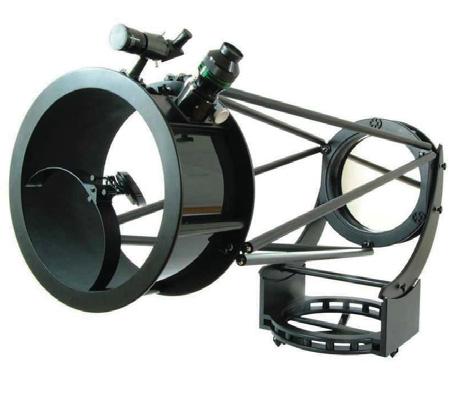 Newtonian, Cassegrain and Ritchey–Chrétien telescopes typically produce these spikes when incoming light hits the primary mirror and the vanes (or 'spider') supporting the secondary mirror, causing it to bend or 'diffract'.
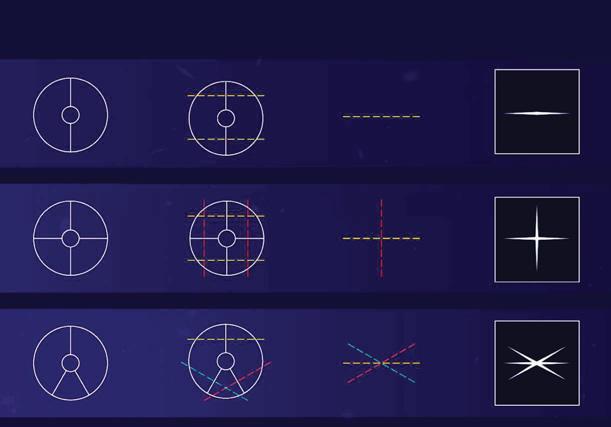
This diffraction redirects the light into a particular pattern determined by the shape and numbers of the supporting vanes. The shape of the primary mirror also has an effect.
Diffraction spikes can also appear as a result of light interacting with camera lenses. In these cases, it's not the vane causing the diffraction, but the aperture blades used to control the amount of light entering the lens. The higher the f/number, the smaller the aperture; this, in turn, makes the opening less circular too, meaning that more incoming light is diffracted and the more prominent the spikes become.

このストーリーは、BBC Sky at Night Magazine の July 2025 版からのものです。
Magzter GOLD を購読すると、厳選された何千ものプレミアム記事や、10,000 以上の雑誌や新聞にアクセスできます。
すでに購読者ですか? サインイン
BBC Sky at Night Magazine からのその他のストーリー
BBC Sky at Night Magazine
MOONWATCH
January's top lunar feature to observe

2 mins
January 2026
BBC Sky at Night Magazine
Speed up your processing workflow
How to use Photoshop's Actions tool to drastically cut your processing time
3 mins
January 2026
BBC Sky at Night Magazine
Chasing Canada's polar lights
With solar maximum peaking and a new Moon promising dark skies, Jamie Carter travels to Churchill, Manitoba to hunt the Northern Lights - and dodge polar bears – in Canada's far north
7 mins
January 2026
BBC Sky at Night Magazine
Beyond Pluto: The search for the hidden planets
Could one – or even two - undiscovered planets lurk at the edges of our Solar System? Nicky Jenner explores how close we are to finding the elusive 'Planet 9'
6 mins
January 2026
BBC Sky at Night Magazine
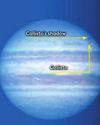
Jupiter moon events
Jupiter is a magnificent planet to observe.
2 mins
January 2026

BBC Sky at Night Magazine
What samples from space have taught us
Alastair Gunn explains what scientists have learnt in the 20 years since the first unmanned mission brought materials back from alien worlds
3 mins
January 2026
BBC Sky at Night Magazine
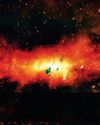
The Milky Way as you've never seen it before
This is the largest low-frequency radio colour image of our Galaxy ever assembled
1 min
January 2026
BBC Sky at Night Magazine
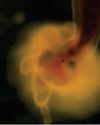
Merger of ‘impossibly' massive black holes explained
Scientists discover how enormous, fast-spinning black holes can exist after all
1 mins
January 2026
BBC Sky at Night Magazine
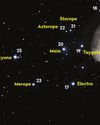
Lunar occultation of the Pleiades
BEST TIME TO SEE: 27 January from 20:30 UT
1 min
January 2026
BBC Sky at Night Magazine
The Universe's expansion may be slowing down
New study suggests current theories of dark energy could be wrong
1 mins
January 2026
Listen
Translate
Change font size