試す 金 - 無料
The Age Of Lynching
Outlook
|August 21, 2024
Incidents of fatal lynchings of people from minority communities is on the rise, even as the conviction rate for such crimes remains abysmal

"IS a Muslim life worth anything?" asks a grimfaced Mohammed Naeem, sitting unnaturally still on the edge of the wooden charpai in his Nanpara home in Bahraich, Uttar Pradesh.
His brother Mohammed Ateeq's life he says, was only worth a 20-rupee paan which was why a group of five to six men lynched him 35km from Nanpara. "My brother didn't know them, had no enmity with them, he wasn't even the one to fight or instigate anyone," said Naeem.
Ateeq was one of many killed because of his identity, his family alleges.
Lynchings have surged over the past decade. Those targeted have been predominantly Muslim, or other minorities and scheduled castes such as Dalits. While these acts are frequently described as spontaneous mob violence, there are those who argue that such violence is not merely a spontaneous expression of anger but, instead, is the result of systematic incitement by Hindu extremists.
Between June 7 and July 5, across India, 12 people died after being lynched, according to the Association for Protection of Civil Rights (APCR.) Additionally, the Hate Crime Tracker (HCT) reported 72 confirmed incidents of hate crimes and hate speeches during the first quarter of 2024 (January-March.) HCT's report defines a hate crime as a criminal act committed against an individual or victim due to their race, religion, colour, national origin, sexual orientation, or other personal traits, motivated by hostility and prejudice. This includes mob violence, attacks on property, intimidation, physical assault, provocation, threats, and incitement to violence. For 66 per cent of the 72 cases, the alleged primary driver behind these incidents was the victims' religious identity.
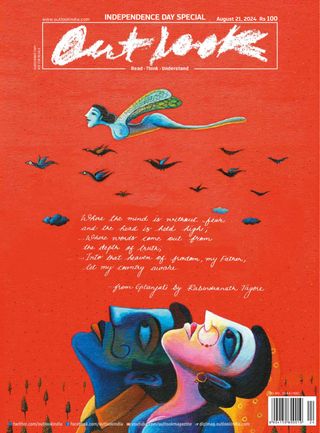

このストーリーは、Outlook の August 21, 2024 版からのものです。
Magzter GOLD を購読すると、厳選された何千ものプレミアム記事や、10,000 以上の雑誌や新聞にアクセスできます。
すでに購読者ですか? サインイン
Outlook からのその他のストーリー

Outlook
The Big Blind Spot
Caste boundaries still shape social relations in Tamil Nadu-a state long rooted in self-respect politics

8 mins
December 11, 2025

Outlook
Jat Yamla Pagla Deewana
Dharmendra's tenderness revealed itself without any threats to his masculinity. He adapted himself throughout his 65-year-long career as both a product and creature of the times he lived through
5 mins
December 11, 2025

Outlook
Fairytale of a Fallow Land
Hope Bihar can once again be that impossibly noisy village in Phanishwar Nath Renu's Parti Parikatha-divided, yes, but still capable of insisting that rights are not favours and development is more than a slogan shouted from a stage
14 mins
December 11, 2025

Outlook
The Lesser Daughters of the Goddess
The Dravidian movement waged an ideological war against the devadasi system. As former devadasis lead a new wave of resistance, the practice is quietly sustained by caste, poverty, superstition and inherited ritual
2 mins
December 11, 2025

Outlook
The Meaning of Mariadhai
After a hundred years, what has happened to the idea of self-respect in contemporary Tamil society?
5 mins
December 11, 2025

Outlook
When the State is the Killer
The war on drugs continues to be a war on the poor
5 mins
December 11, 2025

Outlook
We Are Intellectuals
A senior law officer argued in the Supreme Court that \"intellectuals\" could be more dangerous than \"ground-level terrorists\"
5 mins
December 11, 2025
Outlook
An Equal Stage
The Dravidian Movement used novels, plays, films and even politics to spread its ideology
12 mins
December 11, 2025
Outlook
The Dignity in Self-Respect
How Periyar and the Self-Respect Movement took shape in Tamil Nadu and why the state has done better than the rest of the country on many social, civil and public parameters
5 mins
December 11, 2025

Outlook
When Sukumaar Met Elakkiya
Self-respect marriage remains a force of socio-political change even a century later
7 mins
December 11, 2025
Listen
Translate
Change font size