試す 金 - 無料
Stolen Lives, Buried Truths
Outlook
|August 11, 2025
What happens when the police chase the illusion of justice, not the truth?
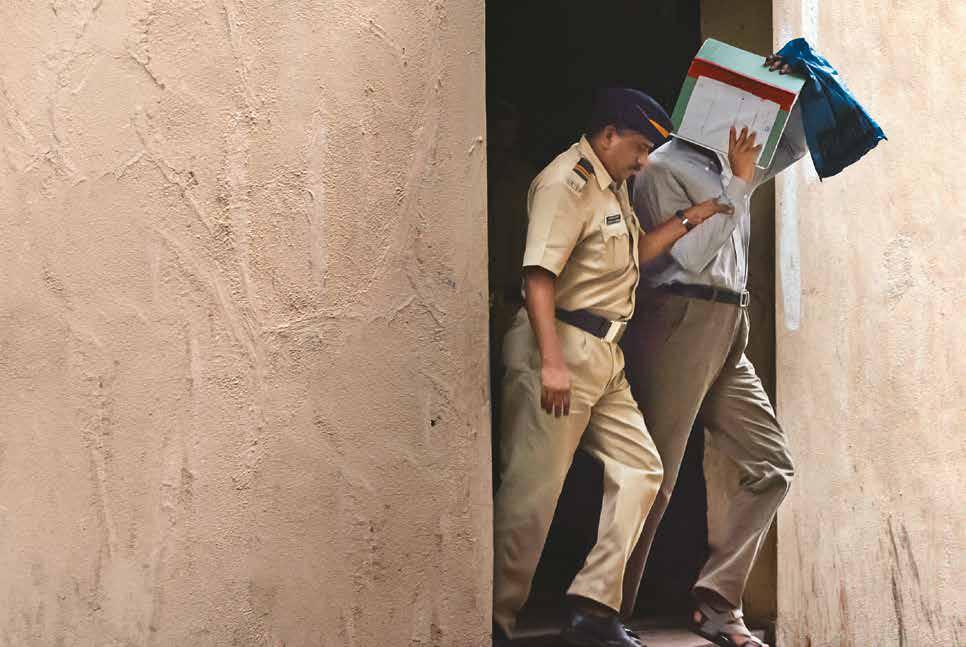
On July 11, 2006, seven bombs tore through Mumbai’s local trains, killing 189 people and injuring over 800.
In the months that followed, the police announced that it had cracked the case. Twelve of the arrested men were tried and later convicted. Five were sentenced to death.
Last week—almost two decades later—the Bombay High Court acquitted them all. The judges ruled that the evidence against them was unreliable, contradictory and, in many cases, fabricated. At that moment, justice stood exposed—not because it had been delivered, but because it had long been denied.
What happens when law enforcement responds not to facts, but public opinion, the so-called ‘collective conscience’, as the police see it? What happens when the police attempt to satisfy the demand for retribution, rather than rely on evidence? The answer is stolen lives, buried truths and perpetrators walking free.
“The conviction of an innocent man is an insurance policy for the guilty person that now he will never be caught,” says advocate Yug Mohit Chaudhry, who along with his colleagues, Payoshi Roy and Siddhartha Sharma, represented some of the men acquitted by the court in the Mumbai blasts case. “The police closed this case not because they found the true culprits, but because they didn’t want to admit they didn’t know who the perpetrators were.”
In an ordinary murder case, a high court can—often does—acquit an accused if the evidence doesn’t hold up. It might be based on benefit of doubt or reassessment of witness credibility or technical reasons. But in terrorism cases, an acquittal wouldn't just hinge on doubt: it would require moral and legal conviction in the unquestioned innocence of the accused.

このストーリーは、Outlook の August 11, 2025 版からのものです。
Magzter GOLD を購読すると、厳選された何千ものプレミアム記事や、10,000 以上の雑誌や新聞にアクセスできます。
すでに購読者ですか? サインイン
Outlook からのその他のストーリー

Outlook
Get the Right Partner
The broking industry is now in a price-war phase, but cost is no longer the key differentiator. The choice will depend on how you plan to use a broking platform

4 mins
July 06, 2026

Outlook
Balanced Fertilizer Push for India
As India faces fertilizer import shocks; Deepak Shah, Chairman of CCFI calls for shift to high NUE solutions for food security and growth.
2 mins
July 06, 2026

Outlook
India’s Anaemia Paradox
From disputed estimates to hidden causes, India’s anaemia story is entering a new phase, one that could reshape how the country understands and addresses a condition affecting millions
5 mins
July 06, 2026

Outlook
Record Placements Anchor PIMR Legacy
Prestige Institute of Management and Research, Indore (Deemed to be University): Anchoring Three Decades of Academic Vanguard and Frontier Leadership
3 mins
July 06, 2026
Outlook
Clinical Excellence in High precision Radiation Therapy
Driven by the conviction that healing begins with humanity, radiation oncologist Dr. Amit Jain has impacted countless lives
2 mins
July 06, 2026

Outlook
A Paradise Worth Protecting
Ancient rainforests, endemic and rare mammals, birds and reptiles, exotic species of trees, breathtaking corals and indigenous tribes... Great Nicobar is home to all this and a lot more
5 mins
July 06, 2026
Outlook
Your Future Starts Here
Adichunchanagiri University (ACU), nurturing visionary thinkers, global leaders, and bold entrepreneurs who are ready to drive impact in a fast-evolving digital economy
3 mins
July 06, 2026

Outlook
Building a Sustainable Airport Ecosystem in Bengaluru
At Kempegowda International Airport Bengaluru (BLR Airport), sustainability is a guiding philosophy shaping infrastructure, operations, growth, resilience and workplace culture.
4 mins
July 06, 2026
Outlook
Intelligent Imaging for Smarter Healthcare
Dilip Bhosale, shares with Outlook, how Agfa Radiology Solutions is leveraging advanced digital technologies, workflow automation and global expertise to shape the future of diagnostic imaging in India in conversation with Aditi Chakraborty
2 mins
July 06, 2026

Outlook
Advancing the Future of Oncology in Eastern India
A champion of accessible and patient-centred cancer care, Dr Soma Mukhopadhyay is leading NCRI Hospital towards new standards of excellence in oncology
2 mins
July 06, 2026
Listen
Translate
Change font size