Essayer OR - Gratuit
Stolen Lives, Buried Truths
Outlook
|August 11, 2025
What happens when the police chase the illusion of justice, not the truth?
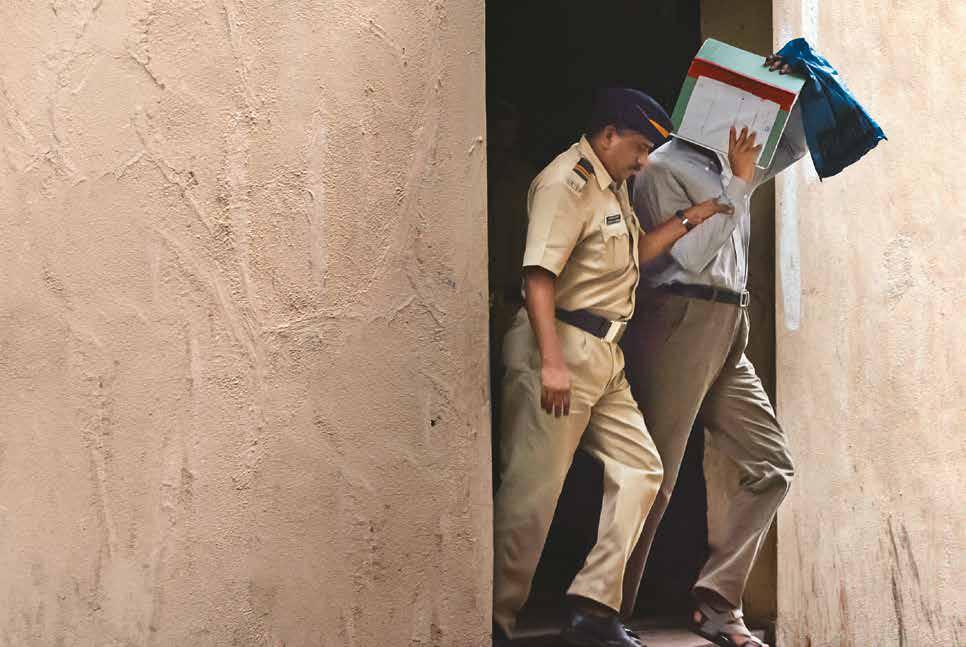
On July 11, 2006, seven bombs tore through Mumbai’s local trains, killing 189 people and injuring over 800.
In the months that followed, the police announced that it had cracked the case. Twelve of the arrested men were tried and later convicted. Five were sentenced to death.
Last week—almost two decades later—the Bombay High Court acquitted them all. The judges ruled that the evidence against them was unreliable, contradictory and, in many cases, fabricated. At that moment, justice stood exposed—not because it had been delivered, but because it had long been denied.
What happens when law enforcement responds not to facts, but public opinion, the so-called ‘collective conscience’, as the police see it? What happens when the police attempt to satisfy the demand for retribution, rather than rely on evidence? The answer is stolen lives, buried truths and perpetrators walking free.
“The conviction of an innocent man is an insurance policy for the guilty person that now he will never be caught,” says advocate Yug Mohit Chaudhry, who along with his colleagues, Payoshi Roy and Siddhartha Sharma, represented some of the men acquitted by the court in the Mumbai blasts case. “The police closed this case not because they found the true culprits, but because they didn’t want to admit they didn’t know who the perpetrators were.”
In an ordinary murder case, a high court can—often does—acquit an accused if the evidence doesn’t hold up. It might be based on benefit of doubt or reassessment of witness credibility or technical reasons. But in terrorism cases, an acquittal wouldn't just hinge on doubt: it would require moral and legal conviction in the unquestioned innocence of the accused.
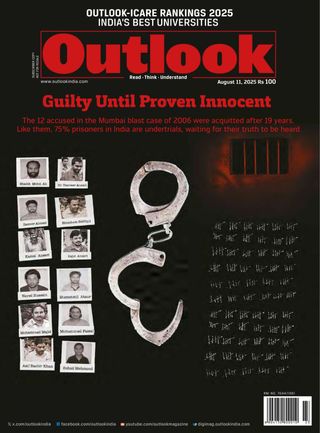

Cette histoire est tirée de l'édition August 11, 2025 de Outlook.
Abonnez-vous à Magzter GOLD pour accéder à des milliers d'histoires premium sélectionnées et à plus de 9 000 magazines et journaux.
Déjà abonné ? Se connecter
PLUS D'HISTOIRES DE Outlook
Outlook
Goapocalypse
THE mortal remains of an arterial road skims my home on its way to downtown Anjuna, once a quiet beach village 'discovered' by the hippies, explored by backpackers, only to be jackbooted by mass tourism and finally consumed by real estate sharks.

2 mins
January 21, 2026

Outlook
A Country Penned by Writers
TO enter the country of writers, one does not need any visa or passport; one can cross the borders anywhere at any time to land themselves in the country of writers.
8 mins
January 21, 2026

Outlook
Visualising Fictional Landscapes
The moment is suspended in the silence before the first mark is made.
1 mins
January 21, 2026
Outlook
Only the Upper, No Lower Caste in MALGUDI
EVERY English teacher would recognise the pleasures, the guilt and the conflict that is the world of teaching literature in a university.
5 mins
January 21, 2026
Outlook
The Labour of Historical Fiction
I don’t know if I can pinpoint when the idea to write fiction took root in my mind, but five years into working as an oral historian of the 1947 Partition, the landscape of what would become my first novel had grown too insistent to ignore.
6 mins
January 21, 2026

Outlook
Conjuring a Landscape
A novel rarely begins with a plot.
6 mins
January 21, 2026

Outlook
The City that Remembered Us...
IN the After-Nation, the greatest crime was remembering.
1 min
January 21, 2026

Outlook
Imagined Spaces
I was talking with the Kudiyattam artist Kapila Venu recently about the magic of eyes.
5 mins
January 21, 2026

Outlook
Known and Unknown
IN an era where the gaze upon landscape has commodified into picture postcards with pristine beauty—rolling hills, serene rivers, untouched forests—the true essence of the earth demands a radical shift.
2 mins
January 21, 2026

Outlook
A Dot in Soot
A splinter in the mouth. Like a dream. A forgotten dream.
2 mins
January 21, 2026
Listen
Translate
Change font size