
Magzter GOLDで無制限に
10,000以上の雑誌、新聞、プレミアム記事に無制限にアクセスできます。
試す 金 - 無料
Sheher-e-Paighambar
Outlook
|February 01, 2024
Muslims in Ayodhya brace for the Ram Mandir inauguration 31 years after the demolition of the Babri Masjid. Their only wish Is to be allowed to live in peace

FIFTY-YEAR-OLD Mohammad Shahid's jaw clenched and unclenched as he watched a young man put up lights on the bare boundary wall of his home in Ayodhya's Tedhibazar, ahead of the grand opening of the Ram temple. The lights are mandatory, he has been told.
He cannot help but think of that day, over 31 years ago, when the house, located just two kilometres from where the Babri Masjid then stood, had been similarly decked up with lights. It was his sister's wedding in a few days. But the festivities ended in horror on December 6, 1992, after the illegal demolition of the Mughal-era mosque when Hindu mobs rampaged through Ayodhya, killing Muslims and setting fire to homes, including his.
Shahid's grandfather Abdul Gaffar Khan was the last Imam of the Babri Masjid. He died in 1990. "It is good that he did not live to see that day," Shahid states glumly. His father and his uncle (the Imam's sons) were among the 17 people killed that day.
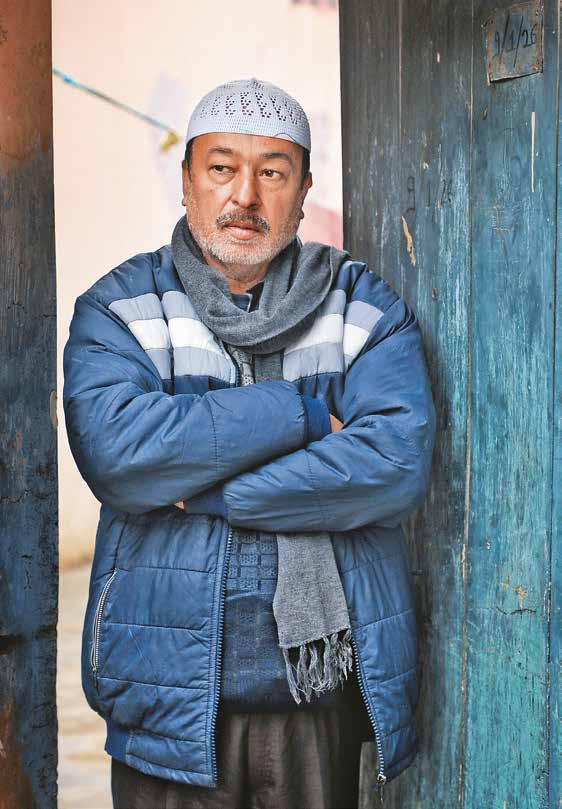
The charred remains of an aara (sawing machine) gathering dust in his derelict yard are the only physical proof the family keeps of the violence. "There used to be a wood workshop here where my father worked along with preaching at the mosque across the street. He was in the workshop when we got news that they were burning pages of the Quran. We knew we had to run," he recalls.
While the rest of the family, including Shahid's deceased mother Taibunnisa Begum, managed to escape to their neighbour Haji Mehboob's house, his father and uncle got separated. The mob found them eventually, stabbed and burnt them alive in different locations. The wood workshop was reduced to cinders and rioters looted all they could from the house, including wedding gifts for his sister.


このストーリーは、Outlook の February 01, 2024 版からのものです。
Magzter GOLD を購読すると、厳選された何千ものプレミアム記事や、10,000 以上の雑誌や新聞にアクセスできます。
すでに購読者ですか? サインイン
Outlook からのその他のストーリー
Outlook
Goapocalypse
THE mortal remains of an arterial road skims my home on its way to downtown Anjuna, once a quiet beach village 'discovered' by the hippies, explored by backpackers, only to be jackbooted by mass tourism and finally consumed by real estate sharks.

2 mins
January 21, 2026

Outlook
A Country Penned by Writers
TO enter the country of writers, one does not need any visa or passport; one can cross the borders anywhere at any time to land themselves in the country of writers.
8 mins
January 21, 2026
Outlook
Visualising Fictional Landscapes
The moment is suspended in the silence before the first mark is made.
1 mins
January 21, 2026
Outlook
Only the Upper, No Lower Caste in MALGUDI
EVERY English teacher would recognise the pleasures, the guilt and the conflict that is the world of teaching literature in a university.
5 mins
January 21, 2026
Outlook
The Labour of Historical Fiction
I don’t know if I can pinpoint when the idea to write fiction took root in my mind, but five years into working as an oral historian of the 1947 Partition, the landscape of what would become my first novel had grown too insistent to ignore.
6 mins
January 21, 2026

Outlook
Conjuring a Landscape
A novel rarely begins with a plot.
6 mins
January 21, 2026

Outlook
The City that Remembered Us...
IN the After-Nation, the greatest crime was remembering.
1 min
January 21, 2026
Outlook
Imagined Spaces
I was talking with the Kudiyattam artist Kapila Venu recently about the magic of eyes.
5 mins
January 21, 2026
Outlook
Known and Unknown
IN an era where the gaze upon landscape has commodified into picture postcards with pristine beauty—rolling hills, serene rivers, untouched forests—the true essence of the earth demands a radical shift.
2 mins
January 21, 2026

Outlook
A Dot in Soot
A splinter in the mouth. Like a dream. A forgotten dream.
2 mins
January 21, 2026
Listen
Translate
Change font size