試す 金 - 無料
Ethics Goes Awry in Humans and AI
Philosophy Now
|August/September 2025
The Politics of Reincarnation in Tibet. Early Adopter of Kierkegaard & Tillich Dies
Human Ethics: Not Working as Expected
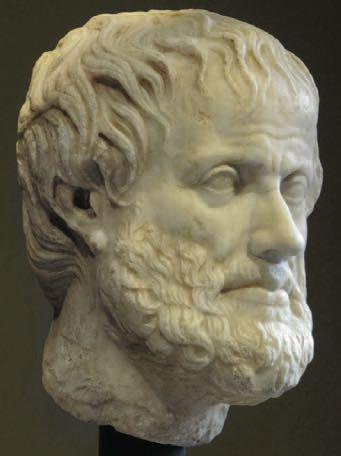
It is satisfying to find a scientific study not only quote but also confirm philosophical insights. Research published by Crystal Reeck of Temple University and Dan Ariely of Duke University is spearheaded by this quote by Aristotle: “The least initial deviation from the truth is multiplied later a thousandfold.” And this is exactly what they found. As opposed to Aristotle’s virtue ethics, which understands any single moral choice as embedded in a larger context, it is common for us in our everyday lives to conceive of any moral act as an isolated singular occurrence. At the same time, however, we are rewarded for little dishonesties, the ones that, in themselves, seem to matter little. They often don’t incur important consequences, but make our lives a little easier. Using a set of six experiments, the researchers demonstrated that “Individual dishonest acts are thus not independent events, but rather can compound and perpetuate pervasive unethical behaviour.” This moral detachment is expedited by factors such as unfair financial deprivation, self-serving rewards, and gradual change, while drawing attention to the importance to how of selfish acts matter can hinder it or slow it down. The authors conclude: “our findings suggest that dishonest acts can be super-additive over time and lead to an increase of unethical behaviour to the point where it becomes pervasive and routine.”
AI Medical Ethics: Not Working Quite as Hoped
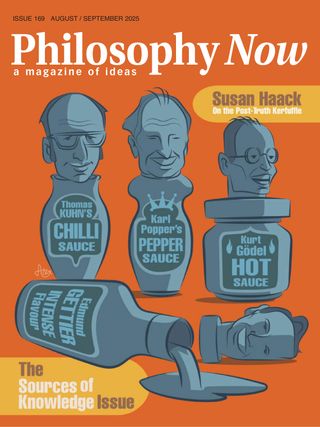

このストーリーは、Philosophy Now の August/September 2025 版からのものです。
Magzter GOLD を購読すると、厳選された何千ものプレミアム記事や、10,000 以上の雑誌や新聞にアクセスできます。
すでに購読者ですか? サインイン
Philosophy Now からのその他のストーリー

Philosophy Now
Nosferatu
Stefan Bolea considers two very different artistic approaches to love and death.

6 mins
April/May 2025

Philosophy Now
Heidegger's Ghost
Raymond Tallis wonders where Heidegger's body went when he was philosophising.
7 mins
April/May 2025

Philosophy Now
Is Comedy Good For Us?
Damaris Stock has a laugh with Plato and friends.
10 mins
April/May 2025
Philosophy Now
In Defense of Idleness
Wendell O'Brien says, 'Just Don't Do It'.
10 mins
April/May 2025

Philosophy Now
Leaving Nothing to Chance by Carl Knight
LEAVING NOTHING TO Chance (2025) by Carl Knight, is an informed, proficient and lucid defence of luck egalitarianism.
3 mins
April/May 2025

Philosophy Now
Star Maker by Olaf Stapledon
THE 1937 SCIENCE FICTION novel Star Maker was written by philosophy professor Olaf Stapledon in the dark days as Europe awaited the onslaught of Nazi Germany. This casts a shadow over the whole book.
6 mins
April/May 2025
Philosophy Now
Love & Emptiness in the Sufi Tradition
Medha Ninad Tambe meditates on Rumi, love and self-negation.
7 mins
April/May 2025

Philosophy Now
The Hedgehog's Dilemma: A Metaphor About the Challenges of Human Intimacy
Krishna Chaubey explains Arthur Schopenhauer's poignant thought experiment.
4 mins
April/May 2025

Philosophy Now
The Mirror & the Flame
Rebwar Fatah imagines Attar's & Hegel's shared path.
4 mins
April/May 2025
Philosophy Now
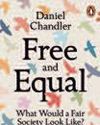
Free and Equal by Daniel Chandler
DANIEL CHANDLER, AN economist and philosopher based at the London School of Economics, begins Free and Equal: What Would a Fair Society Look Like? (2023) by asking an intriguing question. How is it, he wonders, that the most influential political philosopher of the last century has had almost no practical impact on politics or policy? The philosopher in question is John Rawls, whose magnum opus was A Theory of Justice (1971).
5 mins
April/May 2025
Listen
Translate
Change font size