Versuchen GOLD - Frei
Ethics Goes Awry in Humans and AI
Philosophy Now
|August/September 2025
The Politics of Reincarnation in Tibet. Early Adopter of Kierkegaard & Tillich Dies
Human Ethics: Not Working as Expected
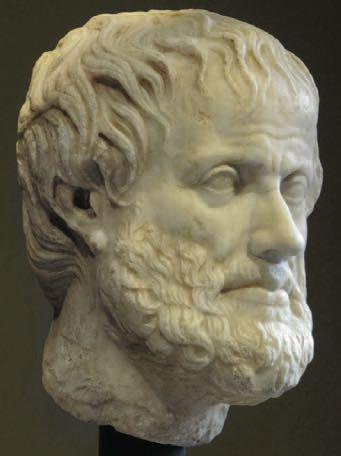
It is satisfying to find a scientific study not only quote but also confirm philosophical insights. Research published by Crystal Reeck of Temple University and Dan Ariely of Duke University is spearheaded by this quote by Aristotle: “The least initial deviation from the truth is multiplied later a thousandfold.” And this is exactly what they found. As opposed to Aristotle’s virtue ethics, which understands any single moral choice as embedded in a larger context, it is common for us in our everyday lives to conceive of any moral act as an isolated singular occurrence. At the same time, however, we are rewarded for little dishonesties, the ones that, in themselves, seem to matter little. They often don’t incur important consequences, but make our lives a little easier. Using a set of six experiments, the researchers demonstrated that “Individual dishonest acts are thus not independent events, but rather can compound and perpetuate pervasive unethical behaviour.” This moral detachment is expedited by factors such as unfair financial deprivation, self-serving rewards, and gradual change, while drawing attention to the importance to how of selfish acts matter can hinder it or slow it down. The authors conclude: “our findings suggest that dishonest acts can be super-additive over time and lead to an increase of unethical behaviour to the point where it becomes pervasive and routine.”
AI Medical Ethics: Not Working Quite as Hoped
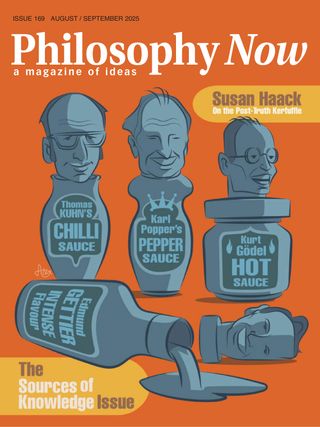

Diese Geschichte stammt aus der August/September 2025-Ausgabe von Philosophy Now.
Abonnieren Sie Magzter GOLD, um auf Tausende kuratierter Premium-Geschichten und über 9.000 Zeitschriften und Zeitungen zuzugreifen.
Sie sind bereits Abonnent? Anmelden
WEITERE GESCHICHTEN VON Philosophy Now

Philosophy Now
Bilbo Theorizes About Wellbeing
Eric Comerford overhears Bilbo and Gandalf discussing happiness.

9 mins
December 2025 / January 2026

Philosophy Now
What Women?
Marcia Yudkin remembers almost choking at Cornell
11 mins
December 2025 / January 2026

Philosophy Now
Islamic Philosophers On Tyranny
Amir Ali Maleki looks at tyranny from an Islamic perspective.
4 mins
December 2025 / January 2026

Philosophy Now
Peter Singer
The controversial Australian philosopher defends the right to choose to die on utilitarian grounds
5 mins
December 2025 / January 2026

Philosophy Now
Another Conversation with Martin Heidegger?
Raymond Tallis talks about communication problems.
7 mins
December 2025 / January 2026

Philosophy Now
Letters
When inspiration strikes, don't bottle it up. Email me at rick.lewis@philosophynow.org Keep them short and keep them coming!
17 mins
December 2025 / January 2026

Philosophy Now
The Philosophy of William Blake
Mark Vernon looks at the imaginative thinking of an imaginative artist.
9 mins
December 2025 / January 2026

Philosophy Now
Philosophical Haiku
Peering through life’s lens God in nature is deduced: The joy of being.
1 mins
December 2025 / January 2026

Philosophy Now
Philosophy Shorts
More songs about Buildings and Food' was the title of a 1978 album by the rock band Talking Heads. It was about all the things rock stars normally don't sing about. Pop songs are usually about variations on the theme of love; tracks like Rose Royce's 1976 hit 'Car Wash' are the exception. Philosophers, likewise, tend to have a narrow focus on epistemology, metaphysics and trifles like the meaning of life. But occasionally great minds stray from their turf and write about other matters, for example buildings (Martin Heidegger), food (Hobbes), tomato juice (Robert Nozick), and the weather (Lucretius and Aristotle). This series of Shorts is about these unfamiliar themes; about the things philosophers also write about.
2 mins
December 2025 / January 2026
Philosophy Now
Hedonic Treadmills in the Vale of Tears
Michael Gracey looks at how philosophers have pursued happiness.
8 mins
December 2025 / January 2026
Listen
Translate
Change font size