試す 金 - 無料
The Perils of Algorithmic Pricing
MIT Sloan Management Review
|winter 2026
Some revenue management systems based on algorithms may lead to unintended collusion and antitrust violations.

FOR DECADES, HOTELS, AIRLINES, casinos, and other companies have used revenue management systems to help them set prices, maximize revenues, and gain competitive advantage.
Now, in a series of legal cases, plaintiffs have argued that some of those systems' pricing algorithms could be used to facilitate illegal price-fixing in violation of federal antitrust law.
Typically, collusion over pricing requires explicit coordination among competitors, the kind one might imagine occurring in the stereotypical smoke-filled room. What makes the recent lawsuits worth paying attention to is the idea, expressed by federal regulators, that the use of pricing algorithms can lead to collusion without such overt agreements — and even if companies didn't intend to collude. If this view of collusion prevails, it could pave the way for even more antitrust lawsuits over algorithmic pricing.
In this article, we want to highlight the possible antitrust risks posed by algorithmic pricing and provide an analytical framework for understanding how the algorithms use data and guide pricing decisions in ways that can lead to illegal collusion.
The Legal Cases Alleging Collusion
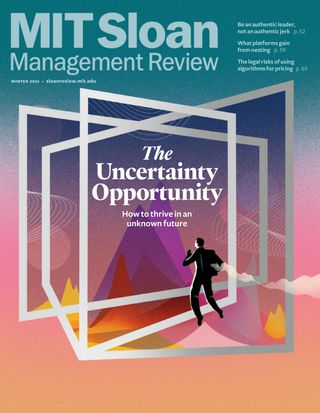

このストーリーは、MIT Sloan Management Review の winter 2026 版からのものです。
Magzter GOLD を購読すると、厳選された何千ものプレミアム記事や、10,000 以上の雑誌や新聞にアクセスできます。
すでに購読者ですか? サインイン
MIT Sloan Management Review からのその他のストーリー

MIT Sloan Management Review
A Smarter Approach to Measuring Customer Experience
Many companies collect more customer experience data points than they need or can use effectively. Here's how to focus on the metrics that matter.

10 mins
Spring 2026

MIT Sloan Management Review
A Smarter Approach to Measuring Customer Experience
Many companies collect more customer experience data points than they need or can use effectively. Here's how to focus on the metrics that matter.
10 mins
Spring 2026

MIT Sloan Management Review
Why Digital Dexterity Is Key to Transformation
To make headway with digital transformation, executives are redefining the challenge: Build a workforce to take advantage of new technologies.
17 mins
Spring 2026

MIT Sloan Management Review
Ask Sanyin: What Makes a 'Listening Tour' Meaningful?
I've just stepped into a new leadership role and was advised to embark on a \"listening tour.\"
2 mins
Spring 2026

MIT Sloan Management Review
Build Business Advantage With Real-Time Decision-Making
Stop running your business on yesterday's data. Real-time data, empowered employees, and agile systems can lead to higher margins.
11 mins
Spring 2026

MIT Sloan Management Review
Balancing Innovation and Risk in the Age of AI
Monica Caldas is executive vice president and global CIO of Liberty Mutual Insurance.
2 mins
Spring 2026

MIT Sloan Management Review
Turn Customer Complaints Into Innovation Blueprints
You can reframe client grievances as an opportunity instead of a burden. At one Swiss hospital, complaints have become a pipeline for improvements to the customer experience.
6 mins
Spring 2026

MIT Sloan Management Review
The Eight Core Principles of Strategic Innovation
A company's future depends on the new directions it explores and develops today — and that requires different structures and capabilities from incremental innovation.
14 mins
Spring 2026

MIT Sloan Management Review
What AI Can Teach Us About Designing Better KPIs
Machine learning research offers four proven strategies to prevent people from gaming measures of organizational performance.
12 mins
Spring 2026

MIT Sloan Management Review
THREE THINGS TO KNOW ABOUT Learning by Hiring
LEADERS WHO RECOGNIZE THAT OUT-siders can be major drivers of innovation often seek to bring new knowledge into their organizations by making external hires.
2 mins
Spring 2026
Listen
Translate
Change font size