कोशिश गोल्ड - मुक्त
The Transformation of Prompts into Source Code
Open Source For You
|March 2026
Prompts are no longer simple text. As generative Al evolves, they are turning into engineering assets, and more specifically, code that needs to be designed, tested, versioned, and maintained.

We know of prompts as intelligent instructions that can be written quickly and modified with no need for written proof. However, as generative AI advances from experimental environments to legitimate operational settings its prompts have begun to function more like software components than regular sentences. A single change in the choice of words can lead to major output differences, impacting customer experience, business choices and regulatory compliance. Software teams have discovered that prompts contain hidden dependencies, implicit logic and failure modes that engineers commonly associate with code.
This transformation is a game changer. Text no longer serves as the material for prompts because they have turned into structured components for specific purposes with operational limits and potential dangers. The prompt that directs a model to summarise legal documents and create financial summaries requires the same control that all vital system elements need.
Today, prompts function as behaviour instructions because they determine how a model thinks, what it considers important, and what it will overlook. People use prompts to express their needs while machines apply their cognitive abilities to meet these. Prompts are no longer ordinary text; they have started turning into code!
The question now is not how to write better prompts, but how to design, test, version, and maintain them—just like any other piece of software that operates at scale.
Viewing prompt engineering through a software lens
Once prompts were recognised as engineering assets, software teams started building them by applying software development methods that require designs to be structured, readable and reusable. The process of creating prompts changed from using intuition to building systems through planned design work.

यह कहानी Open Source For You के March 2026 संस्करण से ली गई है।
हजारों चुनिंदा प्रीमियम कहानियों और 10,000 से अधिक पत्रिकाओं और समाचार पत्रों तक पहुंचने के लिए मैगज़्टर गोल्ड की सदस्यता लें।
क्या आप पहले से ही ग्राहक हैं? साइन इन करें
Open Source For You से और कहानियाँ
Open Source For You
I2C and I3C: How Modern Devices Communicate
I3C and I2C are both two-wire communication protocols that help exchange data between multiple devices. While I3C preserves the simplicity of I2C, it introduces new features suited for today's sensor-rich devices.

8 mins
March 2026
Open Source For You
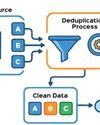
Data Deduplication Done the Right Way
Deduplication helps to save space on Linux-based storage systems. Choose the right platform and check whether it meets your goals.
5 mins
March 2026

Open Source For You
The Relevance of Rubber Duck Debugging in the Age of AI
Discover why rubber duck debugging is a powerful process today.
4 mins
March 2026

Open Source For You
Sending IoT Sensor Data to Public or Private Servers
This IoT system shows a simple and effective way to send sensor data using an ESP8266 microchip.
3 mins
March 2026

Open Source For You
Optimising RAM Usage with Python
Discover how we can make better use of RAM by applying various Python optimisation techniques.
7 mins
March 2026

Open Source For You
How a Job Portal Benefited from Microservices Architecture
Microservices architecture has emerged as a preferred pattern for building scalable and maintainable software applications. Here's how a monolithic job portal application was re-engineered into a microservices-based system. The migration process, key design decisions, the technology stack used, and measurable improvements in performance and flexibility are all laid out for you.
9 mins
March 2026
Open Source For You
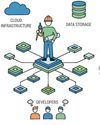
The Role that Software Architects Play
Software architects design software projects and ensure these meet their goals. They must balance tech skills with leadership and mentoring abilities.
5 mins
March 2026

Open Source For You
The Path to Cybersecurity in the Quantum Era
The rise of quantum computing will be accompanied by a failure of conventional cryptography. Post-quantum cryptography and advanced threat detection methodologies, among other techniques, are being evolved to counter security threats in the quantum era.
8 mins
March 2026

Open Source For You
Why Open Source Large Language Models are Popular
Open source large language models mark a pivotal moment in the evolution of generative Al. By lowering barriers to entry and fostering collaborative innovation,these models are enabling a broader spectrum of organisations to benefit from Al.
7 mins
March 2026

Open Source For You
Ant Group open sources two frontier AI models
Ant Group has open sourced two trillion-parameter frontier AI models-Ling2.5-1T and Ring-2.5-1T-placing advanced large language and reasoning systems directly in the hands of developers and researchers worldwide.
1 min
March 2026
Listen
Translate
Change font size