
मैगज़्टर गोल्ड के साथ असीमित हो जाओ
10,000 से अधिक पत्रिकाओं, समाचार पत्रों और प्रीमियम कहानियों तक असीमित पहुंच प्राप्त करें सिर्फ
कोशिश गोल्ड - मुक्त
NEXT STOP: THE FUTURE
The Week Junior Science+Nature UK
|June 2025
All aboard as JD Savage takes the fast track through 200 years of train travel.
-
This year celebrates Railway 200 – two centuries since the first modern railway opened in the UK. This incredible story hits the rails in 1825, as the first train ran on north-east England's brand new Stockton & Darlington Railway. Engineer George Stephenson and his son Robert's engine Locomotion No.1 wasn't fast - it only travelled about 15 miles per hour - but it carried 450 passengers, as huge crowds gathered to watch the strange vehicle in action.
Rocketing ahead
Four years later, a competition was held to find the best engine for a new line between Liverpool and Manchester. The Stephensons entered their latest invention: the Rocket.
Thanks to clever engineering - including a boiler with 25 copper tubes, instead of just one or two - it won easily, reaching an amazing 36mph. Stephenson's Rocket set the standard for train tech. Steam engines would follow its basic layout for over a century. Meanwhile, the tracks themselves were getting an upgrade. Cast-iron rails, which cracked easily, were replaced by tougher wrought iron, and later steel rails.
 Sleek machines
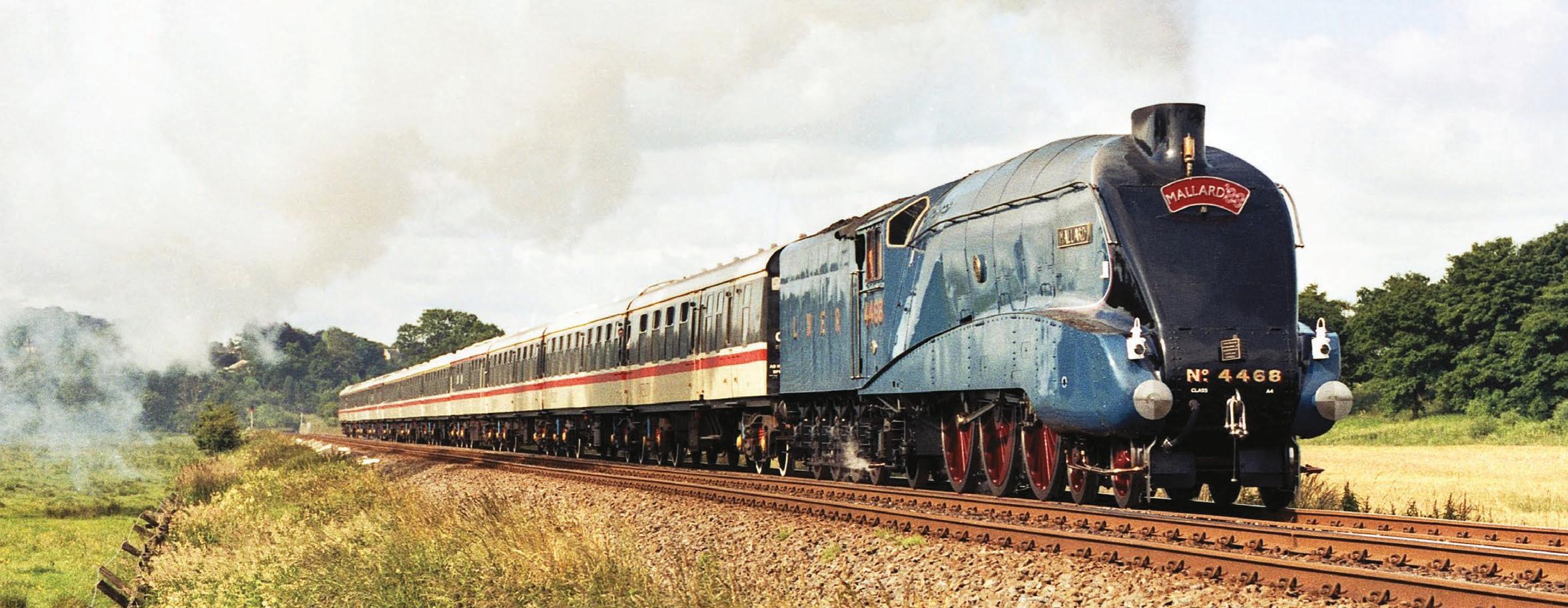
Steam trains rapidly increased in size and power, and 100 years after Stephenson's Rocket, they also became much faster. One of the most famous speedsters was Mallard, built in 1938 by British engineer Sir Nigel Gresley. It had a smooth, streamlined shape, which was tested inside a wind tunnel to reduce drag caused by air resistance. Mallard sliced through the air at top speed, driven by three powerful cylinders (the power units in a steam engine), rather than the usual two. It also sported a more efficient "blastpipe" exhaust system that sucked smoke and steam out of the engine, drawing air through the burning coal and making the fire burn hotter.

यह कहानी The Week Junior Science+Nature UK के June 2025 संस्करण से ली गई है।
हजारों चुनिंदा प्रीमियम कहानियों और 10,000 से अधिक पत्रिकाओं और समाचार पत्रों तक पहुंचने के लिए मैगज़्टर गोल्ड की सदस्यता लें।
क्या आप पहले से ही ग्राहक हैं? साइन इन करें
The Week Junior Science+Nature UK से और कहानियाँ

The Week Junior Science+Nature UK
Make a smoothie bowl
Use left-over fruit and veg to whip up this breakfast treat.

1 min
May 2026
The Week Junior Science+Nature UK
Indian snakes travel by train
King cobras - the world's longest venomous snakes - are slithering on board trains across India, researchers have revealed.
1 min
May 2026
The Week Junior Science+Nature UK
Carr House Meadows
The UK's wildflower meadows are often brimming with life, colour and sound. As these habitats are full of plant and animal species, they are very precious.
1 min
May 2026
The Week Junior Science+Nature UK
Did dragons ever exist?
These fire-breathing monsters have been flying into stories for centuries.
2 mins
May 2026

The Week Junior Science+Nature UK
Should big species return to the UK?
Would you be happy about large animals roaming our countryside - including predators?
1 mins
May 2026

The Week Junior Science+Nature UK
SAVING CORAL REEFS
Find out how scientists, conservationists and imaging experts are joining forces to discover more about corals and bring reefs back to life.
1 mins
May 2026
The Week Junior Science+Nature UK
THE SECRET LIFE OF BEES
Step into a miniature world that quite literally buzzes with life.
1 min
May 2026
The Week Junior Science+Nature UK
Windermere Science Festival
On 9 and 10 May, Windermere Science Festival returns to Windermere Jetty Museum. Get ready for science-themed family fun, including roving robots and awesome virtual reality.
1 min
May 2026
The Week Junior Science+Nature UK
Aneeshwar Kunchala
Hear from a young TV star about his new series and his ambition to save wildlife.
3 mins
May 2026

The Week Junior Science+Nature UK
WORLD'S OLDEST COCKATIEL
Sonny, a family pet living in the US state of Illinois, has been officially recognised as the oldest of his species.
1 min
May 2026
Listen
Translate
Change font size