
मैगज़्टर गोल्ड के साथ असीमित हो जाओ
10,000 से अधिक पत्रिकाओं, समाचार पत्रों और प्रीमियम कहानियों तक असीमित पहुंच प्राप्त करें सिर्फ
कोशिश गोल्ड - मुक्त
BLACK HOLE BURPS
Scientific American
|July/August 2025
After black holes devour stars, sometimes the feast comes back up
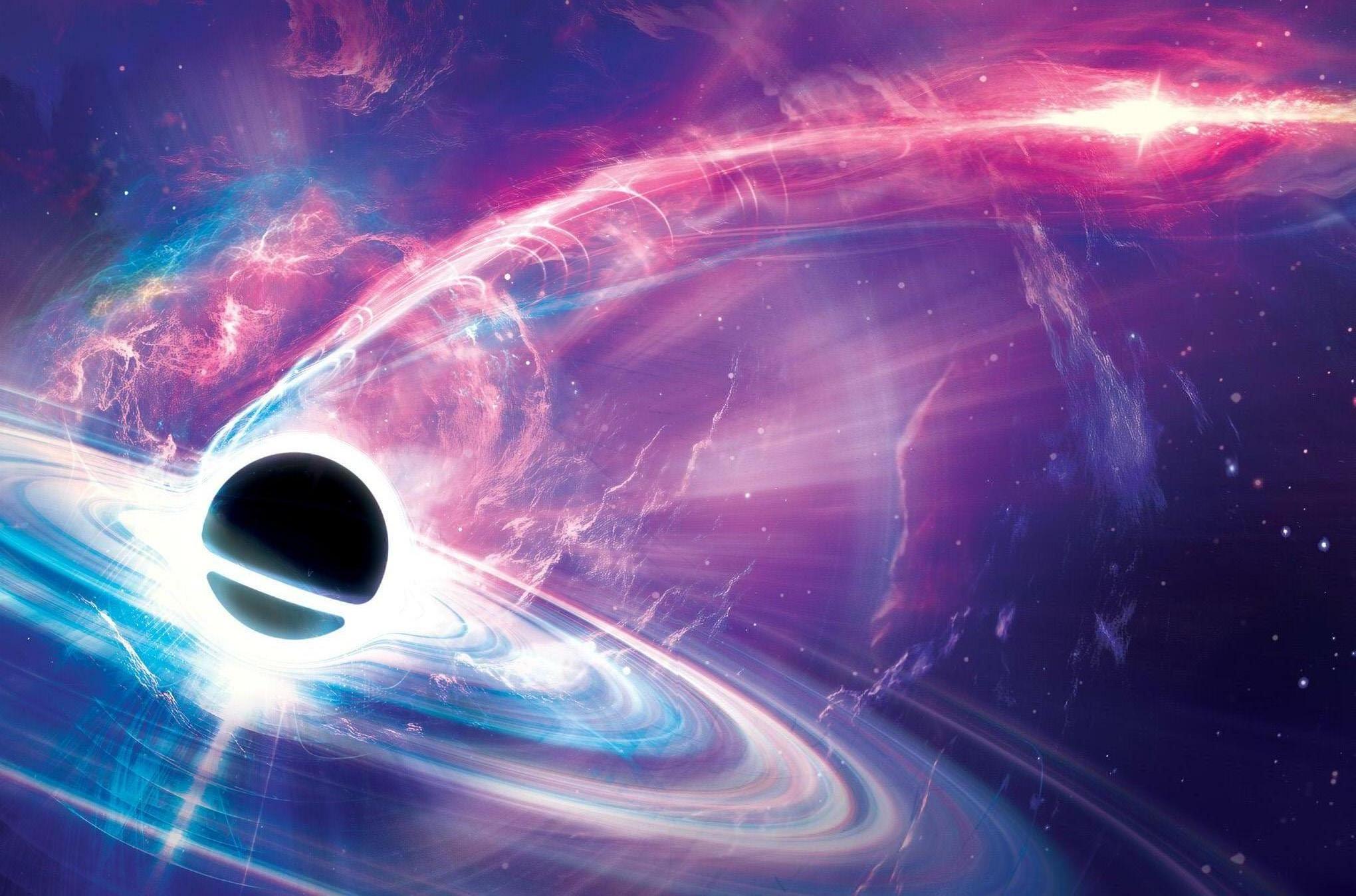
BLACK HOLES ARE INVISIBLE, yet they are among the brightest things in the universe. If a star wanders too close to a black hole, it gets torn apart in a fireworks show called a tidal disruption event. As the star approaches, it gets twisted and pulled, and about half of it ends up flung outward. The other half forms a Frisbee-shaped accretion disk around the black hole itself. This newly formed disk is not stable: material sloshes around and smashes into itself, creating a light show detectable in radio wavelengths.
These are rare occurrences—scientists estimate that the giant black hole at the center of our Milky Way galaxy gobbles a star about every million years or so. But when it happens, it releases a tremendous amount of light and energy visible millions or even billions of light-years away.
Until recently, astronomers had thought that after the initial feast, the swallowed star was never to be seen again. Observations in the past five years, however, suggest otherwise. In a surprising turn unpredicted by theory, it appears that black holes can suffer from indigestion, spewing out material years after the initial stars were shredded. In fact, scientists are now finding that up to half of black holes that devour stars start shining again in radio light years after they had gone quiet—the equivalent of a cosmic burp. We know this material isn’t coming back from beyond the event horizon—that’s impossible. It’s most likely sloshing about in an accretion disk outside that boundary. But explaining how these black hole burps can occur so late is challenging. What’s going on? Solving the mystery of these regurgitations may reveal new secrets about the physics of the most extreme environments in the universe.

यह कहानी Scientific American के July/August 2025 संस्करण से ली गई है।
हजारों चुनिंदा प्रीमियम कहानियों और 10,000 से अधिक पत्रिकाओं और समाचार पत्रों तक पहुंचने के लिए मैगज़्टर गोल्ड की सदस्यता लें।
क्या आप पहले से ही ग्राहक हैं? साइन इन करें
Scientific American से और कहानियाँ

Scientific American
Earthquake Life
Yellowstone quakes spark bursts of microbial growth underground

2 mins
March 2026

Scientific American
Sailing the Sun
By designing vertical panels that move in a gale, two Swedish inventors are unlocking a solar future for the windswept north
9 mins
March 2026
Scientific American
Covered in Bees
Ancient bees burrowed deep into discarded mammal jawbones
2 mins
March 2026
Scientific American
Fire Starters
Ancient humans were making fire 350,000 years earlier than thought
3 mins
March 2026
Scientific American
Relativity Revealed
Physicists have observed a bizarre prediction of special relativity for the first time
8 mins
March 2026

Scientific American
Everything You Wanted to Know about Polyamory (but Were Afraid to Ask
The practice is not a faddish excuse to sleep around, research shows. And it has deep roots in American culture
14 mins
March 2026

Scientific American
Let the Rivers Run
An investigation into the rights of nature
4 mins
March 2026

Scientific American
Hidden Proof
\"Effective zero knowledge\" beats long-standing cryptographic impossibilities
2 mins
March 2026
Scientific American
The Universe's Weirdest Optical Illusions
Sometimes the farther away an object is, the bigger it seems to be
4 mins
March 2026

Scientific American
Living in the COPILOT SOCIETY
The promise and peril of artificial intelligence everywhere
2 mins
March 2026
Listen
Translate
Change font size