
मैगज़्टर गोल्ड के साथ असीमित हो जाओ
10,000 से अधिक पत्रिकाओं, समाचार पत्रों और प्रीमियम कहानियों तक असीमित पहुंच प्राप्त करें सिर्फ
कोशिश गोल्ड - मुक्त
Dark matter
BBC Sky at Night Magazine
|August 2025
The mysterious force we can't see... and astronomers can’t even agree is there

Our eyes paint such vivid portraits of the world around us that it's easy to forget how much of our surroundings go unseen. WiFi signals pinging this way and that, subatomic particles and radiation zipping about. And, if astronomers are to be believed, there's another invisible interloper to throw into the mix: dark matter.
A cosmic glue thought to help bind the Universe together, dark matter is so prevalent that about a milligram (3.5oz) will pass through your body throughout your life. But where did this notion of 'dark matter' come from?
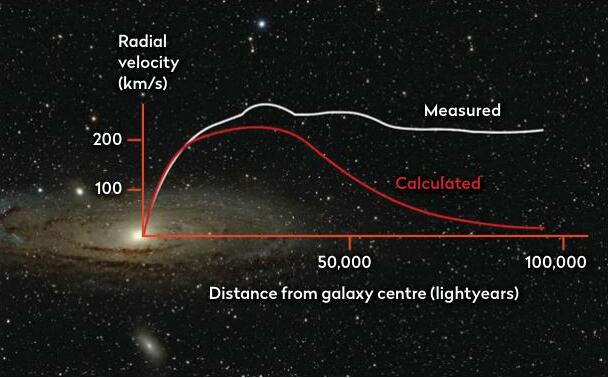 Its story starts in the 1930s. Astronomer Fritz Zwicky was measuring the speeds of galaxies within a big group called the Coma Cluster. He found many were moving so fast that he would have expected them to break free of the cluster's gravitational shackles and head off on their own. Curiously, they didn't. Zwicky suggested there might be some extra, invisible stuff in the cluster providing an additional gravitational glue. Zwicky called this stuff dunkle materie - dark matter.
Around the same time, the Dutch astronomer Jan Oort was observing stars on the outskirts of our own Milky Way Galaxy. He also found them to be moving faster than expected, meaning they too should be able to break away. But again, they didn't.

यह कहानी BBC Sky at Night Magazine के August 2025 संस्करण से ली गई है।
हजारों चुनिंदा प्रीमियम कहानियों और 10,000 से अधिक पत्रिकाओं और समाचार पत्रों तक पहुंचने के लिए मैगज़्टर गोल्ड की सदस्यता लें।
क्या आप पहले से ही ग्राहक हैं? साइन इन करें
BBC Sky at Night Magazine से और कहानियाँ
BBC Sky at Night Magazine
New moons found around Jupiter and Saturn
And we think we know why Jupiter has more big moons than its neighbour

1 min
June 2026
BBC Sky at Night Magazine
Q&A WITH A STAR DIMMING EXPERT
Extraordinary flickering in a distant star has led astronomers to the wreckage of two planets colliding. We meet one of the team behind the rare discovery
3 mins
June 2026
BBC Sky at Night Magazine
Don't let stars overpower your images
How to use Siril freeware to turn down the stars and turn up delicate details
3 mins
June 2026

BBC Sky at Night Magazine
Chasing UFOs on the web
Robert Pateman investigates how the internet has changed the way we view and report on UFO sightings
6 mins
June 2026

BBC Sky at Night Magazine
Under southern SKIES Stargazing in Australia's Warrumbungles
Ten years after Australia gained its first International Dark Sky Park, Yvette Cook finds out exactly why Warrumbungle National Park is a world-class astrotourism destination
7 mins
June 2026
BBC Sky at Night Magazine
Pick the perfect eyepiece
How to choose the right match for your target, telescope and sky conditions
3 mins
June 2026
BBC Sky at Night Magazine
What's really at the heart of our GALAXY?
Colin Stuart investigates the radical claim that our Milky Way's central supermassive black hole may not exist after all
7 mins
June 2026
BBC Sky at Night Magazine
A new way to find advanced alien life
Model could find patterns across multiple planets that reveal life - whatever form it takes
1 mins
June 2026
BBC Sky at Night Magazine
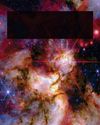
Star-forming region captured in amazing clarity
Piercing the dust clouds allows astronomers to see little-known, youthful massive stars
1 min
June 2026
BBC Sky at Night Magazine
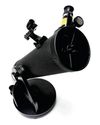
RVO Horizon 102 tabletop Dobsonian
An affordable, easy, carry-anywhere telescope that makes learning the sky a pleasure
4 mins
June 2026
Listen
Translate
Change font size