कोशिश गोल्ड - मुक्त
Five of the best BBQs for the summer
BBC Science Focus
|August 2023
There are hundreds of BBQs on the market, all boasting their own impressive features. But which is the best? The BBC Science Focus team picks their faves...
-

Kamado Joe Classic Joe Grill Series III
international.kamadojoe.com, £2,149
This is the Rolls Royce of barbecues, and it's all thanks to its ceramic shell. Once the ceramic gets hot it needs little energy to stay that way, so once you've lit your charcoal and heated the barbecue to the desired temperature (indicated by the thermometer on the front) it'll stay there.
If you want to slow or speed up the cook, you simply change the airflow by opening or shutting the vents at the top and bottom. This lends the entire practice of cooking outside a degree of predictability, hence why professional chefs love these cookers.
The Kamado excels at slow cooking things like beef brisket or a lamb shoulder, where a long, gentle cook is vital for good results. It'll also go low and slow enough to allow you to reverse sear a steak, but it's equally good if you just want to throw a rib-eye on the coals. Plus, the even heat output means cooking veg or side dishes on pans or baskets is easy. It's our ultimate choice for a barbecue, but has an eye-watering price to match.
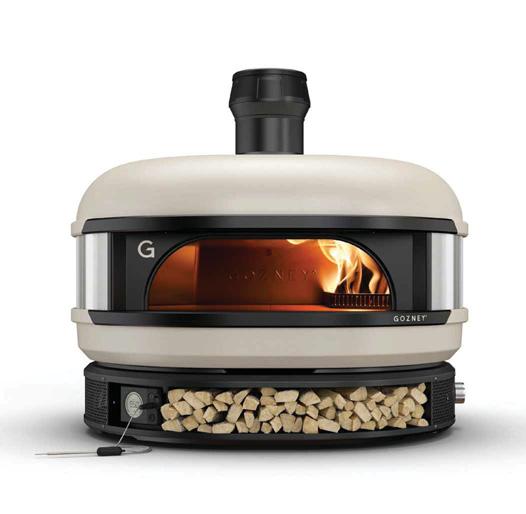
Gozney Dome
gozney.com, £1,799
This is one of the most desirable outdoor ovens going and it delivers on the hype. The model we tested can use either wood or gas as fuel, and comes with a vital internal thermometer so you can get to grips with how it heats up.


यह कहानी BBC Science Focus के August 2023 संस्करण से ली गई है।
हजारों चुनिंदा प्रीमियम कहानियों और 10,000 से अधिक पत्रिकाओं और समाचार पत्रों तक पहुंचने के लिए मैगज़्टर गोल्ड की सदस्यता लें।
क्या आप पहले से ही ग्राहक हैं? साइन इन करें
BBC Science Focus से और कहानियाँ

BBC Science Focus
HEALTH: Eating oats could lower your cholesterol in just two days
The health benefits of a two-day porridge diet lasted for weeks afterwards

1 mins
April 2026

BBC Science Focus
Most people are too sure they can identify fake human faces
Even 'super recognisers' struggle with the challenge. Can you do better?
1 min
April 2026

BBC Science Focus
WHAT'S THE WORST THING YOU CAN DO FOR THE PLANET ONLINE?
Human beings can barely move a muscle without some kind of deleterious effect on the environment around us.
2 mins
April 2026
BBC Science Focus
A bug in the system
The complex arrangement of equipment you see here is part of a particle accelerator.
1 min
April 2026

BBC Science Focus
Snug as a bug in a rug
At first glance, you might feel envious of this little leafhopper, swaddled beneath the folds of what appears to be a luxurious fur blanket.
1 min
April 2026

BBC Science Focus
WHY DO WE ROOT FOR THE VILLAIN IN MOVIES?
Whether it's Darth Vader or Cruella de Vil, we all have a favourite movie villain.
1 mins
April 2026

BBC Science Focus
A TURN TO DISPERSE
Why a fart walk after dinner does more than release your gas
3 mins
April 2026

BBC Science Focus
Hatching a nebula
Welcome to the Egg Nebula, an enigmatic structure formed by ejected stardust in the Cygnus constellation around 1,000 light-years from Earth.
1 min
April 2026

BBC Science Focus
7 TIMES AI GOT IT SPECTACULARLY WRONG
For the past four years, AI has been reshaping how we work and live. But its failures are proving just as transformative as its triumphs
8 mins
April 2026

BBC Science Focus
CHARLES ADCOCK, VIA EMAIL: COULD DARK MATTER BE ALL AROUND PLANET EARTH BUT UNDETECTABLE?
Astronomers have gathered overwhelming evidence that 80 per cent of all matter in the Universe is invisible.
1 min
April 2026
Translate
Change font size