कोशिश गोल्ड - मुक्त
'Doomsday tsunami' is ready to strike the US
BBC Science Focus
|July 2025
A 100ft mega tsunami could hit the US at any moment - and that's only the beginning
-
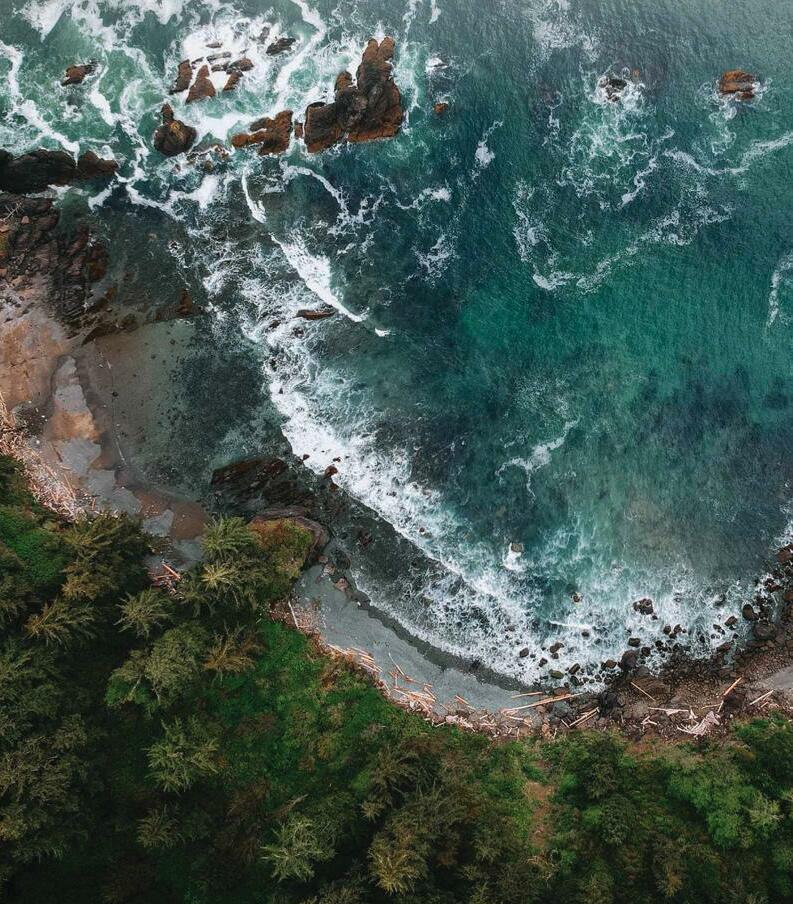
The Cascadia Subduction Zone, a massive fault line stretching from northern California to British Columbia, has been eerily quiet for 300 years. When it finally ruptures, it's expected to trigger a colossal earthquake that could rattle the Pacific Northwest for minutes.
Even worse, tsunami waves up to 30m (100ft) high will likely crash to the shore, unleashing destruction along the coast.
But according to a new study published in the Proceedings of the National Academy of Sciences, that will only mark the beginning of Cascadia's cataclysm.
If a wave the same size as Indonesia's 2004 Boxing Day mega tsunami wasn't bad enough, the new analysis reveals that land along the coast could drop by more than 2.5m (8ft) in a matter of minutes.
"We talk about climate-driven sea level rise, which is occurring at three to four millimetres (0.11-0.15in) a year, and that does eventually add up," Dr Tina Dura, lead author of the study, told BBC Science Focus. “But here we'll have two metres (6.5ft) of sea level rise in minutes. Why aren’t we talking about that more?”
WHEN CASCADIA RUPTURES
The Cascadia Subduction Zone marks the boundary where the oceanic Juan de Fuca Plate is slipping beneath the North American Plate. But rather than moving smoothly, these plates tend to get stuck — and as they lock together, the strain grows over centuries.
When it finally releases, the result is a powerful earthquake.
Cascadia is capable of producing quakes of magnitude 9.0 or more, with major events thought to strike every 450 to 500 years. The last one occurred on 26 January 1700, and based on geological records and contemporary reports, its magnitude was likely between 8.7 and 9.2.
According to the US National Seismic Hazard Model, there’s now a 15 per cent chance of a magnitude 8.0 or greater earthquake along the zone’s margin in the next 50 years.

यह कहानी BBC Science Focus के July 2025 संस्करण से ली गई है।
हजारों चुनिंदा प्रीमियम कहानियों और 10,000 से अधिक पत्रिकाओं और समाचार पत्रों तक पहुंचने के लिए मैगज़्टर गोल्ड की सदस्यता लें।
क्या आप पहले से ही ग्राहक हैं? साइन इन करें
BBC Science Focus से और कहानियाँ

BBC Science Focus
HEALTH: Eating oats could lower your cholesterol in just two days
The health benefits of a two-day porridge diet lasted for weeks afterwards

1 mins
April 2026

BBC Science Focus
Most people are too sure they can identify fake human faces
Even 'super recognisers' struggle with the challenge. Can you do better?
1 min
April 2026

BBC Science Focus
WHAT'S THE WORST THING YOU CAN DO FOR THE PLANET ONLINE?
Human beings can barely move a muscle without some kind of deleterious effect on the environment around us.
2 mins
April 2026
BBC Science Focus
A bug in the system
The complex arrangement of equipment you see here is part of a particle accelerator.
1 min
April 2026

BBC Science Focus
Snug as a bug in a rug
At first glance, you might feel envious of this little leafhopper, swaddled beneath the folds of what appears to be a luxurious fur blanket.
1 min
April 2026

BBC Science Focus
WHY DO WE ROOT FOR THE VILLAIN IN MOVIES?
Whether it's Darth Vader or Cruella de Vil, we all have a favourite movie villain.
1 mins
April 2026

BBC Science Focus
A TURN TO DISPERSE
Why a fart walk after dinner does more than release your gas
3 mins
April 2026
BBC Science Focus
Hatching a nebula
Welcome to the Egg Nebula, an enigmatic structure formed by ejected stardust in the Cygnus constellation around 1,000 light-years from Earth.
1 min
April 2026

BBC Science Focus
7 TIMES AI GOT IT SPECTACULARLY WRONG
For the past four years, AI has been reshaping how we work and live. But its failures are proving just as transformative as its triumphs
8 mins
April 2026
BBC Science Focus
CHARLES ADCOCK, VIA EMAIL: COULD DARK MATTER BE ALL AROUND PLANET EARTH BUT UNDETECTABLE?
Astronomers have gathered overwhelming evidence that 80 per cent of all matter in the Universe is invisible.
1 min
April 2026
Listen
Translate
Change font size