कोशिश गोल्ड - मुक्त
TOWARDS A LARGER CRUISE MISSILE ARSENAL
Geopolitics
|February 2025
India's cruise missile capabilities and precision-guided missiles have largely evolved as a credible conventional-level deterrence since the turn of the new millennium. But, much more needs to be done
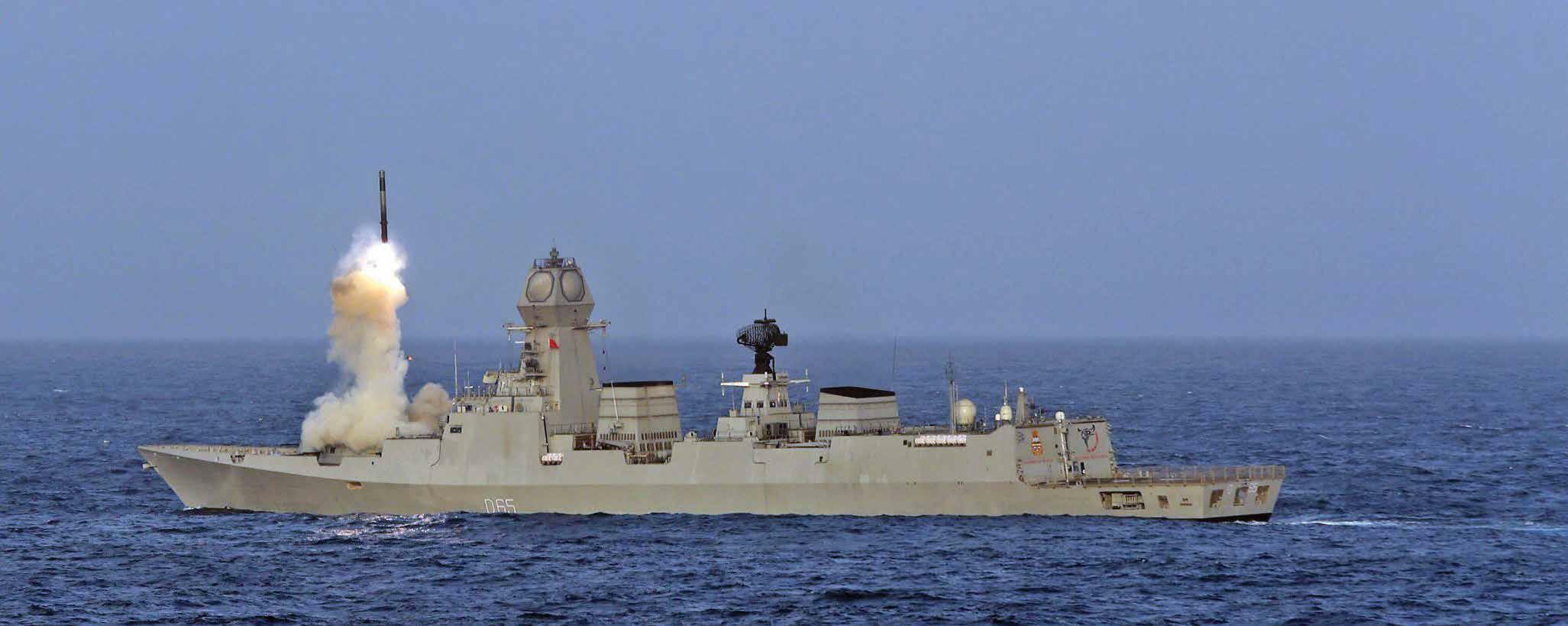
The last century was a transformative and transitional period in the history of contemporary warfare as new generation kinetic strike weapons took to the skies after the Second World War.
Starting right from the first Gulf War in 1990 and ending with the Afghanistan, Iraq, Libya and Syria campaigns in the first two decades of the 21st century, and now as visible in the ongoing Russia-Ukraine War, the world has witnessed the usage of game-changing aerial weapons which tipped the balance in the aggressor's favour in the opening hours of the war. Such weapons play a very critical role not just in maintaining conventional deterrence, but also in executing tactical-level nuclear strikes over the enemy's ground-based infantry battalions and armoured mobile formations in case of an escalation.
The emergence of turbofan engine-powered terrain-hugging cruise missiles which can fly at lower altitudes (below enemy radar coverage) and treetop heights, are some of the most formidable and destructive weapons in the conventional battlefield. A heavy barrage of air-launched, ship-launched, submarine launched and ground-launched cruise missiles during wars can take out the enemy's airfields, dams, bridges, railheads, army garrisons, anti-aircraft positions, heavy-artillery bases, underground nuclear weapons storage facilities and other important strategic installations in the opening hours of the war thus clearing the way for an aerial kinetic bombardment campaign and simultaneous ground incursion inside hostile territory.
Unlike heavyweight ballistic missiles which have larger CEP (Circular Error Probability) and can be used for devastating nuclear strikes on enemy cities, cruise missiles are lightweight, tremendously manoeuvrable and highly accurate.


यह कहानी Geopolitics के February 2025 संस्करण से ली गई है।
हजारों चुनिंदा प्रीमियम कहानियों और 10,000 से अधिक पत्रिकाओं और समाचार पत्रों तक पहुंचने के लिए मैगज़्टर गोल्ड की सदस्यता लें।
क्या आप पहले से ही ग्राहक हैं? साइन इन करें
Geopolitics से और कहानियाँ

Geopolitics
Navy Advances Amphibious Carrier Evaluation
The Indian Navy has begun technical evaluations for its proposed Landing Helicopter Dock warship programme, widely viewed as a step toward developing a compact, drone-enabled aircraft-carrier capability.

1 min
May 2026

Geopolitics
Indigenous Engine Materials Near Completion
MIDHANI has reportedly completed nearly half of the specialised alloy development work required for India's proposed 120kN engine intended for the Advanced Medium Combat Aircraft programme, with around 80 per cent of the materials already certified.
1 mins
May 2026

Geopolitics
Sheshnag Swarms Transform Battlefield Dynamics
Bengaluru-based NewSpace Ben Hechnologies is preparing to Research Sheshnag-20 swarming loitering munition system for trials with the Indian Army following successful developmental testing.
1 min
May 2026
Geopolitics
MPATGM Nears Production Clearance Milestone
India's indigenous Man-Portable Anti-Tank Guided Missile programme has moved closer to final production approval following successful moving-target trials.
1 min
May 2026
Geopolitics
India Accelerates Future Combat Drones
India is accelerating the development of multiple manned-unmanned teaming programmes under the Combat Air Teaming System initiative as the country prepares for the next generation of network-centric aerial warfare.
1 min
May 2026
Geopolitics
THE IRON RENAISSANCE
India is committing ₹57,000 crore to overhaul its ageing Soviet-era tank fleet into a digital warfighting force. The transformation comes as China's Type 15 tanks loom on Himalayan ridgelines and Ukraine's battlefield lessons echo worldwide. The country's engineers are reimagining the very concept of the tank for a new era of combat. A Special Report
8 mins
May 2026

Geopolitics
THE ALGORITHMIC BATTLEFIELD IS THE FUTURE
As India is confronted with a critical strategic question of whether to prioritise indigenous development or to rely on foreign Artificial Intelligence technologies to guarantee sovereignty and security, JOSEPH P CHACKO analyses indigenous capabilities and the dependence versus self-reliance debate, as well as Al implementations in surveillance, threat detection, and decision support systems within the Indian defence framework.
14 mins
May 2026
Geopolitics
Rafale Partnership Structure Faces Overhaul
India is reportedly examining a major restructuring of the Dassault Reliance Aerospace Limited (DRAL) venture, with discussions underway regarding the induction of a new private-sector partner to strengthen Rafale-related manufacturing and maintenance operations in the country.
1 mins
May 2026

Geopolitics
INDIA'S DEFENCE VISION-2047: CLARITY BEFORE CAPABILITY
While the outlined roadmap for the Indian defence forces to emerge as the best in the world by the time the country celebrates 100 years of independence is timely, argues that one should not rush into creating theatre commands before becoming self-reliant in defence manufacturing.
6 mins
May 2026

Geopolitics
Indigenous Blast Capabilities Expand Rapidly
Sagar Defence Engineering has secured an explosives manufacturing licence, marking a major milestone in the company's expansion into indigenous defence production and reinforcing India's broader push towards strategic self-reliance in military technologies.
1 min
May 2026
Listen
Translate
Change font size