
मैगज़्टर गोल्ड के साथ असीमित हो जाओ
10,000 से अधिक पत्रिकाओं, समाचार पत्रों और प्रीमियम कहानियों तक असीमित पहुंच प्राप्त करें सिर्फ
कोशिश गोल्ड - मुक्त
Zan, Zindagi, Azadi
Outlook
|July 11, 2025
As missiles fall silent—for now—it's time to explore whether the heart of the Iran-Israel conflict lies in a deeper battle over culture and values
FOR now, Israel and Iran have ceased military attacks against each other. Although the situation appears unstable, there's hope that a renewed “war of cities” will not afflict civilians. This is an opportunity to reflect on the reasons behind a conflict anticipated for years. Does the dispute stem from Iran’s nuclear programme? Would the conflict end if Iran did not possess the programme? Or should the roots of their disagreements be sought in other factors?
Evidently, the conflict between Israel and the countries of West Asia and North Africa is rooted more deeply in the identity foundations of these societies than in political and military issues. Since the end of World War II, struggles in the region have been over “territorial identity” rather than “lands”. As a symbol of Western civilisation in this part of the world, Israel has tried to carve out a place for itself. It has sometimes succeeded—through war or dialogue—in aligning certain governments with itself and rendering others indifferent, yet it has failed to find a stronghold among the peoples of various societies.
Iran’s society’s animosity towards this Western symbol dates back to the Pahlavi era. Despite the government's diplomatic relations with Israel, memoirs, for instance of the aristocrat Asadollah Alam, published in English as The Shah and I: The Confidential Diary of Iran’s Royal Court reveal how cautious the government was of public reactions to relations with Israel.
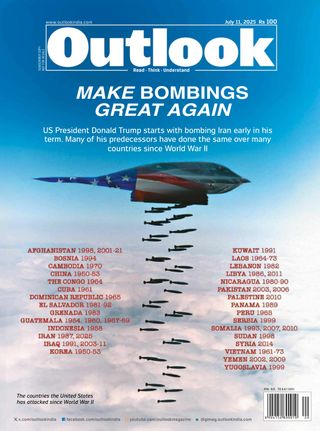

यह कहानी Outlook के July 11, 2025 संस्करण से ली गई है।
हजारों चुनिंदा प्रीमियम कहानियों और 10,000 से अधिक पत्रिकाओं और समाचार पत्रों तक पहुंचने के लिए मैगज़्टर गोल्ड की सदस्यता लें।
क्या आप पहले से ही ग्राहक हैं? साइन इन करें
Outlook से और कहानियाँ

Outlook
'Why GDP Growth Doesn't Always Translate Into Votes'
The recent election results have once again shown that economic growth alone does not guarantee electoral victory.

3 mins
June 06, 2026

Outlook
Lights, Camera, Othering
The establishment of Israel has been accompanied by a national cinema devoted to negating and erasing the Palestinian Other
5 mins
June 06, 2026

Outlook
Goodbye to All That
Booker-winning British author Julian Barnes' Departure(s) is a unique hybrid work: playful, philosophical, whimsical
4 mins
June 06, 2026

Outlook
Collapse of Trust
As the NEET-UG 2026 paper leak forced the cancellation of India’s biggest medical entrance exam, more than 22 lakh aspirants find themselves trapped in uncertainty
11 mins
June 06, 2026

Outlook
NO LONGER A TWELFTH MAN
Bihar cricket, which has languished in the shadows for long, is all set to improve its strike rate, thanks to Vaibhav Sooryavanshi, the new Bihari kid on the block
5 mins
June 06, 2026

Outlook
BLAZE OF GLORY
The challenges of being a celebrity cricketer at a young age can be tough to handle
5 mins
June 06, 2026

Outlook
THE SWASHBUCKLERS
A new generation of fearless stars is emerging and finding its feet at the very top of an extremely competitive cricketing environment
5 mins
June 06, 2026

Outlook
THE TEEN TORNAD
At the age of 15, Vaibhav Sooryavanshi is already a cricketing legend
10 mins
June 06, 2026

Outlook
A Journey to Remember
The prerecorded message crackled over the din in the compartment: ‘Welcome to the Shatabdi Express.
4 mins
June 06, 2026

Outlook
Crossing Borders
Ruth Martin is the translator of German-Iranian author Shida Bazyar’s novel The Nights are Quiet in Tehran (originally written in German), which has been shortlisted for the 2026 International Booker Prize.
4 mins
June 06, 2026
Listen
Translate
Change font size