कोशिश गोल्ड - मुक्त
Long-range Response
Outlook
|May 21, 2025
The transformation of India's strategic restraint to calibrated retaliation against Pakistan
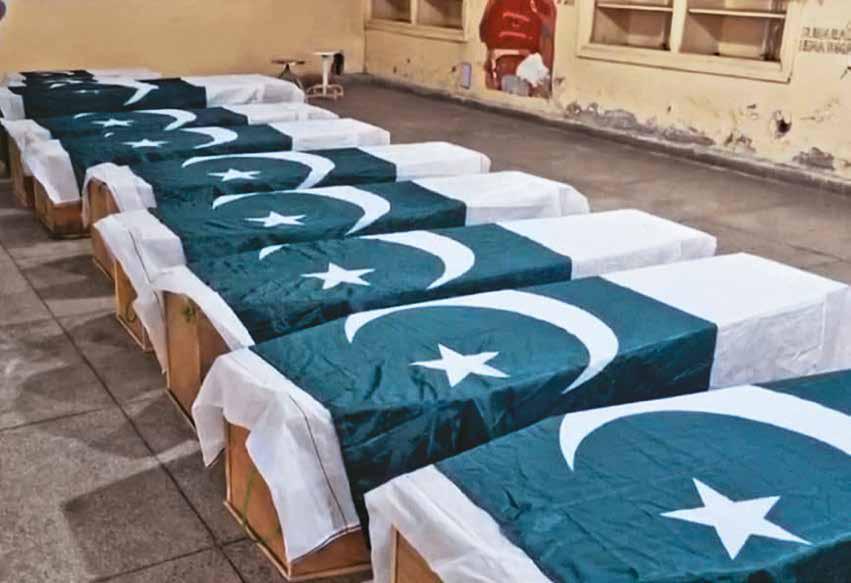
THE missile-based response to the Pahalgam terror attack, known as Operation Sindoor, was not a mere retaliation—it is emblematic of a new doctrine shaping India’s relationship with Pakistan. Targeting nine terror facilities in Pakistan and Pakistan-occupied Kashmir (PoK), this operation is a continuation of an evolving strategic shift that began with the 2016 Uri surgical strikes and matured with the Balakot airstrikes in 2019.
What makes this moment significant is not just the military precision or the symbolism, but the clarity with which India has chosen to abandon the shackles of its earlier doctrine of strategic restraint. This transformation has been catalysed by Pakistan’s unwavering use of cross-border terrorism as a tool of statecraft, protected under the illusion of a nuclear shield.
The End of Strategic Restraint
For decades, Pakistan has operated under a calculated assumption: that its nuclear capabilities would deter India from responding to terror strikes in any meaningful military manner. This playbook allowed Pakistan to wage an asymmetric war against India through non-state actors.
The evolving Indian posture is altering that logic. India, sensitive to the domestic call for justice and accountability after each major terror strike, has moved towards a more proactive and punitive strategy. From surgical strikes to aerial bombardments, and now precision missile attacks, the threshold of tolerance has narrowed. While the red line for retaliation may remain undefined publicly, India has made it clear that provocation—especially attacks targeting civilians and tourists—will trigger a response.


यह कहानी Outlook के May 21, 2025 संस्करण से ली गई है।
हजारों चुनिंदा प्रीमियम कहानियों और 10,000 से अधिक पत्रिकाओं और समाचार पत्रों तक पहुंचने के लिए मैगज़्टर गोल्ड की सदस्यता लें।
क्या आप पहले से ही ग्राहक हैं? साइन इन करें
Outlook से और कहानियाँ

Outlook
The Big Blind Spot
Caste boundaries still shape social relations in Tamil Nadu-a state long rooted in self-respect politics

8 mins
December 11, 2025

Outlook
Jat Yamla Pagla Deewana
Dharmendra's tenderness revealed itself without any threats to his masculinity. He adapted himself throughout his 65-year-long career as both a product and creature of the times he lived through
5 mins
December 11, 2025

Outlook
Fairytale of a Fallow Land
Hope Bihar can once again be that impossibly noisy village in Phanishwar Nath Renu's Parti Parikatha-divided, yes, but still capable of insisting that rights are not favours and development is more than a slogan shouted from a stage
14 mins
December 11, 2025

Outlook
The Lesser Daughters of the Goddess
The Dravidian movement waged an ideological war against the devadasi system. As former devadasis lead a new wave of resistance, the practice is quietly sustained by caste, poverty, superstition and inherited ritual
2 mins
December 11, 2025

Outlook
The Meaning of Mariadhai
After a hundred years, what has happened to the idea of self-respect in contemporary Tamil society?
5 mins
December 11, 2025

Outlook
When the State is the Killer
The war on drugs continues to be a war on the poor
5 mins
December 11, 2025

Outlook
We Are Intellectuals
A senior law officer argued in the Supreme Court that \"intellectuals\" could be more dangerous than \"ground-level terrorists\"
5 mins
December 11, 2025

Outlook
An Equal Stage
The Dravidian Movement used novels, plays, films and even politics to spread its ideology
12 mins
December 11, 2025

Outlook
The Dignity in Self-Respect
How Periyar and the Self-Respect Movement took shape in Tamil Nadu and why the state has done better than the rest of the country on many social, civil and public parameters
5 mins
December 11, 2025

Outlook
When Sukumaar Met Elakkiya
Self-respect marriage remains a force of socio-political change even a century later
7 mins
December 11, 2025
Listen
Translate
Change font size