कोशिश गोल्ड - मुक्त
Philosophy & Hurling: Thinking & Playing
Philosophy Now
|February/March 2024
Stiofán Ó Murchadha knowing how we know.
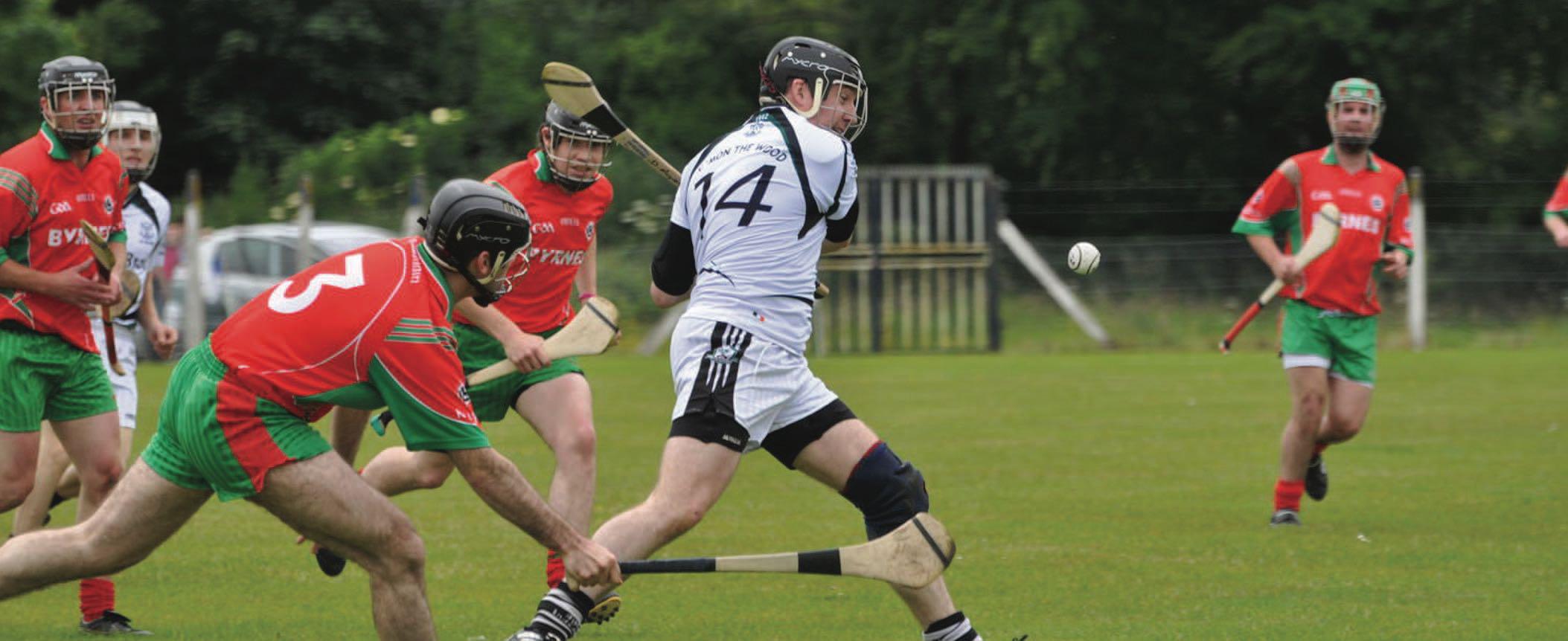
We are often unconscious of what it is we are actually doing in our actions, including while playing sports. But this is a good thing. If people were explicitly aware of all they do, two major things would follow. Firstly, they would be awed by how amazing they are as organisms; secondly, nothing would get done. Therefore, it is important that we come to intuit certain forms of practical knowledge, in order for acts like hammering a nail into a wall or playing sport to be possible.
Michael Polanyi’s book Personal Knowledge: Toward a PostCritical Philosophy (1958) will support us in philosophically investigating the ancient Irish sport of hurling, which is something like a cross between hockey, lacrosse, rugby – and some might add sword fighting. The first part of this article will explain Polanyi’s epistemology of knowledge – in other words, how we know what we know. After that, we will apply this theory to the game of hurling.
Tacit & Other Knowledge
Polanyi first offers a distinction between focal and subsidiary awareness. Focal awareness is what you’re consciously aware of or explicitly aware of, and subsidiary awareness is what you are less aware of or implicitly aware of. All knowledge has from-to relations because meaning is brought from the subsidiary to the focal which is part of the reason why Polanyi notes that all knowledge must begin with an act of commitment, which is belief. He writes, ‘‘We must now recognize belief as the source of all knowledge’’ (

यह कहानी Philosophy Now के February/March 2024 संस्करण से ली गई है।
हजारों चुनिंदा प्रीमियम कहानियों और 10,000 से अधिक पत्रिकाओं और समाचार पत्रों तक पहुंचने के लिए मैगज़्टर गोल्ड की सदस्यता लें।
क्या आप पहले से ही ग्राहक हैं? साइन इन करें
Philosophy Now से और कहानियाँ

Philosophy Now
Bilbo Theorizes About Wellbeing
Eric Comerford overhears Bilbo and Gandalf discussing happiness.

9 mins
December 2025 / January 2026

Philosophy Now
What Women?
Marcia Yudkin remembers almost choking at Cornell
11 mins
December 2025 / January 2026

Philosophy Now
Islamic Philosophers On Tyranny
Amir Ali Maleki looks at tyranny from an Islamic perspective.
4 mins
December 2025 / January 2026

Philosophy Now
Peter Singer
The controversial Australian philosopher defends the right to choose to die on utilitarian grounds
5 mins
December 2025 / January 2026

Philosophy Now
Another Conversation with Martin Heidegger?
Raymond Tallis talks about communication problems.
7 mins
December 2025 / January 2026

Philosophy Now
Letters
When inspiration strikes, don't bottle it up. Email me at rick.lewis@philosophynow.org Keep them short and keep them coming!
17 mins
December 2025 / January 2026
Philosophy Now
The Philosophy of William Blake
Mark Vernon looks at the imaginative thinking of an imaginative artist.
9 mins
December 2025 / January 2026

Philosophy Now
Philosophical Haiku
Peering through life’s lens God in nature is deduced: The joy of being.
1 mins
December 2025 / January 2026

Philosophy Now
Philosophy Shorts
More songs about Buildings and Food' was the title of a 1978 album by the rock band Talking Heads. It was about all the things rock stars normally don't sing about. Pop songs are usually about variations on the theme of love; tracks like Rose Royce's 1976 hit 'Car Wash' are the exception. Philosophers, likewise, tend to have a narrow focus on epistemology, metaphysics and trifles like the meaning of life. But occasionally great minds stray from their turf and write about other matters, for example buildings (Martin Heidegger), food (Hobbes), tomato juice (Robert Nozick), and the weather (Lucretius and Aristotle). This series of Shorts is about these unfamiliar themes; about the things philosophers also write about.
2 mins
December 2025 / January 2026

Philosophy Now
Hedonic Treadmills in the Vale of Tears
Michael Gracey looks at how philosophers have pursued happiness.
8 mins
December 2025 / January 2026
Listen
Translate
Change font size