
मैगज़्टर गोल्ड के साथ असीमित हो जाओ
10,000 से अधिक पत्रिकाओं, समाचार पत्रों और प्रीमियम कहानियों तक असीमित पहुंच प्राप्त करें सिर्फ
कोशिश गोल्ड - मुक्त
A practical guide to sorghum production
Farmer's Weekly
|May 16, 2025
Sorghum is an ideal crop for new farmers, as it requires minimal nutrient inputs and is resilient to drought. It also thrives in soils where maize, soya bean, and sunflower can’t. Experiments are ongoing to breed varieties with even better drought and heat tolerance
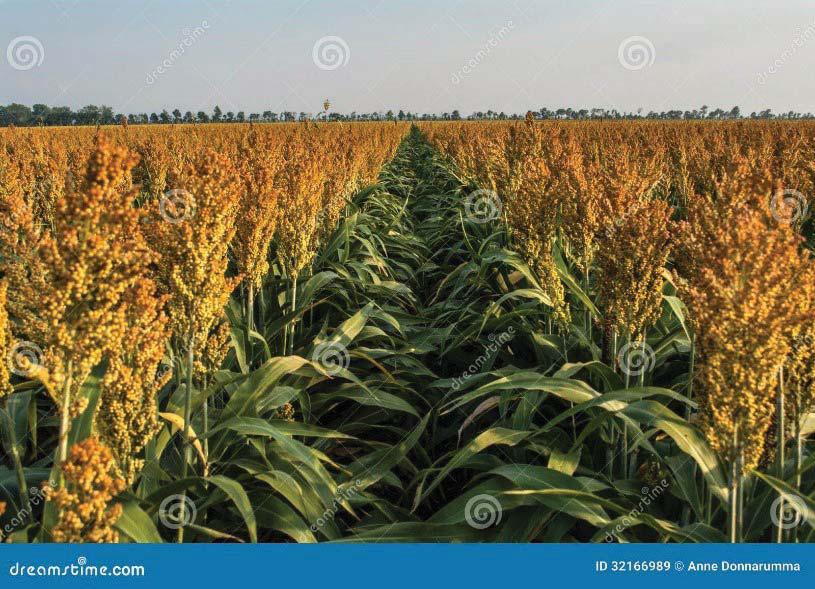
Sorghum is one of Africa’s oldest grains and a staple crop for around 500 million people in 30 countries. It is a highly versatile crop with a wide range of uses, from human food and beverages to animal feed and industrial manufacturing.
In South Africa, sorghum is primarily cultivated for human consumption, with the main production areas being Mpumalanga, North West, the Free State, and Limpopo.
Deeply embedded in the country’s cultural heritage, sorghum is used to make traditional foods like ting ya mabele (fermented porridge) and traditional beer, and despite the popularity of maize, it has remained a staple food for many rural communities.
Sorghum can also be found in cereals, soups, and baked goods. A nutrient-rich grain, high in vitamins and essential minerals like iron, magnesium, and potassium, it is also gluten-free.
Beyond food, the entire plant has multiple purposes: forage, hay, and silage, while the stems of certain varieties are used for basket-making, fencing, and firewood. Sorghum also contributes to the production of biofuel, biodegradable packaging materials, vegetable oil, and wax.
WHY CULTIVATE SORGHUM?
A hardy crop, sorghum is suited to drought-prone areas where other grains may struggle. Dr Nemera Shargie from the Agricultural Research Council's Grain Crops Institute (ARC-GCI) explains that with water resources under pressure and more productivity required from less arable land due to population increase, sorghum could meet the rising needs of traditional agriculture and bio-industrial processes.
He suggests considering sorghum as an alternative crop: “Sorghum requires low nutrient inputs and far less water than comparable crops such as maize, and its unique biology makes it possible to produce good yields, even under difficult conditions.”

यह कहानी Farmer's Weekly के May 16, 2025 संस्करण से ली गई है।
हजारों चुनिंदा प्रीमियम कहानियों और 10,000 से अधिक पत्रिकाओं और समाचार पत्रों तक पहुंचने के लिए मैगज़्टर गोल्ड की सदस्यता लें।
क्या आप पहले से ही ग्राहक हैं? साइन इन करें
Farmer's Weekly से और कहानियाँ
Farmer's Weekly
Cash flow budgets: keeping farmers in control of liquidity, risk, and their survival
Profit doesn't guarantee a farm's survival - cash does. Cobus du Plessis explains why cash flow budgets are one of the most important yet underused financial tools on South African farms.

5 mins
February 27 - March 06, 2026

Farmer's Weekly
The toast of the Navy
The incredible story of the World War II-era Great Dane dog Nuisance being enlisted in the Royal Navy is well documented. Graham Jooste shared some entertaining anecdotes involving the canine shipmate.
6 mins
February 27 - March 06, 2026
Farmer's Weekly
Healthier soils deter destructive locusts
Locust swarms remain a serious global threat, capable of devastating crops, livelihoods and local economies across vast regions.
1 min
February 27 - March 06, 2026
Farmer's Weekly
Wheat crisis dominates Grain SA regional meetings
As the ongoing wheat crisis continues to erode producers' margins, emotions ran high at Grain SA's regional meeting in Moorreesburg in the Western Cape.
2 mins
February 27 - March 06, 2026

Farmer's Weekly
A FARMER'S EXPERIENCE
Street Wallet has been a game-changer for Mario Athanasopoulos, hydroponic production consultant and owner of Green City Farms.
1 mins
February 27 - March 06, 2026

Farmer's Weekly
Kesieberg Merino Stud Production Sale
The Kesieberg Merino Stud Production Sale was held on the farm Leeuwfontein on 4 February on behalf of Willie and Herman Henning.
1 min
February 27 - March 06, 2026
Farmer's Weekly
Not cheaper, just different: what you should know about farming in Mozambique
Although Mozambique is often viewed as a cheaper, easier farming location than South Africa, cost comparisons tell a more complex story. But while cross-border production presents real challenges, it also offers opportunities for complementary trade, diversification and regional food security, particularly when it comes to subtropical crops such as bananas.
10 mins
February 27 - March 06, 2026
Farmer's Weekly
The all-rounder anchoring South Africa's beef value chain
Louis Steyl, CEO of the Bonsmara Cattle Breeders' Society of South Africa, spoke to Octavia Avesca Spandiel about how the versatile Bonsmara breed anchors the country's beef value chain, delivering balanced performance, reproductive and feed efficiency, and carcass traits across extensive and intensive systems.
6 mins
February 27 - March 06, 2026

Farmer's Weekly
THE HITCHING POST
I'm a 60-year-old white woman who loves camping, animals, the outdoors, and watching sport.
2 mins
February 27 - March 06, 2026
Farmer's Weekly
Foot-and-mouth disease in pigs
Recently, the radio news mentioned an outbreak of foot-and-mouth disease (FMD) in pigs in South Africa.
2 mins
February 27 - March 06, 2026
Listen
Translate
Change font size