
استمتع بـUnlimited مع Magzter GOLD
احصل على وصول غير محدود إلى أكثر من 9000 مجلة وصحيفة وقصة مميزة مقابل
يحاول ذهب - حر
A practical guide to sorghum production
May 16, 2025
|Farmer's Weekly
Sorghum is an ideal crop for new farmers, as it requires minimal nutrient inputs and is resilient to drought. It also thrives in soils where maize, soya bean, and sunflower can’t. Experiments are ongoing to breed varieties with even better drought and heat tolerance
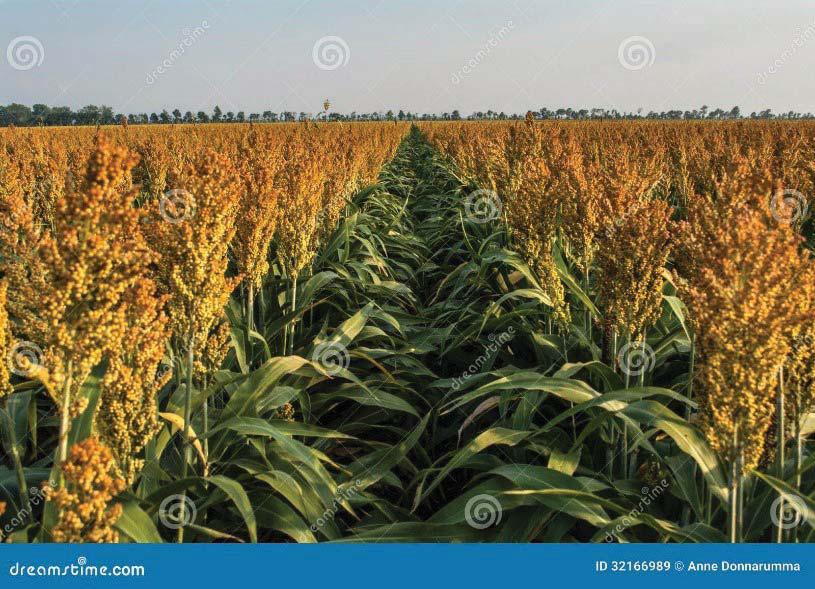
Sorghum is one of Africa’s oldest grains and a staple crop for around 500 million people in 30 countries. It is a highly versatile crop with a wide range of uses, from human food and beverages to animal feed and industrial manufacturing.
In South Africa, sorghum is primarily cultivated for human consumption, with the main production areas being Mpumalanga, North West, the Free State, and Limpopo.
Deeply embedded in the country’s cultural heritage, sorghum is used to make traditional foods like ting ya mabele (fermented porridge) and traditional beer, and despite the popularity of maize, it has remained a staple food for many rural communities.
Sorghum can also be found in cereals, soups, and baked goods. A nutrient-rich grain, high in vitamins and essential minerals like iron, magnesium, and potassium, it is also gluten-free.
Beyond food, the entire plant has multiple purposes: forage, hay, and silage, while the stems of certain varieties are used for basket-making, fencing, and firewood. Sorghum also contributes to the production of biofuel, biodegradable packaging materials, vegetable oil, and wax.
WHY CULTIVATE SORGHUM?
A hardy crop, sorghum is suited to drought-prone areas where other grains may struggle. Dr Nemera Shargie from the Agricultural Research Council's Grain Crops Institute (ARC-GCI) explains that with water resources under pressure and more productivity required from less arable land due to population increase, sorghum could meet the rising needs of traditional agriculture and bio-industrial processes.
He suggests considering sorghum as an alternative crop: “Sorghum requires low nutrient inputs and far less water than comparable crops such as maize, and its unique biology makes it possible to produce good yields, even under difficult conditions.”

هذه القصة من طبعة May 16, 2025 من Farmer's Weekly.
اشترك في Magzter GOLD للوصول إلى آلاف القصص المتميزة المنسقة، وأكثر من 9000 مجلة وصحيفة.
هل أنت مشترك بالفعل؟ تسجيل الدخول
المزيد من القصص من Farmer's Weekly

Farmer's Weekly
The foot-and-mouth disease threat is growing
Foot-and-mouth disease poses a growing threat to the livestock industry, especially communal farmers, with devastating economic consequences unless awareness and compliance improve, writes Shane Brody.

3 mins
January 30 - February 06, 2026

Farmer's Weekly
Shipping conditions to ease in 2026, but risk remains high
Early signs suggest a more favourable export season for South African producers, as easing global shipping congestion and improved performance by Transnet point to higher throughput at local ports. Lindi Botha reports.
2 mins
January 30 - February 06, 2026

Farmer's Weekly
A path of accelerating land reform in South Africa
Delivering the ANC's January 8th Statement a few weeks ago, President Cyril Ramaphosa noted, amongst other things, that: “Land reform remains one of the most urgent tasks of the National Democratic Revolution. While progress has been made, much more is required to give effect to the constitutional requirement for redress and equitable access to land.”
2 mins
January 30 - February 06, 2026
Farmer's Weekly
Reflections on 2025 and the policy space for 2026
The year 2025 was a year characterised initially by a wave of misinformation, particularly relating to legislation and tariff issues. This year some big moves are expected in the trade space.
3 mins
January 30 - February 06, 2026

Farmer's Weekly
From planning to peak lay: building a profitable egg business
Mpumalanga poultry farmer Lebogang Mashego spoke to Octavia Avesca Spandiel, and shared practical insights on planning, building systems that work, breed choice, feed management, and markets to build a profitable and sustainable egg business.
5 mins
January 30 - February 06, 2026

Farmer's Weekly
Impofu Wind Farm becomes a canvas for community connection through Enel's Blowing Art Initiative
Enel Green Power South Africa has introduced the Blowing Art Initiative at the Impofu Wind Farm in the Eastern Cape, a creative community project that turns renewable energy infrastructure into a living gallery.
2 mins
January 30 - February 06, 2026

Farmer's Weekly
Geely is intent on hanging around
Having fallen off the radar around a decade ago following a short local stint, Chinese manufacturer Geely has announced its proposed return to South Africa towards the end of 2026. The Citizen's Jaco van der Merwe reports.
4 mins
January 30 - February 06, 2026

Farmer's Weekly
Great reads to enjoy during ‘me-time'
Patricia McCracken has plucked an assortment of fascinating titles covering different areas of interest, from coastal exploration and dining in the wild, to African traditions surrounding love and marriage.
3 mins
January 30 - February 06, 2026
Farmer's Weekly
Thokoman Peanut Butter marks 25-year milestone with R500 000 commitment to food security
Thokoman Peanut Butter, one of South Africa's biggest producers of peanut butter, celebrates 25 years of consistent quality and community support, marking the occasion with a significant R500 000 partnership with Hot 102.7's Hot Cares initiative for 2026.
2 mins
January 30 - February 06, 2026
Farmer's Weekly
South Africa's famous wandering hippo
From 1928 to 1931, a hippopotamus trekked 1 600km from what was then northern Natal to the Eastern Cape's Keiskamma River near Peddie, where it was shot dead by a posse of farmers. As Mike Burgess writes, this journey would immortalise the hippo in South African history.
3 mins
January 30 - February 06, 2026
Listen
Translate
Change font size