कोशिश गोल्ड - मुक्त
Understanding Medicinal Drug Delivery Using Dry Powder Inhalers (DPIS)
BioSpectrum Asia
|BioSpectrum Asia Sep 2023
For a long time, dry powder inhalers (DPI) have been used for treating asthma, and other respiratory diseases, by delivering medication directly to the lungs.
-

Dr Gajendra Singh, Assistant Professor, Indian Institute of Technology Mandi, India
Dry powder inhalers (DPI) remain a vital part of our healthcare system due to their extensive use caused by a large number of respiratory patients globally. However, despite their wide use, their inherent inefficiency leads to drug wastage, poor therapy, and high costs to the end-user.
These devices have also been used for the delivery of antibiotics with dry powders also having the ability to be used for nasal inspiration for the treatment of local as well as systemic disorders.
Precise particle size control
When a person inhales orally through a DPI, the air starts moving at high speed within the device. The air lifts the powder sitting inside the DPI or helps to move a capsule that contains the powder. This highspeed airflow eventually helps to aerosolise the drug within the DPI chamber. The chamber, designed to intensify the turbulence of the inhaled air, facilitates the collision of particle clusters with the chamber walls, helping them to “de-agglomerate” into fine particles of the size of a few microns (this is what we want to get to the lungs). Following this complex process, the fine aerosol exits the device and travels to the lungs through the patient’s mouth and airway.
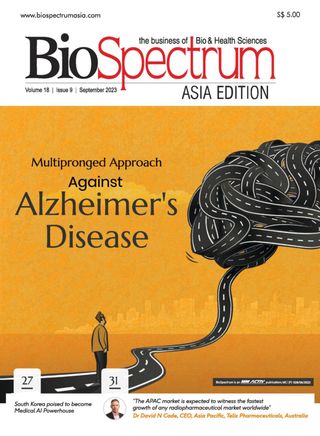

यह कहानी BioSpectrum Asia के BioSpectrum Asia Sep 2023 संस्करण से ली गई है।
हजारों चुनिंदा प्रीमियम कहानियों और 10,000 से अधिक पत्रिकाओं और समाचार पत्रों तक पहुंचने के लिए मैगज़्टर गोल्ड की सदस्यता लें।
क्या आप पहले से ही ग्राहक हैं? साइन इन करें
BioSpectrum Asia से और कहानियाँ

BioSpectrum Asia
"The next 5-years will see mRNA science evolve beyond infectious disease"
A new survey from Moderna Singapore reveals persistent vaccine hesitancy among older adults in Singapore, even as international travel and year-end gatherings increase the urgency of protection. The findings point to clear opportunities to strengthen public health, including empowering healthcare professionals as trusted messengers and promoting co-administration of vaccines.

4 mins
BioSpectrum Asia Dec 2025
BioSpectrum Asia
No Funding No Vax for TB?
The World Health Organization (WHO)'s latest updates on tuberculosis (TB) released on November 12 reveal significant progress in diagnosis, treatment, and political commitment, but also expose deep vulnerabilities—especially in the South-East Asia Region (SEARO)—related to funding gaps and the uncertain future of novel TB vaccines. SEARO remains the global epicentre of the TB epidemic, carrying more than 45 per cent of the world's TB incidence despite representing only a quarter of the global population.
2 mins
BioSpectrum Asia Dec 2025

BioSpectrum Asia
Australia builds tailored heart pump to transform heart failure care
Despite making up half of the 64 million people living with heart failure, patients with this common form have no access to heart pump treatments and are left with only medication or palliative care.
1 min
BioSpectrum Asia Dec 2025

BioSpectrum Asia
Clinical Research Trends 2026: Hybrid DCTs Set for Surge as Innovation Outpaces Regulatory Hurdles
APAC's openness to innovation, combined with its large population and low trial density, creates strong potential for expanding decentralised clinical trials (DCTs), especially for patients with limited trial access. While regulatory diversity and operational challenges will continue to hinder fully decentralised models, the region is expected to adopt more digital technologies in clinical research. As a result, hybrid DCTs will keep gaining traction, and effective management of digitally collected data will remain a central focus for data science teams.
4 mins
BioSpectrum Asia Dec 2025

BioSpectrum Asia
CSL Seqirus to localise advanced influenza vaccine manufacturing in Saudi Arabia
Australia-based CSL Seqirus and Vaccine Industrial Company have signed a Memorandum of Understanding with the Ministry of Health of Saudi Arabia to enhance the biotechnology sector by accessing advanced cellbased seasonal and pandemic influenza vaccines and localising manufacturing in Saudi Arabia.
1 min
BioSpectrum Asia Dec 2025

BioSpectrum Asia
How Sponsors Could Gain Advantage by Embracing Dose Optimisation in Asia by 2026
In 2026, oncology drug development in Asia may move away from the historical maximum tolerated dose (MTD) paradigm toward evidence-based dose optimisation. Sponsors might consider adopting strategies similar to the FDA's Project Optimus, which emphasises selecting doses that balance efficacy and safety rather than relying solely on toxicity thresholds. Doing so could improve patient outcomes and position companies favourably as regulatory expectations evolve.
1 mins
BioSpectrum Asia Dec 2025

BioSpectrum Asia
Fujifilm launches joint research with National Cancer Center in Japan
Fujifilm Corporation has signed a joint research agreement with the National Cancer Center Japan, a Tokyo-based national institution recognised for its leadership in cancer care and research.
1 min
BioSpectrum Asia Dec 2025

BioSpectrum Asia
Monash spinout RAGE Biotech secures $29 M to advance next-generation RNA therapeutics
Australia's Monash University spinout RAGE Biotech has raised $29 million in Series A funding, marking a major step toward translating RNA-based therapeutics for chronic inflammatory disease into the clinic.
1 min
BioSpectrum Asia Dec 2025

BioSpectrum Asia
Submitting clinical data to the FDA and PDMA: An efficient and compliant approach
In both the US and Japan, regulators provide an extensive set of resources detailing the rules and specifications governing submissions for marketing approval of new drugs and biologics. Fortunately, despite some differences, the regulations concerning clinical data have a surprising amount in common. It is possible that with a solid understanding of the requirements and an adherence to best practices, sponsors can develop some of the same material for submission to both countries.
2 mins
BioSpectrum Asia Dec 2025

BioSpectrum Asia
Regenerative medicines and microbiome health are emerging as exciting frontiers, with Australian companies and researchers pushing into new therapeutic approaches
After more than a year at the helm of AusBiotech, CEO Rebekah Cassidy reflects on her early priorities and the organisation’s ambitions as Australia accelerates its position in the global life sciences economy. In an email interaction on the sidelines of AusBiotech 2025, she highlights the country's progress in mRNA, cell and gene therapy, and radiopharmaceuticals, outlines emerging areas of momentum, and discusses how new partnerships and MoUs are strengthening collaboration across the biotech ecosystem. Rebekah also outlines how AusBiotech is preparing Australia for a more competitive and connected global life sciences economy and the strategic priorities shaping AusBiotech’s next chapter. Edited excerpts:
7 mins
BioSpectrum Asia Dec 2025
Translate
Change font size