कोशिश गोल्ड - मुक्त
Норе for the high seas
BBC Wildlife
|September 2023
Global leaders have agreed to a landmark treaty that will safeguard marine life in our shared waters

It was in 2000, during a dive in a deep-sea submersible, that scientists stumbled upon a place unlike anywhere else on Earth. From a distance, it looked like an abandoned metropolis, its tall, smoking towers left billowing long after its inhabitants had fled. On closer inspection, the site, located 800m deep in the middle of the Atlantic Ocean, turned out to be teeming with microbes, and the towers, seen in sharp focus, the likely source of their nutrition.
The Lost City is now recognised as a unique hydrothermal ecosystem, where temperatures rise to 40-70°C and calciumrich, alkaline waters spew from seafloor vents, creating carbonate chimney-like structures over time, the largest of which, called Poseidon, reaches 60m tall. Life thrives here: not just microbes, but sponges, crabs and even corals. Scientists believe that the Lost City, with its unusual conditions, could give clues to the necessary precursors for life on Earth and on other planets, and have earmarked it for UNESCO World Heritage status.
Some of the most extraordinary parts of our planet are out of sight. They are also outside the control of any single nation, in the two-thirds of our ocean known as the high seas. Typically starting 200 nautical miles from shore, the high seas cover roughly 43 per cent of our planet’s surface and, with an average depth of 4,000m, they constitute 95 per cent of Earth’s available living space. From their sunlit shallows to their lightless depths, they are home to a rich diversity of creatures and ecosystems, many of which we are only now beginning to appreciate.'
ABOUT THE AUTHOR
A former marine biologist, Olive Heffernan now works as a lecturer and writer, specialising in ocean science and climate change.

यह कहानी BBC Wildlife के September 2023 संस्करण से ली गई है।
हजारों चुनिंदा प्रीमियम कहानियों और 10,000 से अधिक पत्रिकाओं और समाचार पत्रों तक पहुंचने के लिए मैगज़्टर गोल्ड की सदस्यता लें।
क्या आप पहले से ही ग्राहक हैं? साइन इन करें
BBC Wildlife से और कहानियाँ
BBC Wildlife
SNAP-CHAT
Isaac Szabo talks hellbenders, chub nests and bears on the roof

3 mins
December 2025
BBC Wildlife
Why are the tropics so diverse?
AS YOU MOVE FROM THE POLES towards the equator, species richness increases.
1 mins
December 2025
BBC Wildlife
Magnificent frigatebird
ONE MIGHT BE FORGIVEN FOR thinking that pterodactyls had been de-extincted upon first sighting the silhouette of a magnificent frigatebird.
3 mins
December 2025
BBC Wildlife
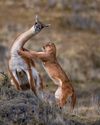
YEAR OF THE CAT
Once a phantom of Chile's windswept peaks, this plucky feline is making a comeback
3 mins
December 2025
BBC Wildlife
KATE BRADBURY
“I feel I am part bird at this point at the year's end: I'm ready for spring”
2 mins
December 2025
BBC Wildlife
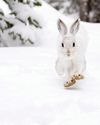
SNOW DAYS
High in the boreal forests of Colorado, the snowshoe hare lives a secretive life. But one photographer has gained a unique window into its world
3 mins
December 2025
BBC Wildlife
A journey into sound
Progressive hearing loss prompted a memorable quest to absorb nature's calls and choruses
7 mins
December 2025
BBC Wildlife
WILD IN THE CITY
A huge parliament of long-eared owls has made an unlikely home in a Serbian town square
2 mins
December 2025
BBC Wildlife
Birds follow the flames
In the Sierra Nevada of California, fire gives some birds a boost
1 mins
December 2025
BBC Wildlife
Remembering Jane
The ethologist, conservationist and humanitarian Dr Jane Goodall died in October. We reflect on the woman who gave the world hope
5 mins
December 2025
Translate
Change font size