
Mit Magzter GOLD unbegrenztes Potenzial nutzen
Erhalten Sie unbegrenzten Zugriff auf über 9.000 Zeitschriften, Zeitungen und Premium-Artikel für nur
Норе for the high seas
BBC Wildlife
|September 2023
Global leaders have agreed to a landmark treaty that will safeguard marine life in our shared waters

It was in 2000, during a dive in a deep-sea submersible, that scientists stumbled upon a place unlike anywhere else on Earth. From a distance, it looked like an abandoned metropolis, its tall, smoking towers left billowing long after its inhabitants had fled. On closer inspection, the site, located 800m deep in the middle of the Atlantic Ocean, turned out to be teeming with microbes, and the towers, seen in sharp focus, the likely source of their nutrition.
The Lost City is now recognised as a unique hydrothermal ecosystem, where temperatures rise to 40-70°C and calciumrich, alkaline waters spew from seafloor vents, creating carbonate chimney-like structures over time, the largest of which, called Poseidon, reaches 60m tall. Life thrives here: not just microbes, but sponges, crabs and even corals. Scientists believe that the Lost City, with its unusual conditions, could give clues to the necessary precursors for life on Earth and on other planets, and have earmarked it for UNESCO World Heritage status.
Some of the most extraordinary parts of our planet are out of sight. They are also outside the control of any single nation, in the two-thirds of our ocean known as the high seas. Typically starting 200 nautical miles from shore, the high seas cover roughly 43 per cent of our planet’s surface and, with an average depth of 4,000m, they constitute 95 per cent of Earth’s available living space. From their sunlit shallows to their lightless depths, they are home to a rich diversity of creatures and ecosystems, many of which we are only now beginning to appreciate.'
ABOUT THE AUTHOR
A former marine biologist, Olive Heffernan now works as a lecturer and writer, specialising in ocean science and climate change.
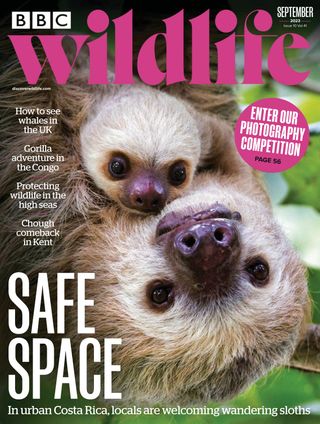

Diese Geschichte stammt aus der September 2023-Ausgabe von BBC Wildlife.
Abonnieren Sie Magzter GOLD, um auf Tausende kuratierter Premium-Geschichten und über 9.000 Zeitschriften und Zeitungen zuzugreifen.
Sie sind bereits Abonnent? Anmelden
WEITERE GESCHICHTEN VON BBC Wildlife
BBC Wildlife
"I was terrified the elephant would ram us"
African elephant in Kenya

2 mins
January 2026
BBC Wildlife
ALL YOU EVER NEEDED TO KNOW ABOUT THE Fennec fox
THE FENNEC FOX IS THE SMALLEST fox in the world, with a body length that can be as little as 24cm.
3 mins
January 2026
BBC Wildlife
INTO THE PLASTISPHERE
A unique synthetic ecosystem is evolving in our oceans – welcome to the plastisphere
7 mins
January 2026
BBC Wildlife
“More than half of all animal life exists in a parasitic relationship, and all life lives in symbiosis”
Our survival depends on species evolving to live together - but some relationships take dark turns
7 mins
January 2026
BBC Wildlife
Are animals able to dream?
SLEEP IS A MYSTERIOUS THING. FOR A long time, we weren't sure why we do it.
1 mins
January 2026
BBC Wildlife
Does a cuckoo know it's a cuckoo?
ABSURD LITTLE BIRDS ACROSS THE world lay their eggs in the nests of other species, leaving the hapless parents to raise a changeling at the expense of their own offspring.
2 mins
January 2026
BBC Wildlife
Orcas killing young sharks
Juvenile great whites are easy prey for orca pod
1 mins
January 2026
BBC Wildlife
Ocean goes on tour
Acclaimed film touring the UK, backed by live orchestra and choir
1 min
January 2026
BBC Wildlife
Feisty bats hunt like lions
Winged mammals use a 'hang and wait' strategy to take down large prey
1 mins
January 2026
BBC Wildlife
SNAP-CHAT
Richard Birchett on magical merlins, wily coyotes and charging deer
2 mins
January 2026
Translate
Change font size