कोशिश गोल्ड - मुक्त
Lost archives
Down To Earth
|May 01, 2022
India is fast losing its geologically critical sites in the Himalayas to developmental activities, destroying forever records that not just tell us about past climates and floral and faunal evidence, but also provide data that can aid in predicting monsoonal and seismic activities, all because the country lacks laws to protect such locations

GOVERNANCE / GEOLOGY
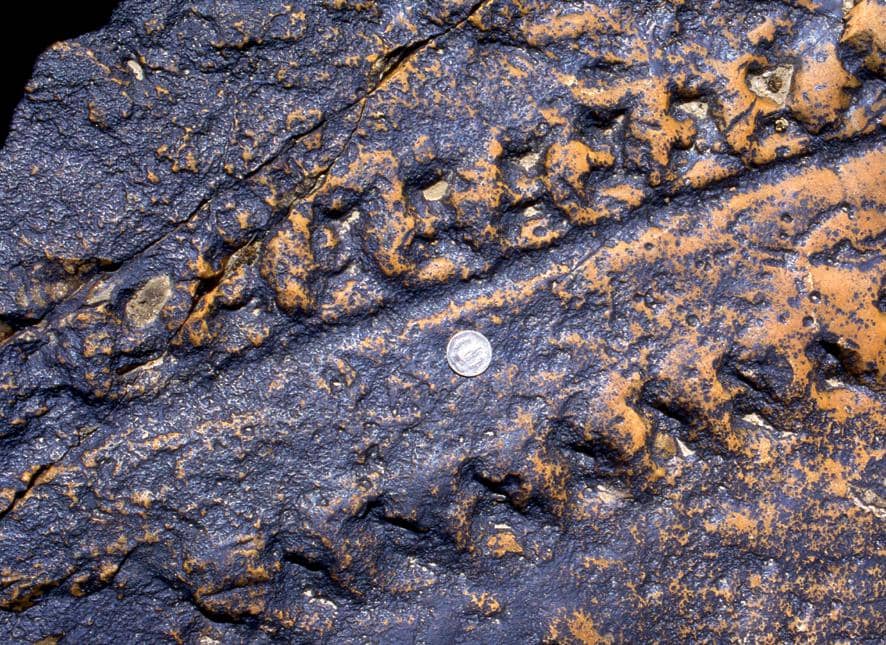
YOU ARE looking at one of the most critical sites in Himalayan history," says Manoj Kumar, former director of the Geological Survey of India (GSI), pointing at a valley along the Kalka-Shimla highway in Himachal Pradesh's Solan district. With multi-storeyed buildings and terrace farming filling up the landscape, there is nothing that distinguishes the valley from any other in the area. "If it does not look different, it is because it has been destroyed due to construction of houses and settlements. Just four-five years ago, you could have seen geomorphological features—the cuts of the slopes, the inclinations of the rocks on the bare mountains that tell the story of the evolution of the range itself,” Kumar adds.
The valley is among a handful of spots in India where the main boundary thrust (MBT)—a 2,400 km belt in the Himalayas, running through Pakistan, India, Nepal and Bhutanhas been studied. Formation of the Himalayas started 50 million years ago, when the Indian plate crashed into the Eurasian plate. But MBT was formed much later, some 10 million years ago, as part of the same process. These features cannot be studied just anywhere on the belt. "It is possible to identify new geological sites but the process of studying them, including estimating the age of each layer of the rock, could take decades. The process is also expensive,” Kumar adds.


यह कहानी Down To Earth के May 01, 2022 संस्करण से ली गई है।
हजारों चुनिंदा प्रीमियम कहानियों और 10,000 से अधिक पत्रिकाओं और समाचार पत्रों तक पहुंचने के लिए मैगज़्टर गोल्ड की सदस्यता लें।
क्या आप पहले से ही ग्राहक हैं? साइन इन करें
Down To Earth से और कहानियाँ

Down To Earth
THINK TWICE BEFORE FELLING SAL TREES
Many trees considered to be affected by sal borer in the 1990s are still alive today

1 mins
February 16, 2026

Down To Earth
EDGE OF SURVIVAL
Caste divides deny marginalised communities land, resources and essential aid, leaving them more vulnerable to climate disasters
6 mins
February 16, 2026

Down To Earth
A WISH LIST?
Union Budget for 2026-27 conveys the impression of a roll-call of intentions and ambitious proposals, with little detail on their formulation
6 mins
February 16, 2026
Down To Earth
Break down the gender wall
THE RULING National Democratic Alliance (NDA) government has been heavily invested in the goal to make India a developed economy by 2047.
2 mins
February 16, 2026

Down To Earth
MENSTRUAL HEALTH, NOW A FUNDAMENTAL RIGHT
In a landmark judgement, the Supreme Court has recognised menstrual health and hygiene as a fundamental right under Article 21 of the Constitution of India, which guarantees the right to life and dignity.
8 mins
February 16, 2026

Down To Earth
Of devolution and new disasters
The 16th Finance Commission pushes for changes in view of new fiscal and climatic conditions
11 mins
February 16, 2026
Down To Earth
Rising risks of plastics
NEGATIVE IMPACTS on human health due to emissions linked to the plastic lifecycle could double by 2040, according to a study published in The Lancet Planetary Health in January.
1 min
February 16, 2026

Down To Earth
GAP BETWEEN EPIDEMICS NARROWING
A watershed-based and landscape-level approach is needed to address forest degradation
2 mins
February 16, 2026
Down To Earth
WAITING TO STRIKE
Sal heartwood borer is considered the biggest threat to forestry in India, especially to the sal tree, where it lives and breeds.
11 mins
February 16, 2026

Down To Earth
A SPRING DELIGHT
Mustard flowers are not meant only for the eyes. Invite them to your plate once in a while
3 mins
February 16, 2026
Translate
Change font size