Essayer OR - Gratuit
Lost archives
Down To Earth
|May 01, 2022
India is fast losing its geologically critical sites in the Himalayas to developmental activities, destroying forever records that not just tell us about past climates and floral and faunal evidence, but also provide data that can aid in predicting monsoonal and seismic activities, all because the country lacks laws to protect such locations

GOVERNANCE / GEOLOGY
YOU ARE looking at one of the most critical sites in Himalayan history," says Manoj Kumar, former director of the Geological Survey of India (GSI), pointing at a valley along the Kalka-Shimla highway in Himachal Pradesh's Solan district. With multi-storeyed buildings and terrace farming filling up the landscape, there is nothing that distinguishes the valley from any other in the area. "If it does not look different, it is because it has been destroyed due to construction of houses and settlements. Just four-five years ago, you could have seen geomorphological features—the cuts of the slopes, the inclinations of the rocks on the bare mountains that tell the story of the evolution of the range itself,” Kumar adds.
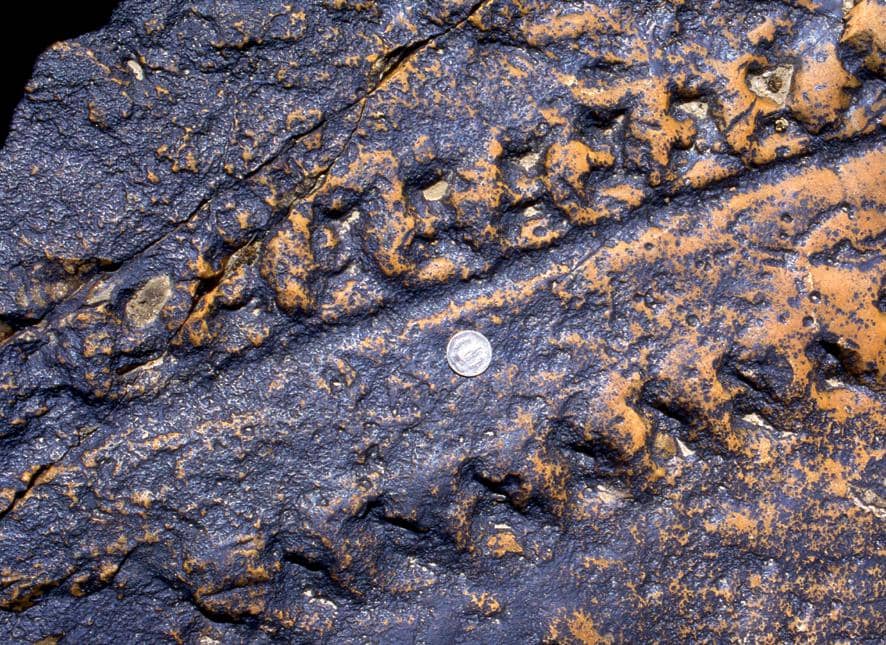
The valley is among a handful of spots in India where the main boundary thrust (MBT)—a 2,400 km belt in the Himalayas, running through Pakistan, India, Nepal and Bhutanhas been studied. Formation of the Himalayas started 50 million years ago, when the Indian plate crashed into the Eurasian plate. But MBT was formed much later, some 10 million years ago, as part of the same process. These features cannot be studied just anywhere on the belt. "It is possible to identify new geological sites but the process of studying them, including estimating the age of each layer of the rock, could take decades. The process is also expensive,” Kumar adds.


Cette histoire est tirée de l'édition May 01, 2022 de Down To Earth.
Abonnez-vous à Magzter GOLD pour accéder à des milliers d'histoires premium sélectionnées et à plus de 9 000 magazines et journaux.
Déjà abonné ? Se connecter
PLUS D'HISTOIRES DE Down To Earth

Down To Earth
THE GREAT PIVOT
China's moves to transition to clean energy offer critical lessons to India

4 mins
March 01, 2026

Down To Earth
COAL V CORRIDOR
A proposal to mine coal along a corridor that links two tiger reserves in central India is a step away from getting final clearance. The move could affect movement and genetic diversity of tiger populations in the region
8 mins
March 01, 2026

Down To Earth
India's challenging AI predicament
Hobbled by lack of innovation and AI skills in its crucial technology sector, India is focusing on a ruinous plan to host data centres
4 mins
March 01, 2026
Down To Earth
China to implement zero tariffs across Africa
CHINA ON February 14 announced that it will implement zero tariffs for imports from all the 53 African nations it has diplomatic relations with, starting from May 1.
1 min
March 01, 2026
Down To Earth
Poverty, sans the threshold
MEASUREMENT OF poverty is a fundamental exercise, needed to direct development programmes.
2 mins
March 01, 2026

Down To Earth
A bridge across forever
For two decades, a Chhattisgarh village remains stuck in a loop of building temporary river crossings to access markets and sell forest produce
4 mins
March 01, 2026
Down To Earth
Liveable cities need a new model
CRY FOR my Delhi. This is my city—my family records many generations who have lived here.
3 mins
March 01, 2026

Down To Earth
Real impacts of the changing seasons
This refers to the article \"1,500 days, and an alarm for new climate\" (1-15 December, 2025).
1 mins
March 01, 2026

Down To Earth
‘It’s a systematic effort by US to dismantle climate policy’
The US, the world's largest historical emitter of greenhouse gases, has overturned its “endangerment finding”, the legal foundation for regulating emissions under the Clean Air Act since 2009.
4 mins
March 01, 2026
Down To Earth
Amazon turned carbon source in 2023 drought
EXTREME DROUGHT and a prolonged heatwave in 2023 pushed parts of the Amazon rainforest from acting as a carbon sink to becoming a carbon source for three months, according to a February 13 study published in the journal AGU Advances of the American Geophysical Union.
1 min
March 01, 2026
Translate
Change font size