कोशिश गोल्ड - मुक्त
619,097
Down To Earth
|September 01, 2020
This is the number of assets created across rural India in the four months since the COVID-19 lockdown to tap natural resources. This is also the potential of the Mahatma Gandhi National Rural Employment Guarantee Act, 2005 (MGNREGA), a programme envisaged to alleviate poverty among the rural people by using their only capital—labour. So, what has helped the program that over the years got mired in controversies make a comeback? Down To Earth travels to districts that witnessed reverse migration on a large scale to understand this transition. They find a script that can change the rural-urban dynamics forever. Demand for MGNREGA works shows an unprecedented spike—more than 30 million households have asked for employment for three consecutive months. Governments are harnessing the surplus labour to create assets that will ensure livelihood even after people are weaned off the wage support. People too are using this opportunity to pick up the pieces of their lives in villages they had once left.

HAS THE next batch of work been sanctioned?” asks Ram Ratan from a distance, sitting amid the sweating crowd waiting in silence on a humid July afternoon at the panchayat office of Dhurala village in Haryana’s Kurukshetra district. As always, he is dressed in neatly ironed trousers, shirt and sandals. With a post-graduate degree in psychology, he is among the most qualified youths in the village. The official responds, “Yes. We are in talks with the irrigation department about cleaning and de-silting a canal and with the Indian Railways about clearing the tracks.” The news pacifies the crowd, including Ratan, waiting eagerly for more work under the country’s largest public wage programme, the Mahatma Gandhi National Rural Employment Guarantee Act, 2005, popularly known by its acronym MGNREGA. The programme, implemented in 691 of the country’s 739 districts, is in fact dubbed the world’s largest state-sponsored job-scheme to eradicate poverty.
As per its preamble, MGNREGA aims to enhance the livelihood security of rural households by guaranteeing them “100 days of unskilled manual work” every financial year. At least 75 per cent of the total works must be related to water conservation, the Act mandates.
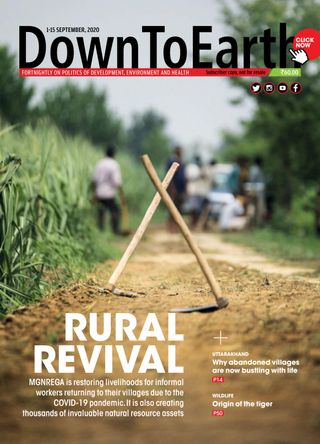

यह कहानी Down To Earth के September 01, 2020 संस्करण से ली गई है।
हजारों चुनिंदा प्रीमियम कहानियों और 10,000 से अधिक पत्रिकाओं और समाचार पत्रों तक पहुंचने के लिए मैगज़्टर गोल्ड की सदस्यता लें।
क्या आप पहले से ही ग्राहक हैं? साइन इन करें
Down To Earth से और कहानियाँ
Down To Earth
Popular distrust
THE WORLD seems to be going through a period of stasis despite facing an unfathomable polycrisis.

2 mins
February 01, 2026
Down To Earth
CONSERVE OR PERISH
Periyar Tiger Reserve has rewritten Indian conservation by turning poachers into protectors and conflict into coexistence
5 mins
February 01, 2026

Down To Earth
'Rivers need to run free'
From Tibet to West Bengal, the Brahmaputra is the pulse of communities and ecosystems along its course. But what are the risks the river faces through human interventions, particularly dams, discusses journalist, author and filmmaker SANJOY HAZARIKA in his new book, River Traveller.
4 mins
February 01, 2026

Down To Earth
India is facing up to its innovation lag
There are signs now that India is acknowledging the superior strides made by China in a frontier technology like Al
4 mins
February 01, 2026

Down To Earth
Competing concerns
What are the repercussions of the EU-Mercosur pact that have made European farmers protest against the free trade agreement?
4 mins
February 01, 2026

Down To Earth
From fryer to flight
Sustainable fuel made from used cooking oil can play a pivotal role in helping India achieve its aviation emission reduction goals. Measures to collect this oil must be revamped
4 mins
February 01, 2026

Down To Earth
ACCESS OPEN
An amendment to India's nodal forest conservation law opens up forests across India to commercial exploitation by the paper industry
6 mins
February 01, 2026
Down To Earth
DRINK FROM TAP CAN BE A REALITY
As cities across India struggle to supply safe piped water, Odisha offers a success story
2 mins
February 01, 2026

Down To Earth
GREAT DRYING
The Earth is hotter than at any point in the past 100,000 years, with 2023-25 becoming the warmest three-year period on record and also breaching the 1.5°C threshold for the first time. One fallout is dwindling freshwater.
22 mins
February 01, 2026

Down To Earth
Green redemption
Restoration of grasslands of Kerala's Pampadum Shola National Park, once dominated by invasive Australian wattles, see a return of streams and native species
1 mins
February 01, 2026
Translate
Change font size