
Passez à l'illimité avec Magzter GOLD
Obtenez un accès illimité à plus de 9 000 magazines, journaux et articles Premium pour seulement
Essayer OR - Gratuit
The Hardest Problem
Scientific American
|February 2026
Bruised theories. Accusations of pseudoscience. Machines that claim to be sentient. The field of consciousness research could be on the verge of a revolution— or once again be relegated to the fringe
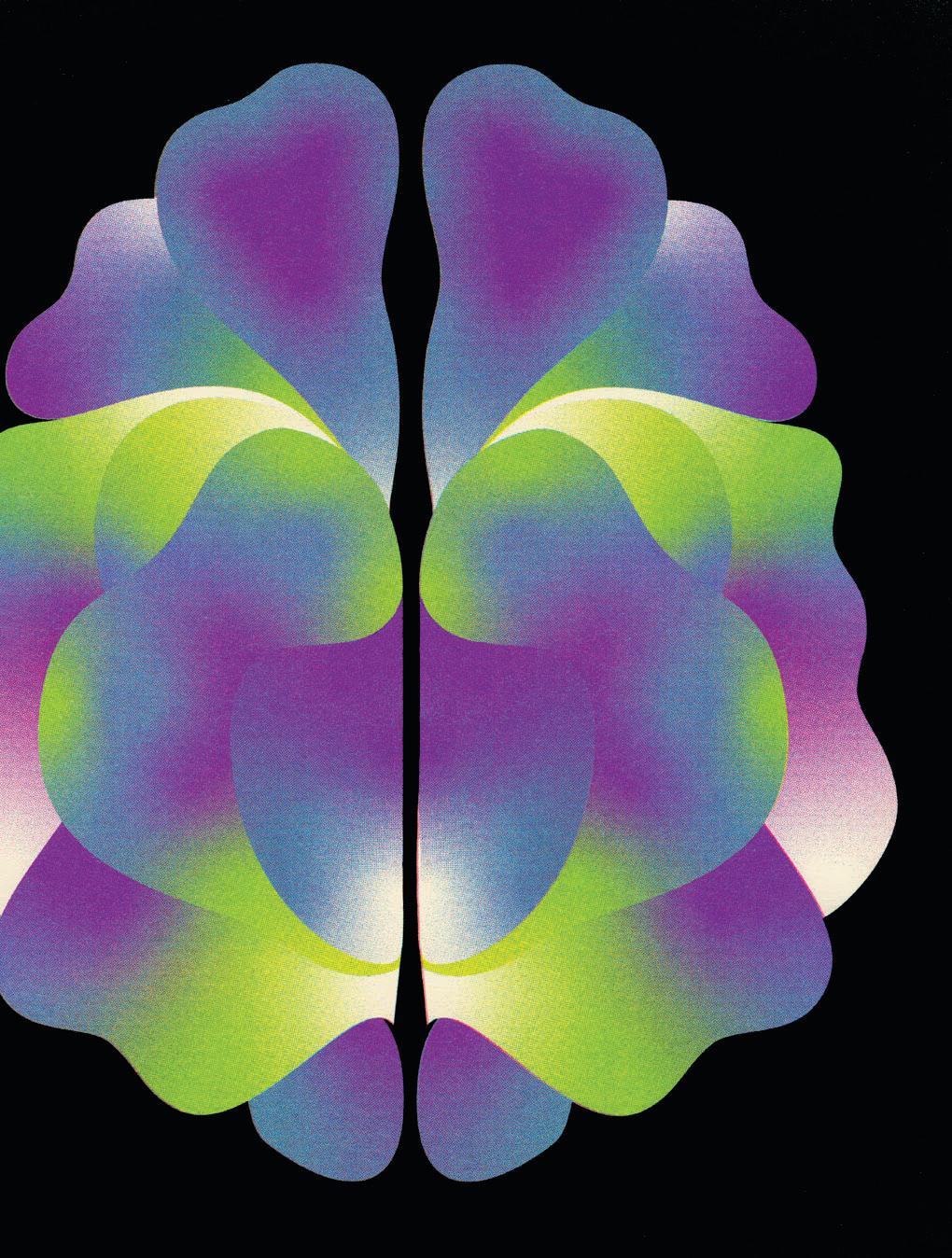
UNTIL HALF A BILLION YEARS AGO, LIFE ON EARTH WAS SLOW. The seas were home to single-celled microbes and largely stationary soft-bodied creatures. But at the dawn of the Cambrian era, some 540 million years ago, everything exploded. Bodies diversified in all directions, and many organisms developed appendages that let them move quickly around their environment. These ecosystems became competitive places full of predators and prey. And our branch of the tree of life evolved an incredible structure to navigate it all: the brain.
We don't know whether this was the moment when consciousness first arose on Earth. But it might have been when living creatures began to really need something like it to combine a barrage of sensory information into one unified experience that could guide their actions. It's because of this ability to experience that, eventually, we began to feel pain and pleasure. Eventually, we became guided not just by base needs but by curiosity, emotions and introspection. Over time we became aware of ourselves.
This last step is what we have to thank for most of art, science and philosophy—and the millennia-long quest to understand consciousness itself. This state of awareness of ourselves and our environment comes with many mysteries. Why does being awake and alive, being yourself, feel like anything at all, and where does this singular sense of awareness come from in the brain? These questions may have objective answers, but because they are about private, subjective experiences that can't be directly measured, they exist at the very boundaries of what the scientific method can reveal.
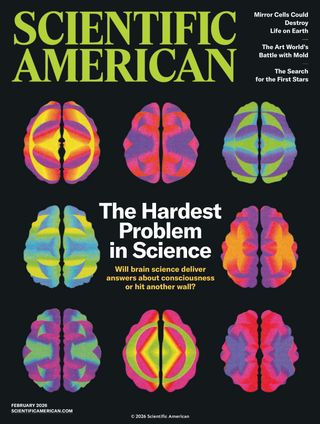

Cette histoire est tirée de l'édition February 2026 de Scientific American.
Abonnez-vous à Magzter GOLD pour accéder à des milliers d'histoires premium sélectionnées et à plus de 9 000 magazines et journaux.
Déjà abonné ? Se connecter
PLUS D'HISTOIRES DE Scientific American

Scientific American
The Business of Space Weather
A company aims to offer better forecasts based on a new solar model

7 mins
April 2026
Scientific American
Mindless Sleep
Even without brains, sea anemones and jellyfish can sleep like humans do
1 min
April 2026

Scientific American
THE KIDS ARE ALL RIGHT
Young people are doing better than you think
12 mins
April 2026

Scientific American
Something in THE WATER
Pristine alpine lakes are being choked by algal blooms. The culprit is in the air
9 mins
April 2026
Scientific American
A Dose of Prevention
New alert systems and biomarkers are spotting drug- induced kidney damage early, before irreversible harm
6 mins
April 2026

Scientific American
Life on the Edge
Kidney damage can progress for years without symptoms. The newly diagnosed cope with everything from restrictive diets to the emotional and logistical toll of dialysis
9 mins
April 2026
Scientific American
Stopping an Autoimmune Attack
IgA nephropathy, a frequent cause of kidney failure, is underdiagnosed. New treatments mean it's more important now to find those who will benefit
8 mins
April 2026
Scientific American
Mindless Sleep
Even without brains, sea anemones and jellyfish can sleep like humans do
4 mins
April 2026

Scientific American
Microbes Afloat
BACTERIA AND THE VIRUSES that infect them are perpetually at war. Their deadly clashes push both kinds of microbes to evolve new traits that meet the challenges of every environment they inhabit, from the human digestive tract to the seafloor’s hydrothermal vents— and even the harsh conditions of space.
2 mins
April 2026

Scientific American
The Strangest Bloom
Research reveals how the corpse flower came by its peculiar traits
9 mins
April 2026
Listen
Translate
Change font size