Essayer OR - Gratuit
TRADE TENSIONS
Down To Earth
|March 01, 2025
Why the benefits of agroforestry carbon trade do not trickle down to farmers
-
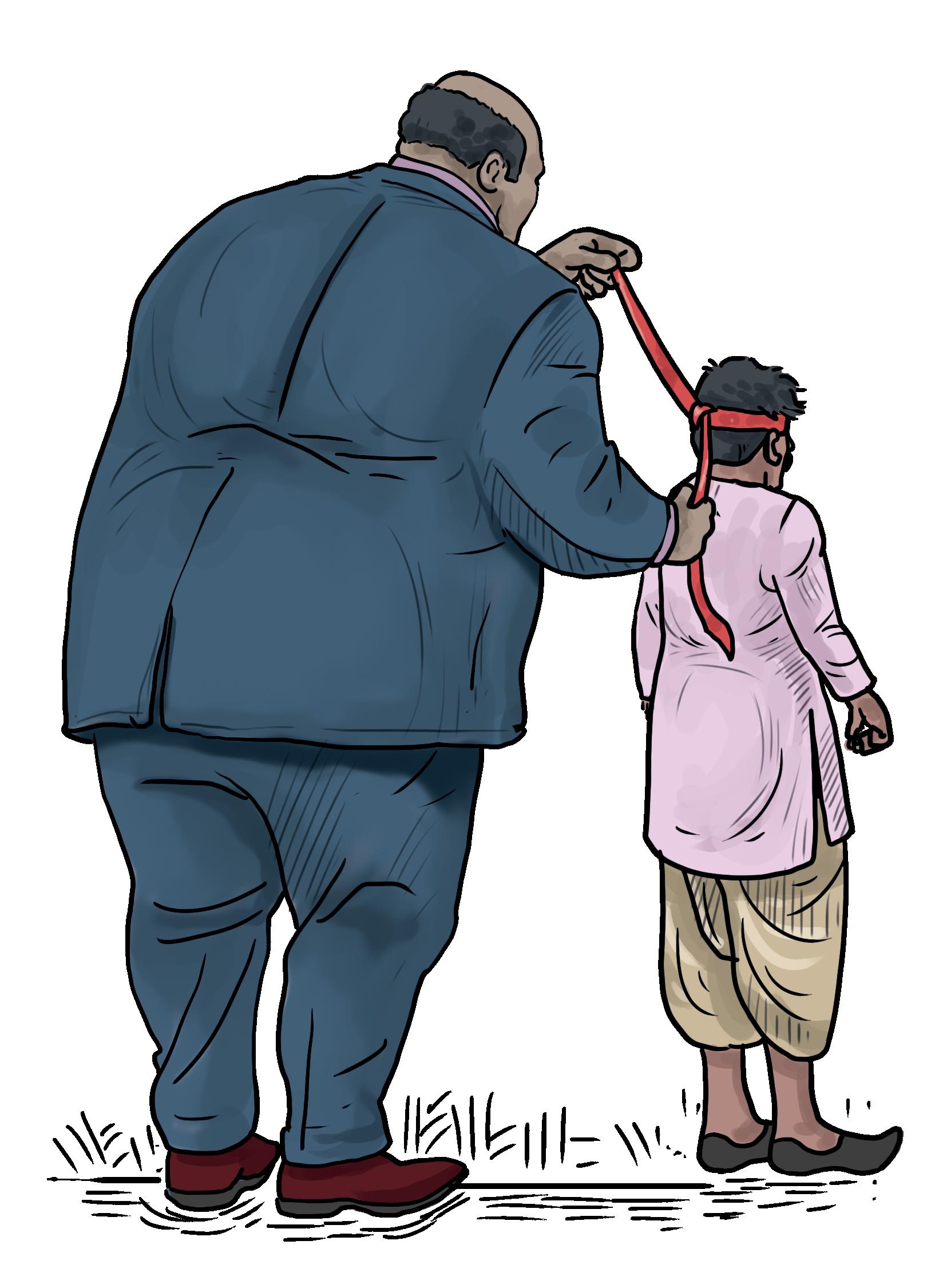
IN THEORY, agroforestry carbon credit projects can be a win-win solution for both the communities and environment. Though such projects are picking up in India, DTE's interaction with farmers and analysis of project documents show that farmers rarely benefit from the carbon revenue—and this has to do with the design of the voluntary carbon market as well as the lack of transparency in the agreements with poor communities.
PRICING WOES
First, in a voluntary carbon market, as the name suggests, prices are determined by an agreement between a buyer (a company looking to retire a credit) and a seller (a project developer, for instance). "The price is a question of what buyers are willing to pay and at what price project developers are willing to sell. There is no regulation of the price," Lambert Schneider, research coordinator for International Climate Policy at Oeko-Institut in Berlin, tells DTE. However, buyers are willing to pay a premium for high-quality carbon credits, such as credits generated from projects that pass the additionality check (removals from the project would not have occurred without the revenue from the sale of carbon credits), and offers co-benefits for biodiversity and local communities.
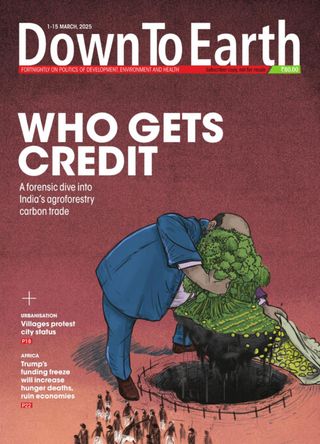

Cette histoire est tirée de l'édition March 01, 2025 de Down To Earth.
Abonnez-vous à Magzter GOLD pour accéder à des milliers d'histoires premium sélectionnées et à plus de 9 000 magazines et journaux.
Déjà abonné ? Se connecter
PLUS D'HISTOIRES DE Down To Earth

Down To Earth
GREAT NICOBAR DILEMMA
In the fragile ecosystem of Nicobar, strategic development must align with constitutional commitment to protect environment, indigenous dignity

3 mins
March 16, 2026
Down To Earth
CATCH BY THE ROOTS
Sabai grass could be a game-changer for the marginalised economies of West Bengal's dry uplands. All it needs is an efficient market strategy
4 mins
March 16, 2026

Down To Earth
POWERING TRANSITION
India's renewable ambitions are rising rapidly, with half of its installed power capacity now coming from non-fossil sources. Yet the gap between capacity and generation remains wide. The experiences of two pioneering states, Karnataka and Tamil Nadu, which together generate over a fifth of the country's renewable energy, offer crucial lessons for accelerating the transition, reports PUJA DAS from Bengaluru, Chennai, Mumbai and New Delhi
16 mins
March 16, 2026

Down To Earth
At core of survival
Water scarcity defines life in a village inside Sariska Tiger Reserve's critical habitat, as debates over its relocation drag on
5 mins
March 16, 2026

Down To Earth
What's on your plate
An upcoming digital tool can help people learn about the origin of their meals and make climate-positive food choices
2 mins
March 16, 2026

Down To Earth
'Bad environment can never be good economics'
The Supreme Court of India and even the high courts were once very active and took a proactive role in protecting the environment; unfortunately, that is no longer true
4 mins
March 16, 2026
Down To Earth
Things fall apart
IN THE past year, the world has counted more missiles and bombs than hours.
2 mins
March 16, 2026

Down To Earth
Universities in crisis, innovation is stifled
Political control and skewed policies have led to unrest in academia, stifling creativity and meaningful research
4 mins
March 16, 2026

Down To Earth
SPARK IN THE GAME
The Reserve Bank of India's restored recognition of Default Loss Guarantees re-enables credit flow into last-mile electric mobility
3 mins
March 16, 2026

Down To Earth
Ushering in new eras
An appraisal of the state of biodiversity conservation, pollution reduction and climate adaptation regimes in India
3 mins
March 16, 2026
Listen
Translate
Change font size