Essayer OR - Gratuit
HOW INDIA MOVES GRIDLOCKED
Down To Earth
|July 16, 2025
India moves is brutally simple: it does not. Urban India is gridlocked and congested, and the problem is not limited to big cities. An analysis by SUNITA NARAIN, ANUMITA ROYCHOWDHURY, SHUBHAM SRIVASTAVA AND SAYAN ROY
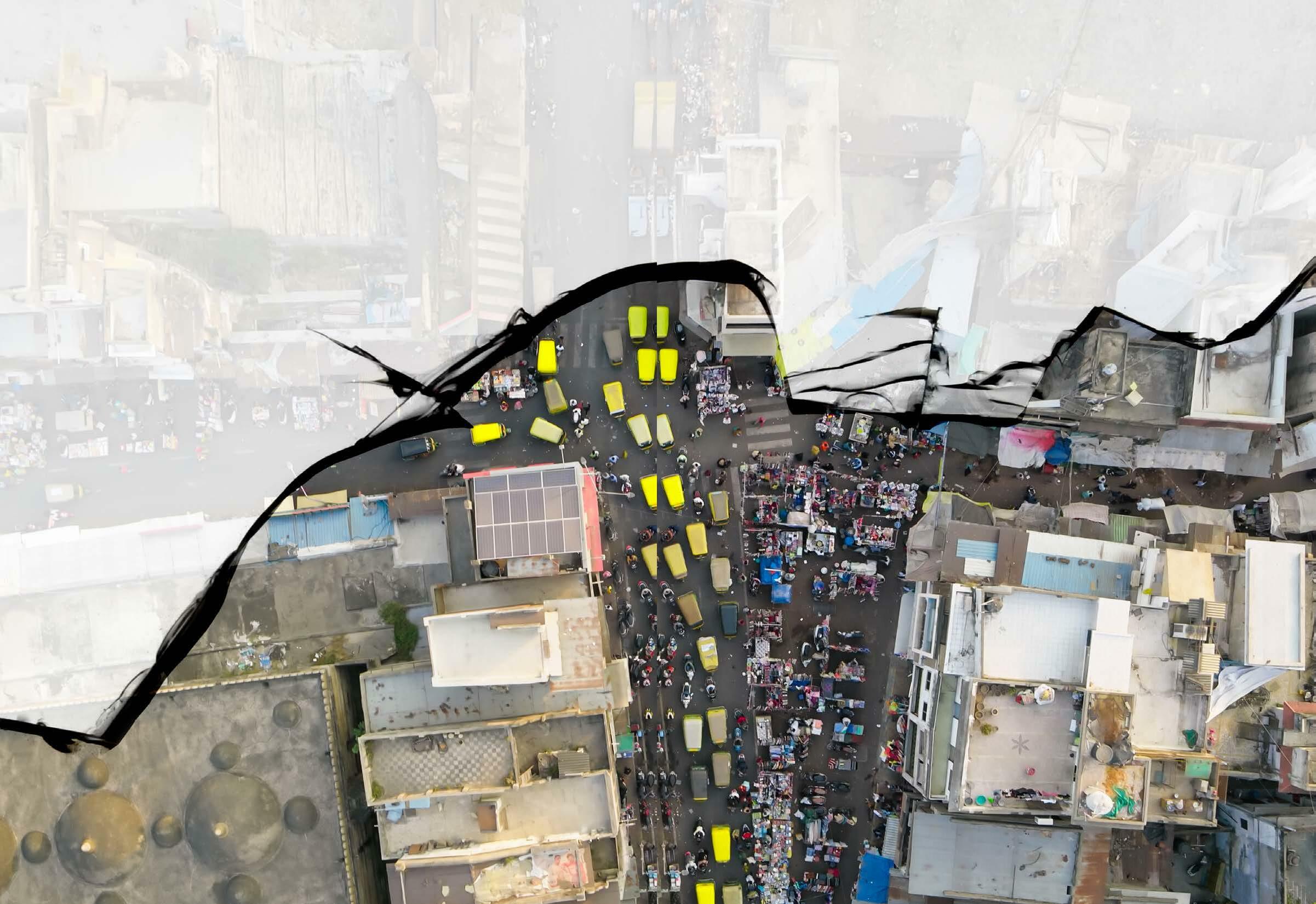
JUST ABOUT everywhere in Indian cities, the time it takes for people to travel to work or for leisure doubles between the off-peak and peak hours. What we often fail to realise is that congestion is not benignit not only contributes to the toxic pollution in the air we breathe, but also takes a toll on our mental well-being. It is this human face of being stuck in traffic that should compel us to make a change.
Richie (name changed), a professional in the development sector in Delhi, commutes 30 km from Dwarka to South Delhi for work. He estimates that he loses 24 hours-a full day-every eight days to traffic congestion. That adds up to nearly two years lost to traffic, over the past 15 years of commuting to his workplace from Dwarka. This is despite Richie's efforts to avoid peak traffic hours, which in Delhi typically run from 9 am to 12 noon and again from 6 pm to 9 pm.
Richie's colleague Kiran, who also lives in Dwarka, prefers to take the metro.
But it does not ease her commute much. To cover the last leg of her journey-4.5 km from the metro station to office-she relies on autorickshaws, which take anywhere from 20 to 40 minutes to cover the distance, depending on congestion.
This is a daily ordeal, which has a huge impact on our quality of life and mental health. We lose productive time stuck in traffic; we lose time with our families; and by the time we reach our destination, it feels as though we have come through a warzone.

Cette histoire est tirée de l'édition July 16, 2025 de Down To Earth.
Abonnez-vous à Magzter GOLD pour accéder à des milliers d'histoires premium sélectionnées et à plus de 9 000 magazines et journaux.
Déjà abonné ? Se connecter
PLUS D'HISTOIRES DE Down To Earth

Down To Earth
KING OF BIRDS
Revered for centuries, western tragopan now needs protection as its forests shrink, human pressures mount

3 mins
December 16, 2025

Down To Earth
WHISKERS ALL AQUIVER
Climate change threatens creatures that have weathered extreme environments for thousands of years
2 mins
December 16, 2025

Down To Earth
GOLDEN SPIRIT
Survival of the shy primate is closely tied to the health of Western Ghats
3 mins
December 16, 2025

Down To Earth
RINGED EYES IN THE CANOPY
Rapid habitat destruction forces arboreal langur to alter habits
2 mins
December 16, 2025

Down To Earth
HANGING BY THE CLIFF
The Himalaya's rarest wild goat is on the brink of local extinction
2 mins
December 16, 2025

Down To Earth
ANGEL OF THE BEAS
Conservation reserves, citizen science, and habitat protection give the Indus River dolphin a fighting chance in India
2 mins
December 16, 2025

Down To Earth
UNDER MOONLIT SCRUB
Survival of this hidden guardian tells us whether our scrublands still breathe
2 mins
December 16, 2025

Down To Earth
SYMBOL OF SILENT VALLEY
Lion-tailed macaque remains vulnerable despite past victories
2 mins
December 16, 2025

Down To Earth
THE APE IN OUR STORIES
India's only non-human ape species is a cultural icon threatened by forest fragmentation
2 mins
December 16, 2025

Down To Earth
SENTINEL OF THE HIGH COLD DESERT
The bird's evocative call may not continue to roll across the cold desert valley for long
3 mins
December 16, 2025
Listen
Translate
Change font size