
Passez à l'illimité avec Magzter GOLD
Obtenez un accès illimité à plus de 9 000 magazines, journaux et articles Premium pour seulement
How to make a planet
BBC Sky at Night Magazine
|September 2025
From stardust to rocky realms and gas giants, here's what it takes to build a world
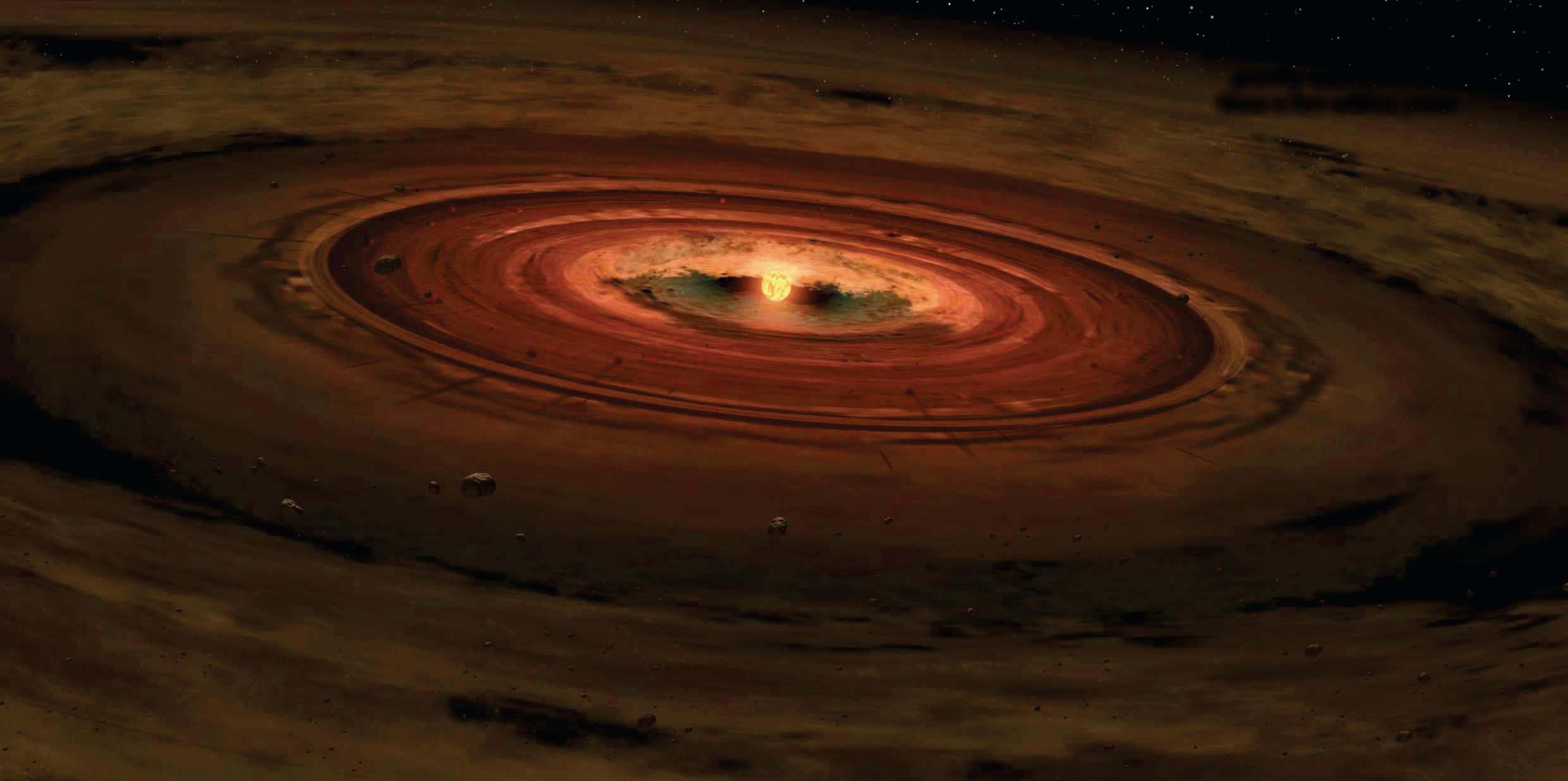
To make a planet, first you'll need a massive, reasonably dense cloud of cold gas and dust.
Luckily, later generations of the cosmos have provided just that. These clouds, rich in hydrogen, helium and elements forged in earlier stars, are the raw ingredients for planets. In the case of Earth, this happened about 4.5 billion years ago. So if you're starting from scratch, you may want to clear your schedule for the next few aeons...
Next, you'll need something to give that cloud a cosmic nudge. A nearby supernova blast, a passing star or some other gravitational disturbance will do the trick. This triggers the cloud to begin collapsing under its own gravity. As it contracts, most of the mass falls towards the centre, forming a protostar. The rest flattens into a spinning protoplanetary disc. This is where the magic of planet building happens.
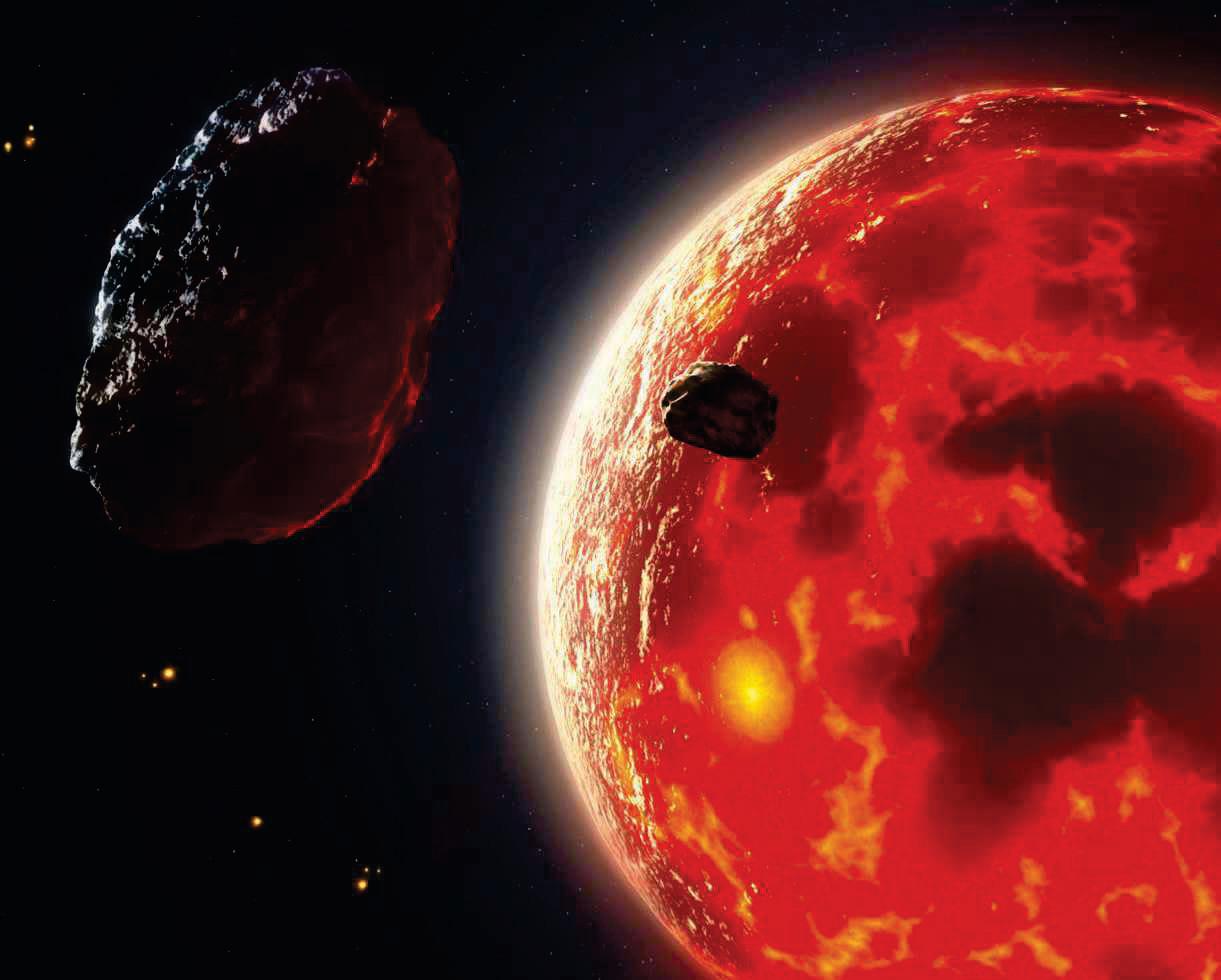 As the protostar continues to feed on surrounding material, it grows hotter and denser. Eventually, its core becomes hot enough to ignite nuclear fusion, and - voilà! - a new star is born. But we're here for planets, not stars, so let's turn our attention to what's still swirling in the disc. This material isn't all the same temperature. The farther you go from the star, the cooler it gets. At certain distances, you'll hit what's called a snow line (or frost line), the point where gases like water, methane and ammonia are cold enough to condense into ice. As these ices start sticking to dust grains, they form larger and larger clumps. These sticky seeds are called planetesimals.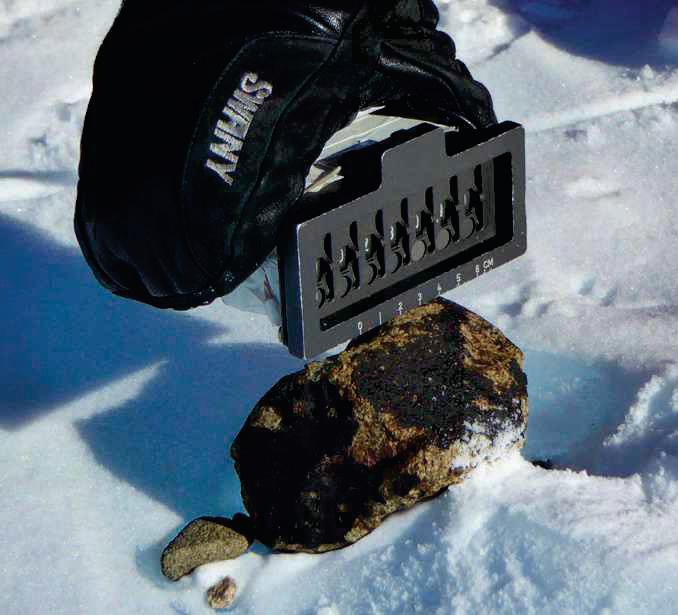

Cette histoire est tirée de l'édition September 2025 de BBC Sky at Night Magazine.
Abonnez-vous à Magzter GOLD pour accéder à des milliers d'histoires premium sélectionnées et à plus de 9 000 magazines et journaux.
Déjà abonné ? Se connecter
PLUS D'HISTOIRES DE BBC Sky at Night Magazine
BBC Sky at Night Magazine
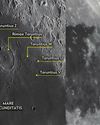
MOONWATCH
January's top lunar feature to observe

2 mins
January 2026
BBC Sky at Night Magazine
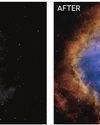
Speed up your processing workflow
How to use Photoshop's Actions tool to drastically cut your processing time
3 mins
January 2026
BBC Sky at Night Magazine
Chasing Canada's polar lights
With solar maximum peaking and a new Moon promising dark skies, Jamie Carter travels to Churchill, Manitoba to hunt the Northern Lights - and dodge polar bears – in Canada's far north
7 mins
January 2026
BBC Sky at Night Magazine
Beyond Pluto: The search for the hidden planets
Could one – or even two - undiscovered planets lurk at the edges of our Solar System? Nicky Jenner explores how close we are to finding the elusive 'Planet 9'
6 mins
January 2026
BBC Sky at Night Magazine
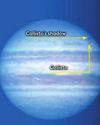
Jupiter moon events
Jupiter is a magnificent planet to observe.
2 mins
January 2026
BBC Sky at Night Magazine
What samples from space have taught us
Alastair Gunn explains what scientists have learnt in the 20 years since the first unmanned mission brought materials back from alien worlds
3 mins
January 2026
BBC Sky at Night Magazine
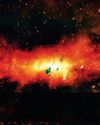
The Milky Way as you've never seen it before
This is the largest low-frequency radio colour image of our Galaxy ever assembled
1 min
January 2026
BBC Sky at Night Magazine
Merger of ‘impossibly' massive black holes explained
Scientists discover how enormous, fast-spinning black holes can exist after all
1 mins
January 2026
BBC Sky at Night Magazine
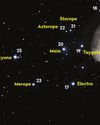
Lunar occultation of the Pleiades
BEST TIME TO SEE: 27 January from 20:30 UT
1 min
January 2026
BBC Sky at Night Magazine
The Universe's expansion may be slowing down
New study suggests current theories of dark energy could be wrong
1 mins
January 2026
Listen
Translate
Change font size