Essayer OR - Gratuit
Chasing Canada's polar lights
BBC Sky at Night Magazine
|January 2026
With solar maximum peaking and a new Moon promising dark skies, Jamie Carter travels to Churchill, Manitoba to hunt the Northern Lights - and dodge polar bears – in Canada's far north
-
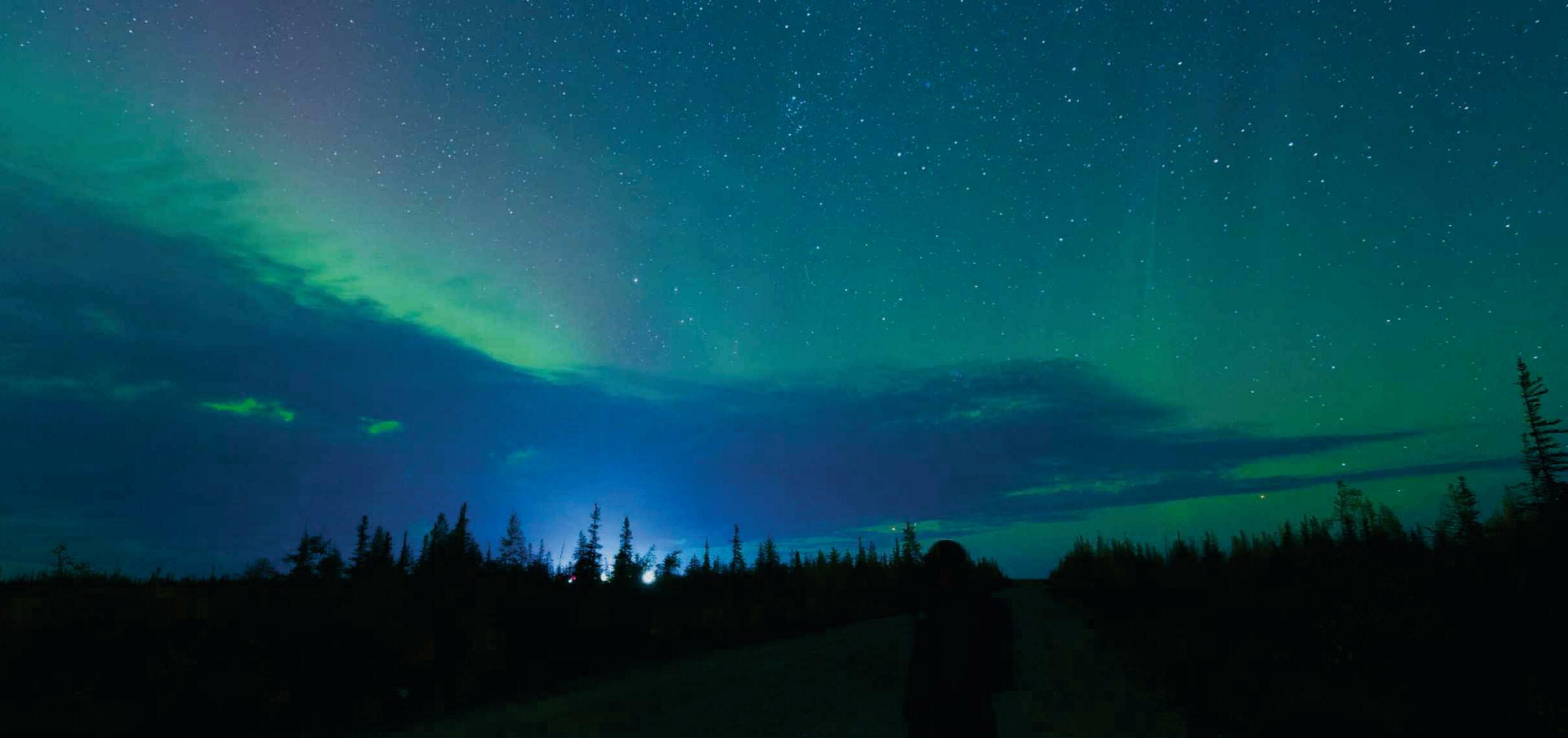
If Ursa Major, the Great Bear constellation, dominates the northern sky above Canada, then below it – across the frozen Arctic tundra – it’s Ursus maritimus, the polar bear, that rules.
And between the constellation and the polar bears lies the auroral oval, a near-permanent ring of light that circles Earth's poles.
Churchill, Manitoba is bear country in every sense. Even the word Arctic comes from the Greek ‘arktós’, meaning bear, a nod to the constellations circling Polaris, the North Star. That North Star always hangs high above this frontier town located at latitude 59° north, where 890 people – and almost as many polar bears – live on the shore of Hudson Bay. I'm here with 15 others on a special science-themed Lazy Bear Expeditions trip to see and to learn about the Northern Lights. And the timing is no accident – it's September, it's the equinox, and there's a new Moon, all of which maximise our chances of geomagnetic activity and dark skies. It's also halfway between the Beluga whale-spotting season (June–August) and near peak polar bear months (October and November), so we've a decent chance of seeing both, as well as the aurora – if skies are clear. All the rumours on the two-hour plane ride from Winnipeg have been of cloud, but we arrive in sync with a high-pressure system – it's suddenly all blue skies and short sleeves – and a forecast for lots of geomagnetic activity in a few days.
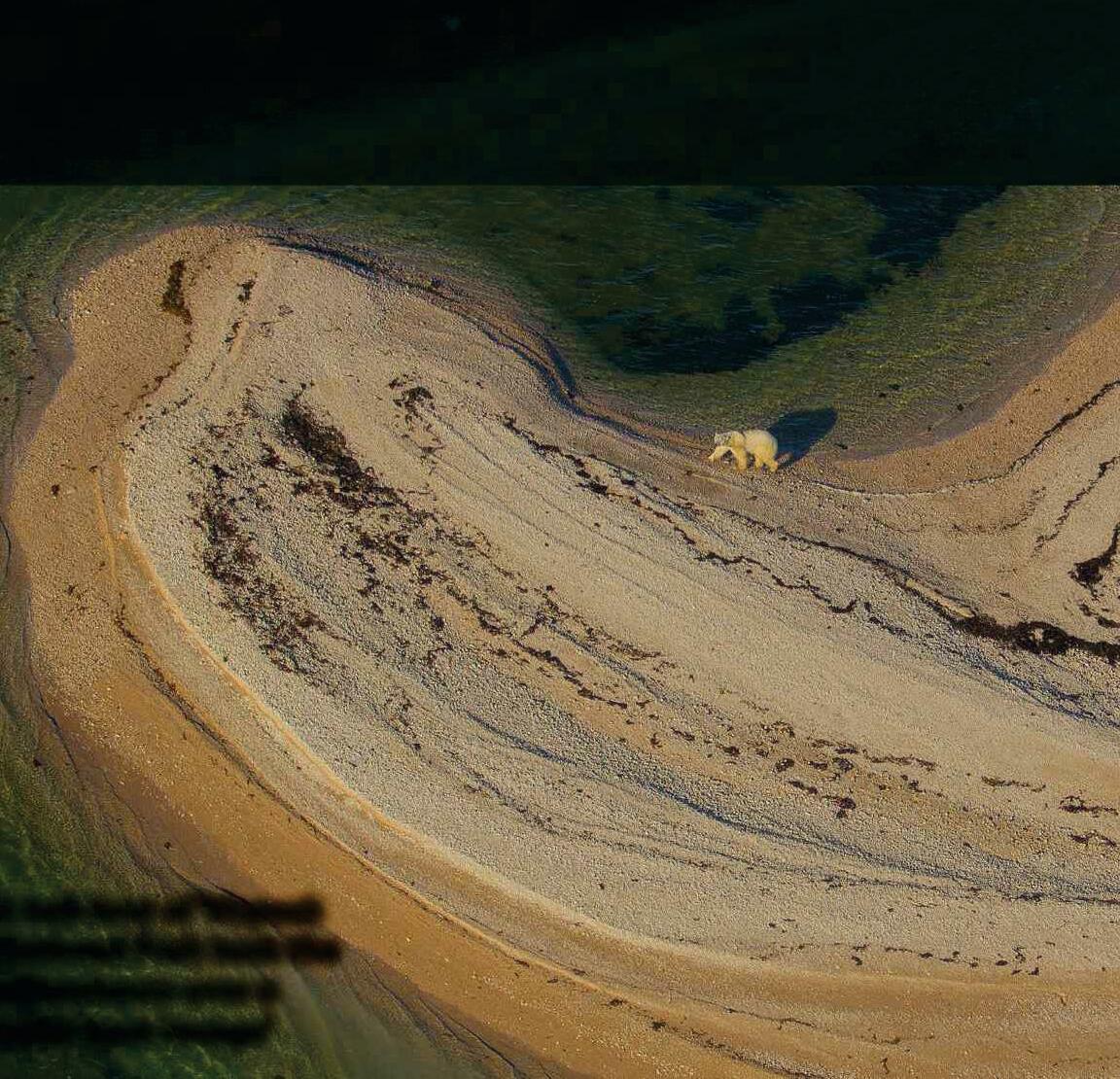 Lights, rifles... action!

Cette histoire est tirée de l'édition January 2026 de BBC Sky at Night Magazine.
Abonnez-vous à Magzter GOLD pour accéder à des milliers d'histoires premium sélectionnées et à plus de 9 000 magazines et journaux.
Déjà abonné ? Se connecter
PLUS D'HISTOIRES DE BBC Sky at Night Magazine
BBC Sky at Night Magazine
The Giant Leap: Why Space is the Next Frontier in the Evolution of Life
“Earth is the cradle of humanity, but one cannot live in the cradle forever,” wrote Konstantin Tsiolkovsky in 1911.

1 mins
February 2026
BBC Sky at Night Magazine
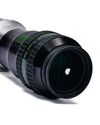
Tele Vue Nagler Type-7 series eyepieces
These premium optics were inspired by Apollo - and deliver a giant leap to your views
4 mins
February 2026
BBC Sky at Night Magazine
Once Upon a Time in Space
While the Space Race of the Cold War years was ultimately a geopolitical contest between the USA and the Soviet Union, the rivalry sparked rapid innovation and inspired multiple generations to look skyward.
1 mins
February 2026
BBC Sky at Night Magazine
The Multiverse: When One Universe Isn't Enough
The concept of a 'multiverse' – the idea that our Universe may be just one of many – is widespread in science fiction and a common thread of online discussions.
1 mins
February 2026
BBC Sky at Night Magazine
Q&A WITH A GAMMA RAY SPECIALIST
In 2025, astronomers detected a blast from space that lasted seven hours. Now they're uncovering the strange processes behind the exceptional outburst
3 mins
February 2026
BBC Sky at Night Magazine
Astronomy Photographer of the Year
The world-leading astrophotography competition returns. Could your image take the top prize of £10,000?
2 mins
February 2026
BBC Sky at Night Magazine
MOONWATCH
February's top lunar feature to observe
2 mins
February 2026
BBC Sky at Night Magazine
NOVAStar Scarlet A62Q 62mm f/8.4 quadruplet achromatic refractor
Well-built and capable, this beginner scope punches well above its bargain price
4 mins
February 2026
BBC Sky at Night Magazine
STAR OF THE MONTH
Rasalas, Leo the Lion's metal-rich crown
1 min
February 2026
BBC Sky at Night Magazine
Comet 24P/Schaumasse
Having reached perihelion on 8 January, comet 24P/ Schaumasse is now fading. Starting the month at a small-telescope-friendly mag. +10.5, it dims throughout February to below 12th magnitude.
1 min
February 2026
Listen
Translate
Change font size