Essayer OR - Gratuit
What to Make of Miracles
The Atlantic
|May 2025
In a new book, Elaine Pagels searches for the narrative origins of Jesus's most wondrous acts.
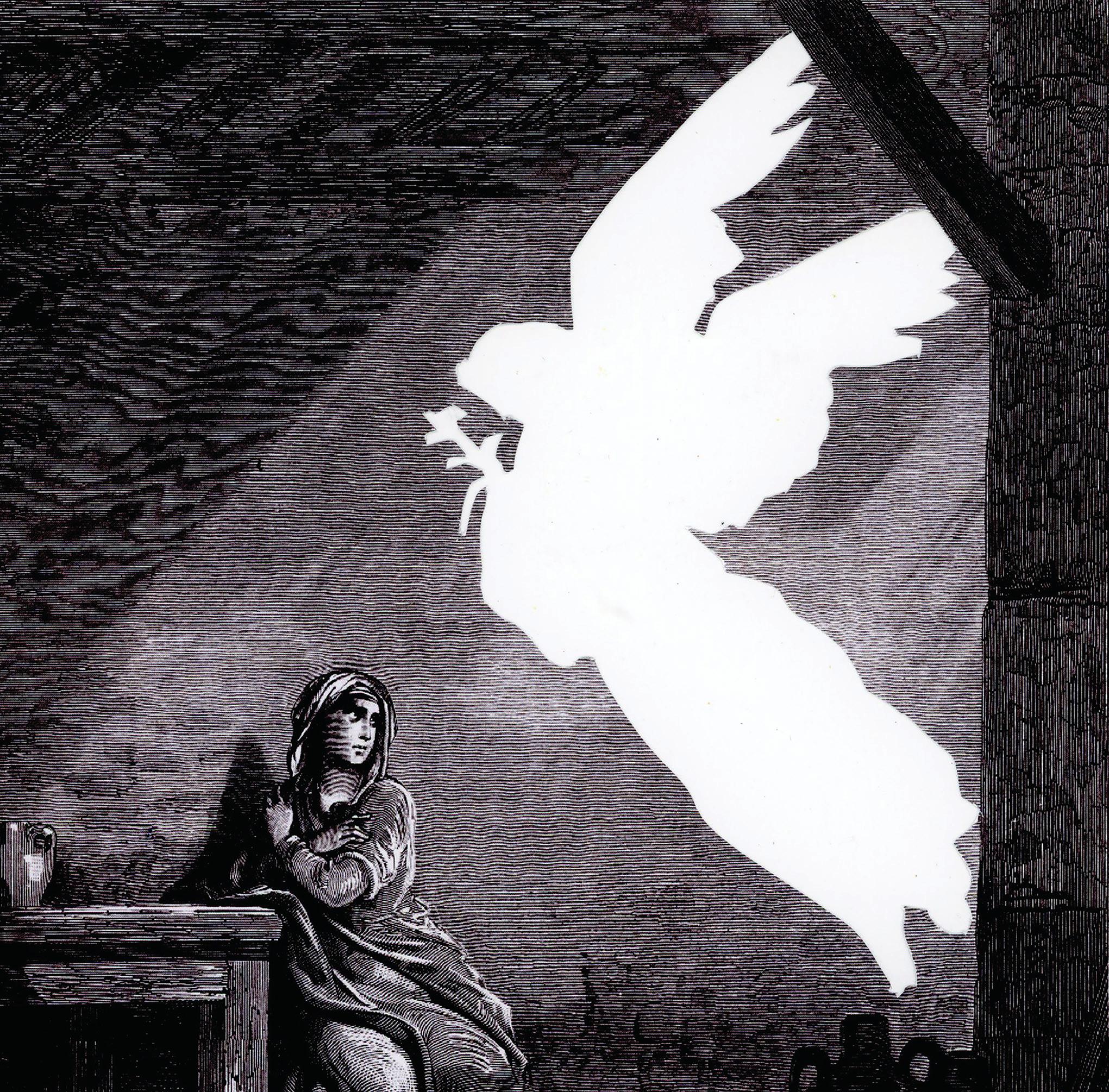
How should we understand miracles? Many people in the near and distant past have believed in them; many still do. I believe in miracles too, in my way, reconciling rationalism and inklings of a preternatural reality by means of “radical amazement.” That's a core concept of the great modern Jewish philosopher Abraham Joshua Heschel. Miracles, insofar as Heschel would agree with my calling them that—it’s not one of his words—do not defy the natural order. God dwells in earthly things. Me, I find God in what passes for the mundane: my family, Schubert sonatas, the mystery of innate temperament. A corollary miracle is that we have been blessed with a capacity for awe, which allows us “to perceive in the world intimations of the divine, to sense in small things the beginning of infinite significance,” Heschel writes.
Every so often, though, I wonder whether radical amazement demands enough of us. Heschel would never have gone as far as Thomas Jefferson, who simply took a penknife to his New Testament and sliced out all the miracles, because they offended his Enlightenment-era conviction that faith should not contradict reason. His Jesus was a man of moral principles stripped of higher powers. But a faith poor in miracles is an untested faith. At the core of Judaism and Christianity lie divine interventions that rip a hole in the known universe and change the course of history. Jesus would not have become Christ the Savior had he not risen from his tomb. Nor would Jews be Jews had Moses not brought down God's Torah from Mount Sinai.
What problems did the miracle stories solve; what new vistas did solving them open; what religious function did they serve?

Cette histoire est tirée de l'édition May 2025 de The Atlantic.
Abonnez-vous à Magzter GOLD pour accéder à des milliers d'histoires premium sélectionnées et à plus de 9 000 magazines et journaux.
Déjà abonné ? Se connecter
PLUS D'HISTOIRES DE The Atlantic
The Atlantic
You Had to Be There
An emerging field of history asks if we can ever really understand how our forebears experienced love, anger, fear, and sorrow.

23 mins
January 2026

The Atlantic
By the Horns
The week before the biggest bullfight of her career, in Cádiz, Spain, this past July, 24-year-old Miriam Cabas posted a carefully produced video on Instagram.
1 mins
January 2026

The Atlantic
The New German War Machine
After World War II, Germany embraced pacifism as a form of atonement. Now the country is arming itself again.
18 mins
January 2026
The Atlantic
The Eloquence
The prime minister was watching a disaster movie when we found him.
4 mins
January 2026

The Atlantic
What's for Dinner, Mom?
The women who want to change the way America eats
12 mins
January 2026

The Atlantic
How Terror Works
A 1947 German novel explores the sometimes corrosive, sometimes energizing nature of fear.
8 mins
January 2026

The Atlantic
Yesterday's Idea of a Modern Man
Sam Shepard, a self-made cowboy, was also a poet of masculine angst.
7 mins
January 2026

The Atlantic
ACCOMMODATION NATION
America's colleges have an extra-time-on-tests problem.
11 mins
January 2026

The Atlantic
Respect the Drummer
A new history of rock, told through its overlooked heroes
5 mins
January 2026

The Atlantic
THE MOST POWERFUL MAN IN SCIENCE
WHY IS ROBERT F. KENNEDY JR. SO CONVINCED HE'S RIGHT?
42 mins
January 2026
Listen
Translate
Change font size