Essayer OR - Gratuit
The Warrior's Anti-War Novel
The Atlantic
|March 2025
In All Quiet on the Western Front, Erich Maria Remarque invented modern war writing.
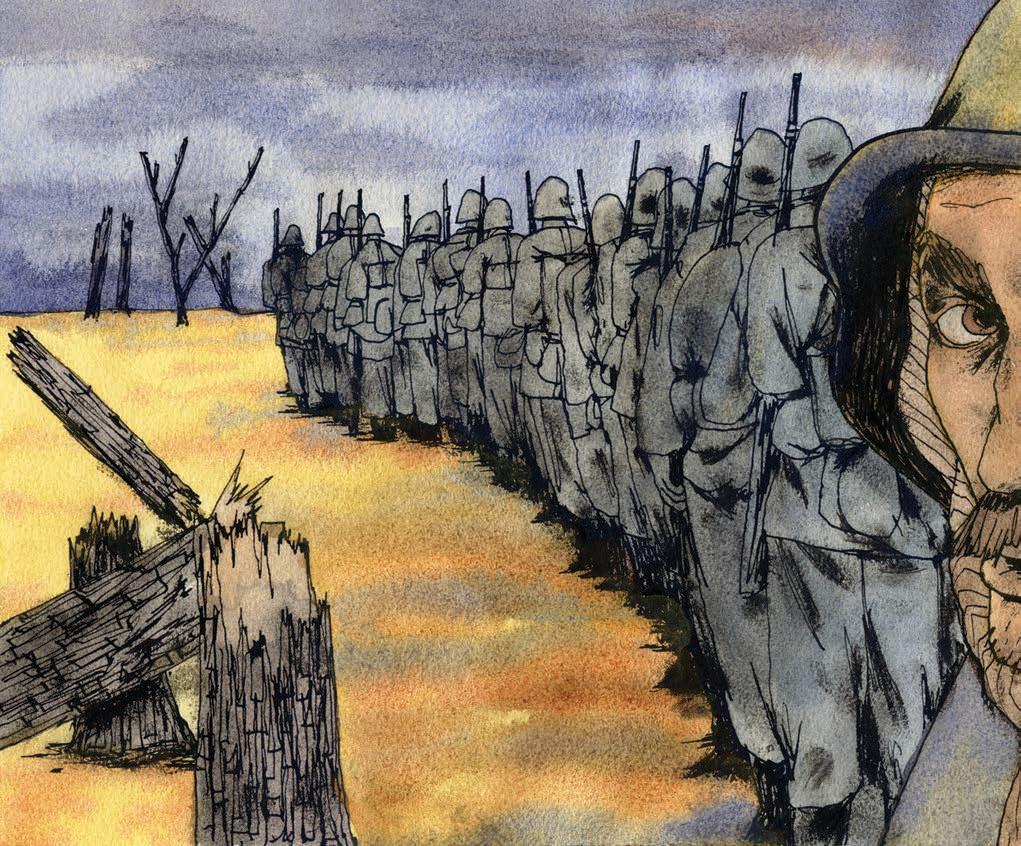
Every war begins in blind folly and ends in unimagined suffering. This is true of all wars but especially of the First World War. Its catalysts were so trivial and its consequences so apocalyptic that they belong in a Swiftian satire of human stupidity: the shooting of a bewhiskered potentate, followed by a botched game of diplomatic chicken, armies mobilized across Europe and cheered on by delirious publics, a whole generation sent to die by the millions in industrial warfare-all for a few miles of mud and barbed wire. Between the assassination in Sarajevo, the mass slaughter in the trenches, and the stagnant front lines lie disproportions so immense that cause and effect lose all relation. The conflict is a sustained demonstration of war's essential inanity. "Every war is ironic because every war is worse than expected," the critic Paul Fussell wrote in The Great War and Modern Memory. By this standard, World War I was the most ironic war in history.
What did the soldiers of the Great War think they were going off to defend? King, kaiser, czar, empire, democracy, European civilization, national honorthe reasons, in hindsight, make no sense. By 1917, the meaninglessness of the sacrifice had become clear enough to the combatants, if not to civilians back home: French and Russian troops mutinied, tens of thousands of soldiers on both sides deserted, the British poet and captain Siegfried Sassoon made a public anti-war declaration, and English war poetry turned brutal and bitter. Yet most soldiers, including Sassoon, fought on, under intolerable conditions-rain-soaked and hungry; facing machine-gun fire, shelling, and chlorine gas; surrounded by the half-buried corpses of their comrades and enemies until the last minute of the last hour before the armistice on November 11, 1918, when, to quote John Kerry, an unknown soldier became "the last man to die for a mistake."

Cette histoire est tirée de l'édition March 2025 de The Atlantic.
Abonnez-vous à Magzter GOLD pour accéder à des milliers d'histoires premium sélectionnées et à plus de 9 000 magazines et journaux.
Déjà abonné ? Se connecter
PLUS D'HISTOIRES DE The Atlantic

The Atlantic
The Realist Magic of Philip Pullman
The Golden Compass author tells us how to love this world. It's not easy.

9 mins
December 2025
The Atlantic
We Are Not One
When it came into view, Doctor Rustin was struck by its size.
14 mins
December 2025
The Atlantic
THE COMING ELECTION MAYHEM
Donald Trump's plans to throw the 2026 midterms into chaos are already under way.
22 mins
December 2025
The Atlantic
The One and Only Sammy
The astonishing, confounding career of Sammy Davis Jr.
7 mins
December 2025

The Atlantic
GET A REAL FRIEND
The false promise of AI companionship
10 mins
December 2025

The Atlantic
PRESIDENT FOR LIFE
Donald Trump is trying to amass the powers of a king.
10 mins
December 2025

The Atlantic
The Last of the Literary Outdoorsmen
Thomas McGuane—fisherman, hunter, rancher, writer—says “good riddance” to his kind.
14 mins
December 2025

The Atlantic
THE MISSING KAYAKER
What happened to Ryan Borowardı?
44 mins
December 2025
The Atlantic
The Man Who Rescued Faulkner
How the critic Malcolm Cowley made American literature into its own great tradition
9 mins
December 2025

The Atlantic
Patti Smith's Lifetime of Reinvention
Nearing 80, the punk poet reflects on the twists in her story that have surprised even her.
12 mins
December 2025
Listen
Translate
Change font size