يحاول ذهب - حر
The Warrior's Anti-War Novel
March 2025
|The Atlantic
In All Quiet on the Western Front, Erich Maria Remarque invented modern war writing.
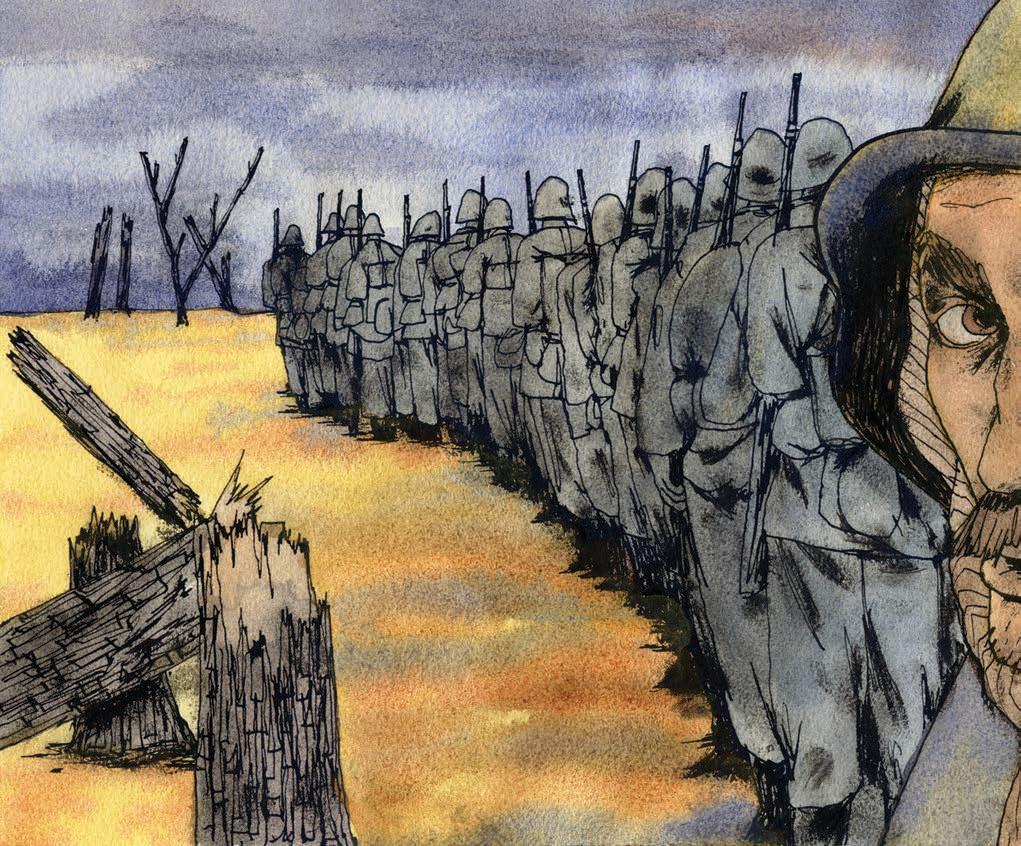
Every war begins in blind folly and ends in unimagined suffering. This is true of all wars but especially of the First World War. Its catalysts were so trivial and its consequences so apocalyptic that they belong in a Swiftian satire of human stupidity: the shooting of a bewhiskered potentate, followed by a botched game of diplomatic chicken, armies mobilized across Europe and cheered on by delirious publics, a whole generation sent to die by the millions in industrial warfare-all for a few miles of mud and barbed wire. Between the assassination in Sarajevo, the mass slaughter in the trenches, and the stagnant front lines lie disproportions so immense that cause and effect lose all relation. The conflict is a sustained demonstration of war's essential inanity. "Every war is ironic because every war is worse than expected," the critic Paul Fussell wrote in The Great War and Modern Memory. By this standard, World War I was the most ironic war in history.
What did the soldiers of the Great War think they were going off to defend? King, kaiser, czar, empire, democracy, European civilization, national honorthe reasons, in hindsight, make no sense. By 1917, the meaninglessness of the sacrifice had become clear enough to the combatants, if not to civilians back home: French and Russian troops mutinied, tens of thousands of soldiers on both sides deserted, the British poet and captain Siegfried Sassoon made a public anti-war declaration, and English war poetry turned brutal and bitter. Yet most soldiers, including Sassoon, fought on, under intolerable conditions-rain-soaked and hungry; facing machine-gun fire, shelling, and chlorine gas; surrounded by the half-buried corpses of their comrades and enemies until the last minute of the last hour before the armistice on November 11, 1918, when, to quote John Kerry, an unknown soldier became "the last man to die for a mistake."

هذه القصة من طبعة March 2025 من The Atlantic.
اشترك في Magzter GOLD للوصول إلى آلاف القصص المتميزة المنسقة، وأكثر من 9000 مجلة وصحيفة.
هل أنت مشترك بالفعل؟ تسجيل الدخول
المزيد من القصص من The Atlantic
The Atlantic
The Eighth Deadly Sin
Humankind has devised a new form of debasement.

5 mins
May 2026

The Atlantic
The Art of the (New) Deal
What the murals of the Wilbur J. Cohen Federal Building can teach us about patriotism, propaganda, and beauty
12 mins
May 2026

The Atlantic
New Chairs
Collaboration, for Robert Rauschenberg and Merce Cunningham, began with the arrangement of chairs.
1 mins
May 2026
The Atlantic
HISTORY IS RUNNING BACKWARDS
Why reactionaries are taking over the world
21 mins
May 2026

The Atlantic
SOMEDAY IN TEHRAN
Like Donald Trump, I, too, once underestimated the Islamic Republic of Iran.
16 mins
May 2026

The Atlantic
On Losing a Daughter
The people we were died at the exact moment our child did.
19 mins
May 2026

The Atlantic
I Found It: The Best Free Restaurant Bread in America
Thirteen thousand miles. Infinite contenders. One beautiful loaf.
15 mins
May 2026
The Atlantic
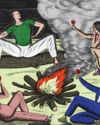
EVERYTHING IS FREE AND NOTHING MATTERS
What I saw at Jeff Bezos's Campfire retreat
9 mins
May 2026

The Atlantic
Who Is Black Comedy For?
A new book is nostalgic for the '90s. But the era of crossover success was not necessarily the pinnacle of Black comedic achievement.
8 mins
May 2026

The Atlantic
The Feeling of Becoming Less and Less of a Person
In Ben Lerner's new novel, technology divides us further from one another, and ourselves.
9 mins
May 2026
Listen
Translate
Change font size