Essayer OR - Gratuit
'Emergency' Takeaways
Outlook
|October 01, 2024
In a democracy, no ruler can be granted a carte blanche, like it happened during the Emergency, but the fact remains that we also learnt some valuable lessons during this period
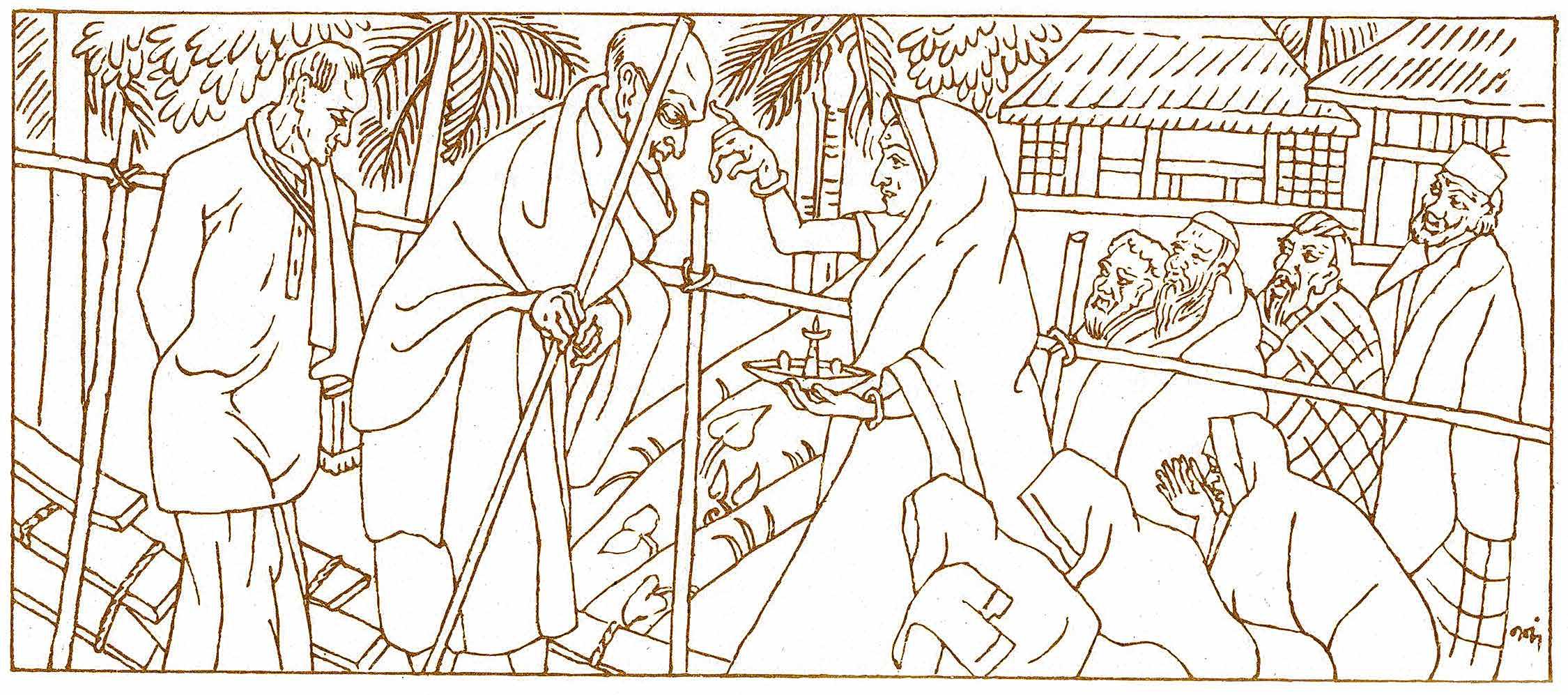
EVEN before a holier-than-thou Narendra Modi government declared June 25 as 'Samvidhaan Hatya Diwas' to mark the imposition of the Emergency by the Indira Gandhi government on that day in 1975, there has been total unanimity that it was a rotten enterprise.
If there were any differences among scholars and partisans, these were to do with what was the dark side and what were the darker aspects of the Emergency. It is mostly agreed upon that the dark side included the suspension of fundamental rights, press censorship, the arrest of Opposition leaders, etc., whereas the darker side had to club the extraconstitutional power exercised by Sanjay Gandhi and his goonish aides. As it happens in all political debates over history, the villains are easily identified as are the heroes.
But even after nearly 50 years, we are nowhere near any understanding of the nature of the breakdown of normal politics that led to that midnight denouement on June 25, 1975.
It is helpful to keep in mind that the "JP Movement" was the first instance of mass mobilisation aimed at a regime change. Prior to the 1974-75 invocation of street power, the Indian State had faced only limited mass agitation. Early in the life of free India, there was the Vishal Andhra agitation; then the demand for bifurcation of Bombay between Gujarat and Maharashtra; and, later, the anti-Hindi agitation in south India. Each of these mass eruptions could be successfully dealt with because each was based on a clear-cut demand that could be conceded. The JP Movement, on the other hand, was expressly seeking a "total revolution".
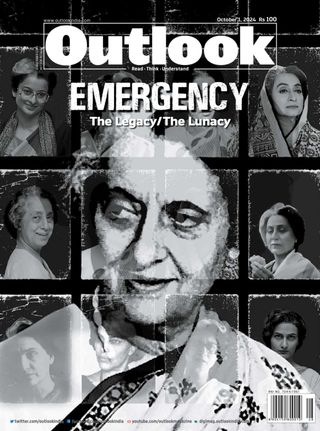

Cette histoire est tirée de l'édition October 01, 2024 de Outlook.
Abonnez-vous à Magzter GOLD pour accéder à des milliers d'histoires premium sélectionnées et à plus de 9 000 magazines et journaux.
Déjà abonné ? Se connecter
PLUS D'HISTOIRES DE Outlook

Outlook
The Big Blind Spot
Caste boundaries still shape social relations in Tamil Nadu-a state long rooted in self-respect politics

8 mins
December 11, 2025
Outlook
Jat Yamla Pagla Deewana
Dharmendra's tenderness revealed itself without any threats to his masculinity. He adapted himself throughout his 65-year-long career as both a product and creature of the times he lived through
5 mins
December 11, 2025

Outlook
Fairytale of a Fallow Land
Hope Bihar can once again be that impossibly noisy village in Phanishwar Nath Renu's Parti Parikatha-divided, yes, but still capable of insisting that rights are not favours and development is more than a slogan shouted from a stage
14 mins
December 11, 2025

Outlook
The Lesser Daughters of the Goddess
The Dravidian movement waged an ideological war against the devadasi system. As former devadasis lead a new wave of resistance, the practice is quietly sustained by caste, poverty, superstition and inherited ritual
2 mins
December 11, 2025

Outlook
The Meaning of Mariadhai
After a hundred years, what has happened to the idea of self-respect in contemporary Tamil society?
5 mins
December 11, 2025

Outlook
When the State is the Killer
The war on drugs continues to be a war on the poor
5 mins
December 11, 2025

Outlook
We Are Intellectuals
A senior law officer argued in the Supreme Court that \"intellectuals\" could be more dangerous than \"ground-level terrorists\"
5 mins
December 11, 2025
Outlook
An Equal Stage
The Dravidian Movement used novels, plays, films and even politics to spread its ideology
12 mins
December 11, 2025
Outlook
The Dignity in Self-Respect
How Periyar and the Self-Respect Movement took shape in Tamil Nadu and why the state has done better than the rest of the country on many social, civil and public parameters
5 mins
December 11, 2025

Outlook
When Sukumaar Met Elakkiya
Self-respect marriage remains a force of socio-political change even a century later
7 mins
December 11, 2025
Listen
Translate
Change font size