
Passez à l'illimité avec Magzter GOLD
Obtenez un accès illimité à plus de 9 000 magazines, journaux et articles Premium pour seulement
Essayer OR - Gratuit
Successful tomato production dependent on holistic approach
Farmer's Weekly
|January 16-23, 2026
Tomato farming has become a high-stakes, high-input business where success depends on getting many moving parts right at once. From seed choice and soil preparation to climate control, irrigation, nutrition and pest management, every stage of the crop’s life cycle demands precise, season-specific decisions.
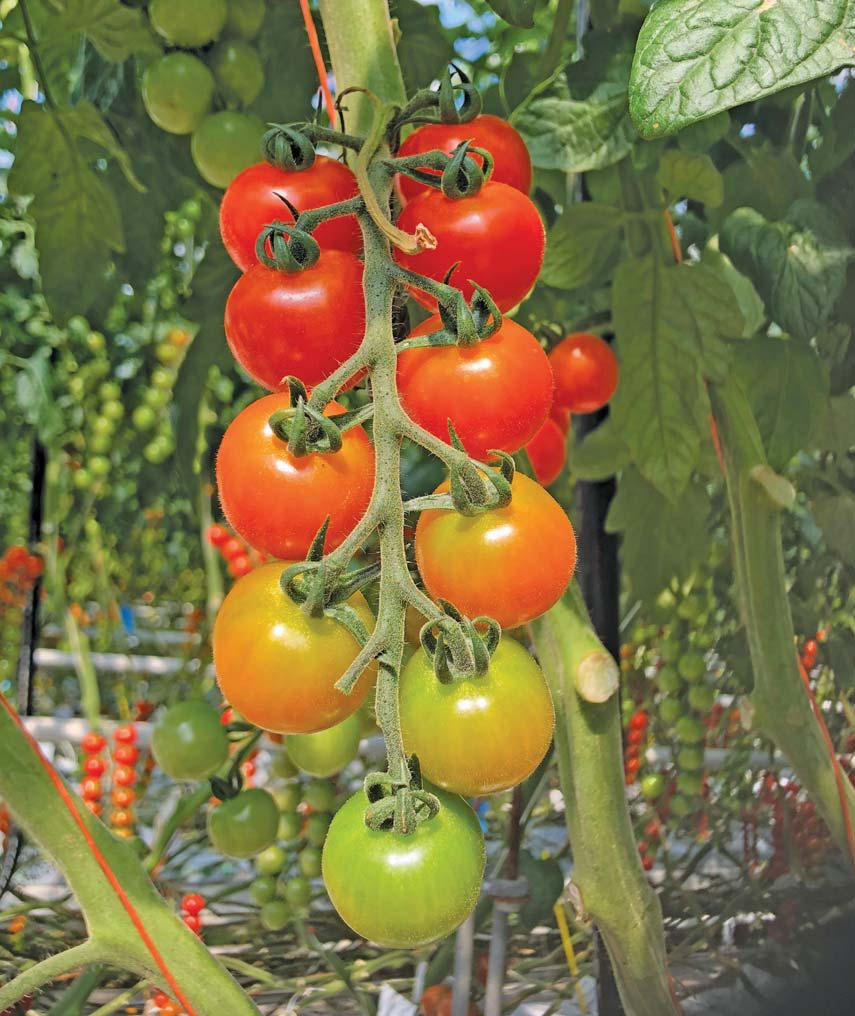
Successful tomato production is determined by a multitude of interactive elements such as variety choice, environmental conditions, the weather, soil health, and management practices. Understanding how each of these interact with the others is the key to unlock the potential good yields, delivering a high-quality product, and optimising profit.
“A holistic approach is needed,” emphasises Werner Wessels, area sales manager at SADC South Countries, Syngenta Vegetable Seeds.
“Balancing environmental conditions, plant physiology, water management, and soil health is important. When farmers understand this, they can make informed decisions and optimise their production for long-term success,” he says.
According to Jandri Venter, responsible for product development at Rijk Zwaan, growers require a great deal more capital to produce tomatoes than 10 years ago.
“Farmers who contemplate planting tomatoes should be prepared to pay more for inputs. In addition, retailers and consumers are demanding a higher quality product, therefore a more intensive crop protection programme is required,” he says.
Wessels highlights that growing tomatoes successfully starts with understanding the crop and its growth stages.
“Tomato plants go through distinct vegetative and generative stages influenced by seasonal changes that result in a constant shift between warm, dry, overcast, or rainy conditions, as well as the difference in day and night temperatures and day length and light intensity.”
In addition, Venter advises that before planting, farmers should secure a market for their produce.
“In the past it was easy to deliver products to the fresh markets in the bigger centres, but with the current situation at some of the markets, this is not [necessarily] a wise strategy to build your business on.

Cette histoire est tirée de l'édition January 16-23, 2026 de Farmer's Weekly.
Abonnez-vous à Magzter GOLD pour accéder à des milliers d'histoires premium sélectionnées et à plus de 9 000 magazines et journaux.
Déjà abonné ? Se connecter
PLUS D'HISTOIRES DE Farmer's Weekly

Farmer's Weekly
More about growing vegetable seedlings in trays
By considering various factors and tailoring care to specific vegetable needs, you can produce healthy, robust seedlings ready for transplanting into the garden, writes Shane Brody.

2 mins
March 27 - April 3, 2026

Farmer's Weekly
Prodigy of agriculture and land is now a presidential envoy
Wandile Sihlobo will be armed by state powers to accelerate any decision-making that the Presidency deems crucial to grow the sectors of agriculture and land
2 mins
March 27 - April 3, 2026

Farmer's Weekly
Notes from the Western Cape agricultural roadshow
We spent time last week engaging with agribusinesses and farmers in the Western Cape. The primary agricultural focus of the province is various fruits, citrus, table grapes, wine, wheat, barley, livestock, and aquaculture, among many value chains.
3 mins
March 27 - April 3, 2026

Farmer's Weekly
AGOA's promise fades under new US tariffs
Although the African Growth and Opportunity Act has been extended for another year, new US reciprocal tariffs have largely erased its duty-free benefits. Recent modelling shows sharp declines in African exports to the US, particularly in apparel-dependent economies such as Lesotho and Madagascar.
4 mins
March 27 - April 3, 2026

Farmer's Weekly
Egon Zunckel: a lifetime of learning from the soil
The Zunckel name is synonymous with no-till farming in South Africa. Egon Zunckel, a pioneer in the field and a passionate advocate for soil health, shared with Lindi Botha the lessons he has learnt over the years about building resilient soils and sustainable farming systems.
10 mins
March 27 - April 3, 2026
Farmer's Weekly
Researchers explore new tools to combat herbicide resistance
Research by students from Stellenbosch University aimed at combatting herbicide resistance was highlighted during a recent technical trial information day hosted by the Western Cape Department of Agriculture.
6 mins
March 27 - April 3, 2026

Farmer's Weekly
Lepas leaps into South Africa as the latest Chery-owned brand
Lepas has become Chinese carmaker Chery's latest local subbrand with the introduction of the L4 compact SUV. The Citizen's Charl Bosch reports.
2 mins
March 27 - April 3, 2026
Farmer's Weekly
La Rhone Limousins: a small mixed herd turned renowned stud
The Western Cape is not typically known for cattle farming, particularly in its fruit-growing regions. Yet nestled among the orchards below the mountains of Tulbagh is a Limousin stud that has made a name for itself. AJ du Toit of La Rhone Limousins spoke to Henning Naudé about producing high-quality genetics now found on farms in all nine provinces.
6 mins
March 27 - April 3, 2026
Farmer's Weekly
Nitrogen: no easy fix
Products that claim to herald a nitrogen revolution that will boost global food production are nothing more than snake oil, say scientists.
4 mins
March 27 - April 3, 2026

Farmer's Weekly
Potato soup
Rich, creamy, and indulgent, this soup is the ultimate in comfort food.
1 mins
March 27 - April 3, 2026
Listen
Translate
Change font size