Essayer OR - Gratuit
Nitrogen: no easy fix
Farmer's Weekly
|March 27 - April 3, 2026
Products that claim to herald a nitrogen revolution that will boost global food production are nothing more than snake oil, say scientists.
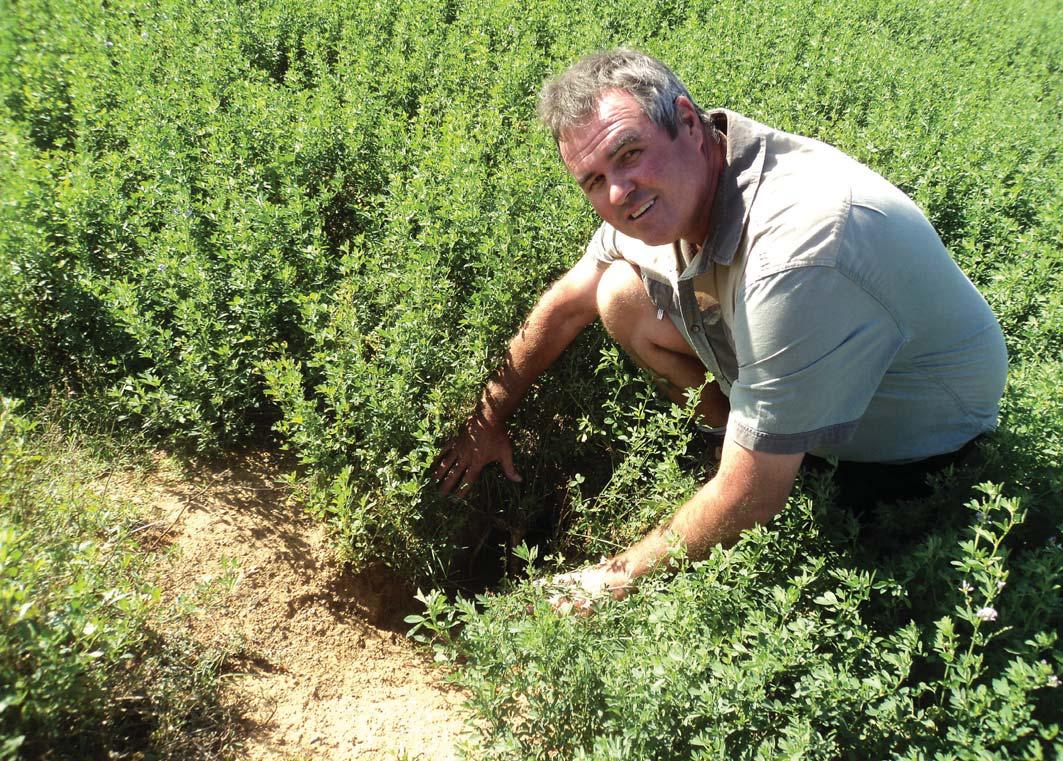
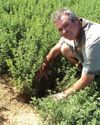
Companies, including a big global player, are bringing biological products onto the market in South Africa and elsewhere that supposedly fix nitrogen (N₂) in grains and other non-legumes. In all likelihood, these products do not fix N₂ in any agronomically significant quantities. The products are plainly based on flawed science, according to Prof Linus Franke of University of the Free State’s Department of Soil, Crop and Climate Sciences.
“The bacterial strain in at least one of these products doesn’t even have the basic genome required to fix nitrogen. It may provide other benefits to crops; it is known to release plant hormones that may stimulate root development, for instance, but it does not fix nitrogen.
“One of the products even makes the claim of ‘converting greenhouse gases to fertiliser’. They are getting the science all wrong,” says Franke.
“One must raise questions about the admission regulations for these biological products, in general, and how they can be improved. When farmers apply a registered herbicide correctly, and there is no herbicide resistance among weeds against the active ingredient, they may be quite sure the herbicide does the job. However, with biologicals there is no such guarantee. Some biological products do provide benefits to plant growth, but it is often under specific conditions only, and the evidence of how and under which conditions the product works is usually missing.” Franke is supported by the review, ‘Science losing its way: examples from the realm of microbial N₂-fixation in grains and other non-legumes', which points out that growing concerns about the effect of intensive agricultural practices on climate change, human health, biodiversity, and soil degradation have led to increased interest in alternatives to agrochemicals to provide nutrients and protect against pests and diseases.


Cette histoire est tirée de l'édition March 27 - April 3, 2026 de Farmer's Weekly.
Abonnez-vous à Magzter GOLD pour accéder à des milliers d'histoires premium sélectionnées et à plus de 9 000 magazines et journaux.
Déjà abonné ? Se connecter
PLUS D'HISTOIRES DE Farmer's Weekly

Farmer's Weekly
More about growing vegetable seedlings in trays
By considering various factors and tailoring care to specific vegetable needs, you can produce healthy, robust seedlings ready for transplanting into the garden, writes Shane Brody.

2 mins
March 27 - April 3, 2026

Farmer's Weekly
Prodigy of agriculture and land is now a presidential envoy
Wandile Sihlobo will be armed by state powers to accelerate any decision-making that the Presidency deems crucial to grow the sectors of agriculture and land
2 mins
March 27 - April 3, 2026

Farmer's Weekly
Notes from the Western Cape agricultural roadshow
We spent time last week engaging with agribusinesses and farmers in the Western Cape. The primary agricultural focus of the province is various fruits, citrus, table grapes, wine, wheat, barley, livestock, and aquaculture, among many value chains.
3 mins
March 27 - April 3, 2026

Farmer's Weekly
AGOA's promise fades under new US tariffs
Although the African Growth and Opportunity Act has been extended for another year, new US reciprocal tariffs have largely erased its duty-free benefits. Recent modelling shows sharp declines in African exports to the US, particularly in apparel-dependent economies such as Lesotho and Madagascar.
4 mins
March 27 - April 3, 2026
Farmer's Weekly
Egon Zunckel: a lifetime of learning from the soil
The Zunckel name is synonymous with no-till farming in South Africa. Egon Zunckel, a pioneer in the field and a passionate advocate for soil health, shared with Lindi Botha the lessons he has learnt over the years about building resilient soils and sustainable farming systems.
10 mins
March 27 - April 3, 2026
Farmer's Weekly
Researchers explore new tools to combat herbicide resistance
Research by students from Stellenbosch University aimed at combatting herbicide resistance was highlighted during a recent technical trial information day hosted by the Western Cape Department of Agriculture.
6 mins
March 27 - April 3, 2026

Farmer's Weekly
Lepas leaps into South Africa as the latest Chery-owned brand
Lepas has become Chinese carmaker Chery's latest local subbrand with the introduction of the L4 compact SUV. The Citizen's Charl Bosch reports.
2 mins
March 27 - April 3, 2026

Farmer's Weekly
La Rhone Limousins: a small mixed herd turned renowned stud
The Western Cape is not typically known for cattle farming, particularly in its fruit-growing regions. Yet nestled among the orchards below the mountains of Tulbagh is a Limousin stud that has made a name for itself. AJ du Toit of La Rhone Limousins spoke to Henning Naudé about producing high-quality genetics now found on farms in all nine provinces.
6 mins
March 27 - April 3, 2026
Farmer's Weekly
Nitrogen: no easy fix
Products that claim to herald a nitrogen revolution that will boost global food production are nothing more than snake oil, say scientists.
4 mins
March 27 - April 3, 2026

Farmer's Weekly
Potato soup
Rich, creamy, and indulgent, this soup is the ultimate in comfort food.
1 mins
March 27 - April 3, 2026
Listen
Translate
Change font size