Essayer OR - Gratuit
Feeding birds may kill them
BBC Wildlife
|February 2025
We love to attract birds to our gardens, but feeders can pose a deadly risk
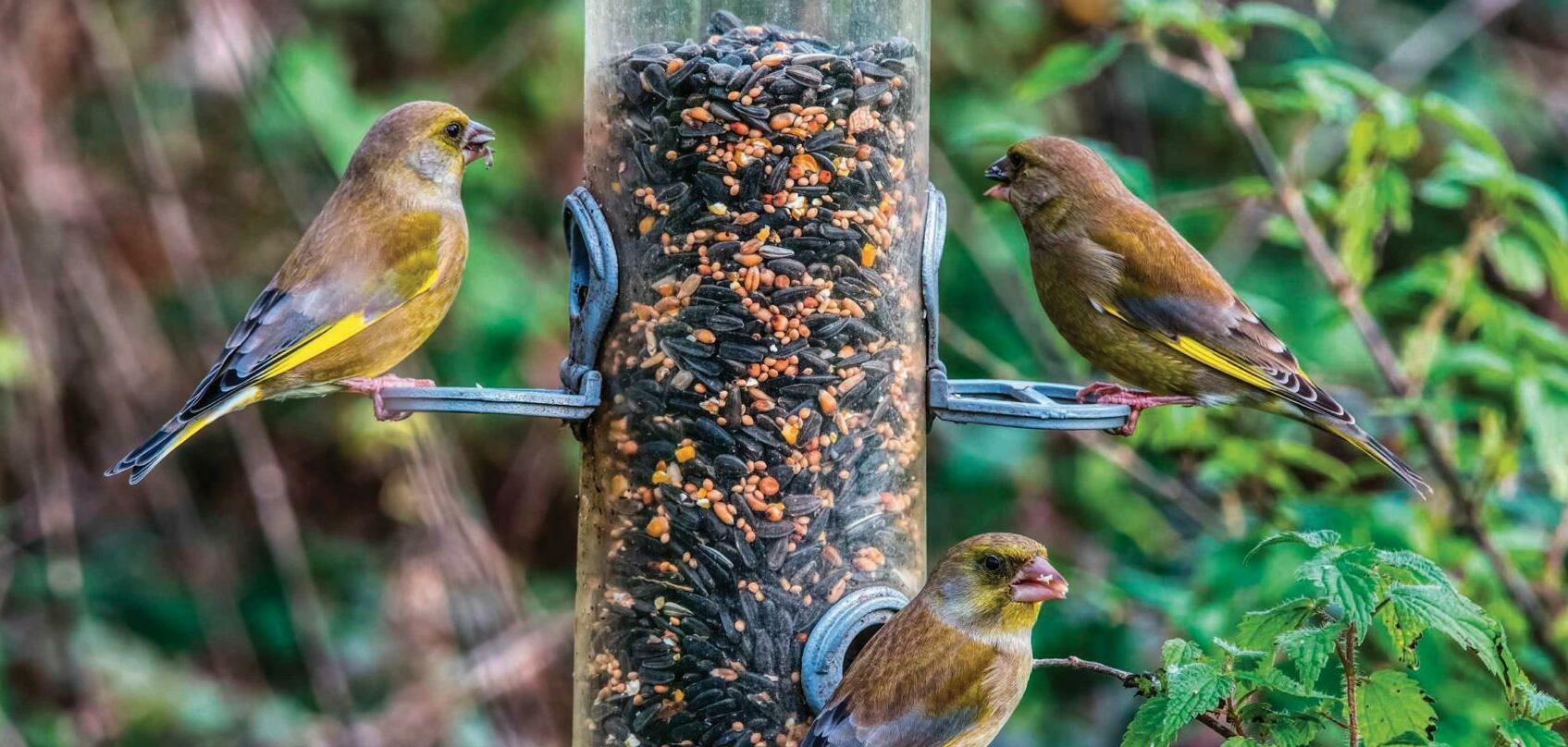
EIGHT OR SO YEARS AGO, DICK WOODS was attracting an estimated 50 greenfinches to the birdfeeders outside his converted barn near Canterbury, Kent. They vastly outnumbered the other species, and then – over a just a couple of weeks – they completely disappeared.
Woods's visitors had succumbed to a deadly disease that has killed around 70 per cent of British greenfinches: trichomonosis, a parasite that first jumped to songbirds from pigeons around 2005. It's thought to be spread mainly on and around birdfeeders, and this got Woods, who is a design engineer by trade, thinking.
The result was Finches' Friend, a redesigned birdfeeder that Woods manufactures at home and says reduces disease transmission. Trichomonosis is spread in saliva, and infected birds regurgitate their food. “You don’t want birds walking, vomiting and defecating in the food provided, so the first thing to do is stop that,” he says. That means the feeder can’t be open for birds to walk in, as in some models.
You also don’t want one bird to drop food from one feeding position onto another below, or the feeder to have open ports into which rain can pour, as the parasite survives better in wet food. Smaller feeders are better, too, because food isn’t sitting around in them for long periods. Woods has also introduced nifty features that make his design easier to clean. (In my experience, this is objectively true.)
But he can’t say for sure that his products are effective. He’s tried to persuade conservation groups such as the RSPB to carry out studies to see if they can protect finches (the group most prone to trichomonosis), but so far has been met with a metaphorical shrug of the shoulders.
As well as greenfinches, chaffinches have been hit, declining by nearly 20 per cent in the past decade, while goldfinches, in contrast, have largely gone. The other way, benefiting from supplementary food – the reasons that are still not fully understood.

Cette histoire est tirée de l'édition February 2025 de BBC Wildlife.
Abonnez-vous à Magzter GOLD pour accéder à des milliers d'histoires premium sélectionnées et à plus de 9 000 magazines et journaux.
Déjà abonné ? Se connecter
PLUS D'HISTOIRES DE BBC Wildlife

BBC Wildlife
SNAP-CHAT
Isaac Szabo talks hellbenders, chub nests and bears on the roof

3 mins
December 2025

BBC Wildlife
Why are the tropics so diverse?
AS YOU MOVE FROM THE POLES towards the equator, species richness increases.
1 mins
December 2025
BBC Wildlife
Magnificent frigatebird
ONE MIGHT BE FORGIVEN FOR thinking that pterodactyls had been de-extincted upon first sighting the silhouette of a magnificent frigatebird.
3 mins
December 2025
BBC Wildlife
YEAR OF THE CAT
Once a phantom of Chile's windswept peaks, this plucky feline is making a comeback
3 mins
December 2025
BBC Wildlife
KATE BRADBURY
“I feel I am part bird at this point at the year's end: I'm ready for spring”
2 mins
December 2025
BBC Wildlife
SNOW DAYS
High in the boreal forests of Colorado, the snowshoe hare lives a secretive life. But one photographer has gained a unique window into its world
3 mins
December 2025
BBC Wildlife
A journey into sound
Progressive hearing loss prompted a memorable quest to absorb nature's calls and choruses
7 mins
December 2025
BBC Wildlife
WILD IN THE CITY
A huge parliament of long-eared owls has made an unlikely home in a Serbian town square
2 mins
December 2025
BBC Wildlife
Birds follow the flames
In the Sierra Nevada of California, fire gives some birds a boost
1 mins
December 2025

BBC Wildlife
Remembering Jane
The ethologist, conservationist and humanitarian Dr Jane Goodall died in October. We reflect on the woman who gave the world hope
5 mins
December 2025
Listen
Translate
Change font size