Essayer OR - Gratuit
A comeback success story?
BBC Wildlife
|March 2026
It's over 30 years since wolves were reintroduced to Yellowstone but the pay-off for the park is disputed
-
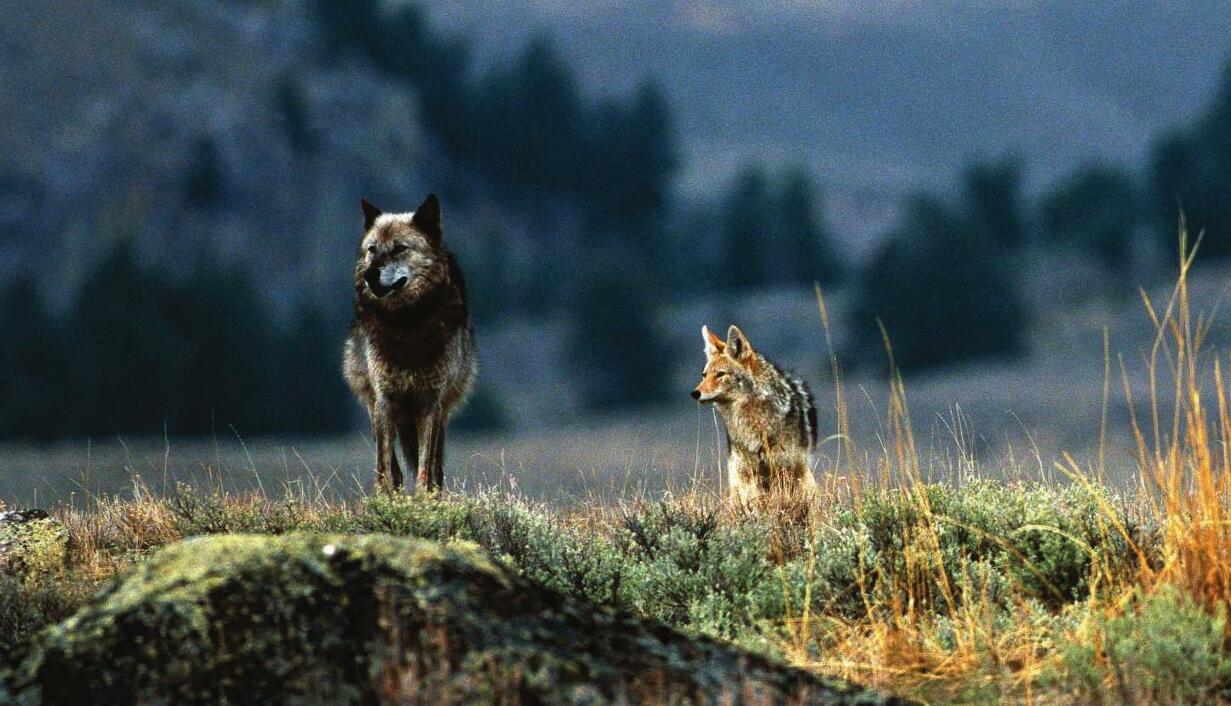
THERE'S A LOVELY FILM ON YOUTUBE called How Wolves Change Rivers. Narrated by the British writer and environmental campaigner George Monbiot, and largely drawn from his book Feral, it describes how the reintroduction of wolves to Yellowstone National Park in the US state of Wyoming in 1995 has precipitated a series of ecological benefits. It wasn't just that wolves were hunting and killing herbivores such as elk (animals closely related to European red deer), but were radically changing their behaviour.
"Elk avoided valleys and gorges where they could be easily caught," Monbiot says. "Immediately those places started to regenerate." This is the so-called 'landscape of fear' hypothesis, whereby herbivores come to be afraid in certain areas, and the young trees they might have browsed on survive.
"Bare valley sides became forests of aspen, willow and cottonwood," continues Monbiot. "Then birds started moving in and beaver numbers increased because they like to eat the trees." The regenerating forests stabilised riverbanks, so they were less prone to collapse, and rivers became more fixed in their course. "Wolves transformed not just the ecosystem but its physical geography."
The impact wolves are said to have had in Yellowstone is known as a trophic cascade.
It's a beautiful and uplifting notion but, according to some scientists, total nonsense.
“It is the source of so much confusion,” says Dan MacNulty of Utah State University. “Not just for the general public but among scientists and students, too. I gave a talk at the University of Oxford two years ago, to the biology department, and I had PhD students telling me afterwards that they felt they’d been deceived – which, frankly, they were.”
Tom Hobbs, an ecologist at Colorado State University, agrees with MacNulty, describing the idea of a widespread trophic cascade stemming from the wolves as a great idea that doesn’t hold up.

Cette histoire est tirée de l'édition March 2026 de BBC Wildlife.
Abonnez-vous à Magzter GOLD pour accéder à des milliers d'histoires premium sélectionnées et à plus de 9 000 magazines et journaux.
Déjà abonné ? Se connecter
PLUS D'HISTOIRES DE BBC Wildlife
BBC Wildlife
STRIKE MODE
Powerful punches. Flesh-tearing teeth. Deadly talons. We explore the best (or is it the worst?) weapons in the natural world.

7 mins
March 2026
BBC Wildlife
WILD IN THE CITY
Rhino numbers are on the rise in southern Nepal and now these powerful animals are moving into town
2 mins
March 2026

BBC Wildlife
KATE BRADBURY
\"Those little bursts of light are a sign that brighter days are ahead\"
2 mins
March 2026
BBC Wildlife
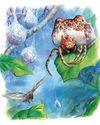
JUST DROPPED IN
The spider that looks like bird poo and sports a lethal hunting weapon.
3 mins
March 2026
BBC Wildlife
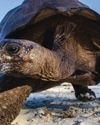
Return of the giant tortoises
New castaways to help rewild exclusive tropical island in the Seychelles
1 mins
March 2026
BBC Wildlife
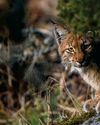
HIDE AND SEEK
Deep in the forests of Finland, the lynx leads a secretive life, so elusive that it rarely give up its secrets
7 mins
March 2026
BBC Wildlife
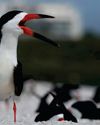
BEACH BIRD
Carving their lives into sand and surf, black skimmers survive against the odds on Florida's crowded shores
3 mins
March 2026
BBC Wildlife
SHAKE A TAIL FEATHER
The courtship displays of this game bird bring a flurry of flamboyance to its monotonous prairie home
2 mins
March 2026
BBC Wildlife
Elephant seals hold grudges
Males remember rivals' calls from previous years
1 mins
March 2026
BBC Wildlife
Secret lives of the Okavango Delta
The second series of the BBC's Big Cats 24/7 returns with new tales to tell
1 mins
March 2026
Listen
Translate
Change font size