Essayer OR - Gratuit
MISSION MANTA
BBC Wildlife
|July 2023
Research into the lives of these mysterious creatures is offering a ray of hope in the Maldives
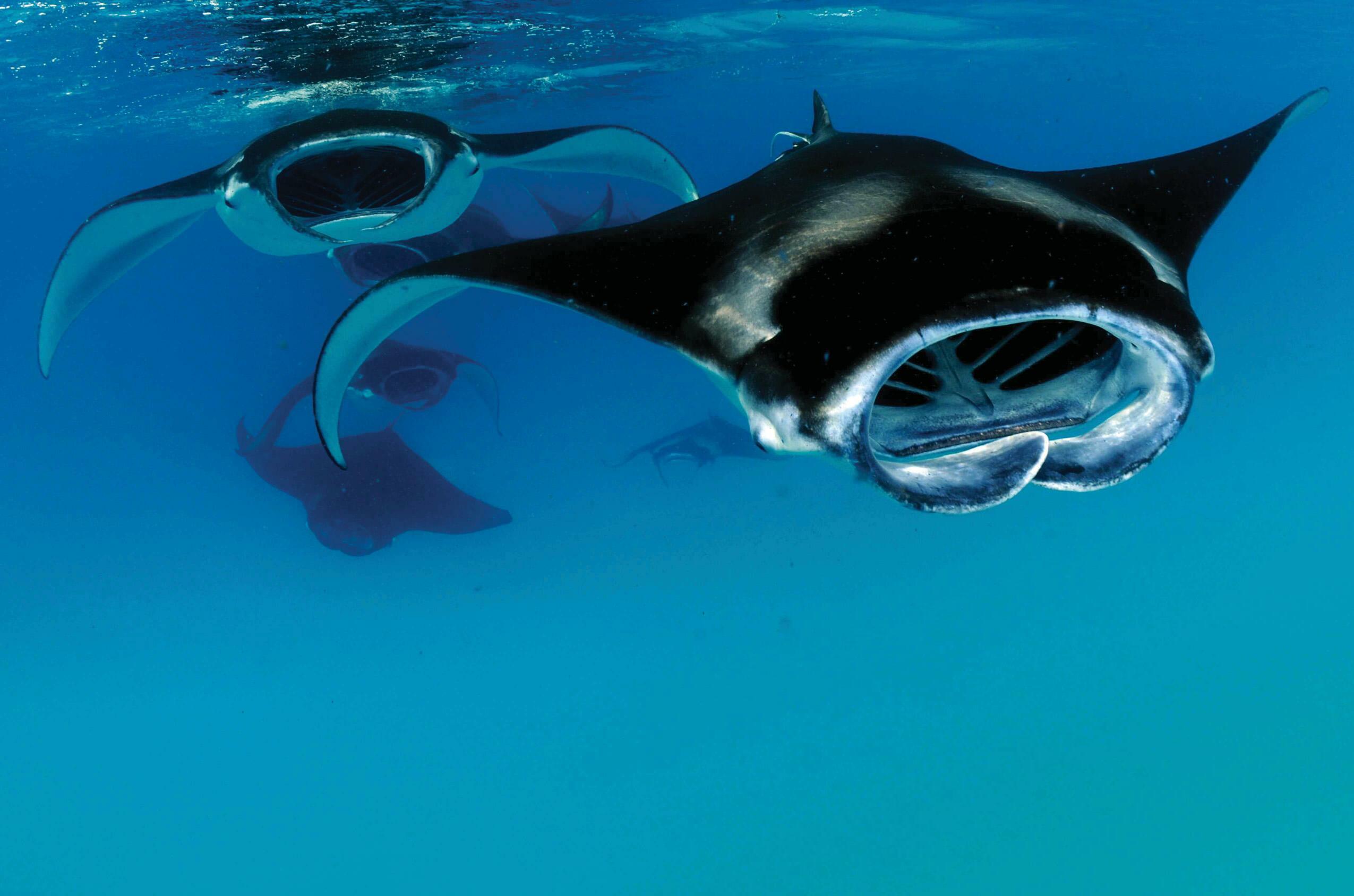
IN THE GLASS-CLEAR WATERS OFF THE MALDIVES' Raa Atoll, something akin to an underwater circus is taking place. The manta rays that have gathered near our boat streak through the water, unfurling their wings as they perform barrel rolls, somersaults and sudden dives. They disappear into the depths before magically reappearing, mouths agape and cephalic fins (horn-like structures used for feeding) curled as they gulp down tiny plankton invisible to the naked eye.
Watching marine biologist Jess Haines in action is no less impressive - even more so given she hasn't been blessed with the ability to breathe underwater. Jess trails the manta rays as they perform their acrobatics, snapping pictures of their undersides.
Manta ray bellies, known as 'ventral surfaces', each bear a unique pattern of spots that act much like a human fingerprint. In the absence of tags, which are banned in the Maldives, photos enable scientists to identify every individual and thus monitor movements, population dynamics and feeding and breeding hotspots. Given that manta rays are now listed as Threatened by the IUCN, with populations increasingly affected by over fishing and by catch, this is vital research.

Jess's love affair with mantas began after she completed her zoology degree. Arriving in the Maldives in 2017 to work as a marine biologist and dive instructor on Dhaalu Atoll, she saw - and fell in love with - reef manta rays, the smaller of the two manta species. She started sending photos of individuals she encountered to the Manta Trust, a conservation organisation founded in 2011, helping to build a database in an area where it had no staff. In 2019, she joined the team as manager of the Maldivian Manta Ray Project. Protecting these spectacular marine creatures was now her day job.
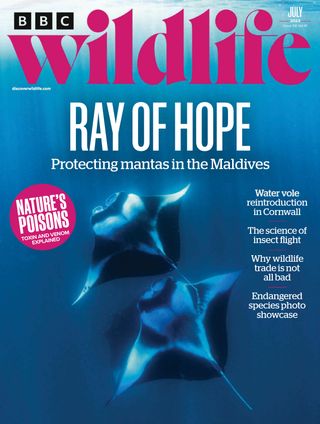

Cette histoire est tirée de l'édition July 2023 de BBC Wildlife.
Abonnez-vous à Magzter GOLD pour accéder à des milliers d'histoires premium sélectionnées et à plus de 9 000 magazines et journaux.
Déjà abonné ? Se connecter
PLUS D'HISTOIRES DE BBC Wildlife
BBC Wildlife
"I was terrified the elephant would ram us"
African elephant in Kenya

2 mins
January 2026
BBC Wildlife
ALL YOU EVER NEEDED TO KNOW ABOUT THE Fennec fox
THE FENNEC FOX IS THE SMALLEST fox in the world, with a body length that can be as little as 24cm.
3 mins
January 2026
BBC Wildlife
INTO THE PLASTISPHERE
A unique synthetic ecosystem is evolving in our oceans – welcome to the plastisphere
7 mins
January 2026
BBC Wildlife
“More than half of all animal life exists in a parasitic relationship, and all life lives in symbiosis”
Our survival depends on species evolving to live together - but some relationships take dark turns
7 mins
January 2026
BBC Wildlife
Are animals able to dream?
SLEEP IS A MYSTERIOUS THING. FOR A long time, we weren't sure why we do it.
1 mins
January 2026
BBC Wildlife
Does a cuckoo know it's a cuckoo?
ABSURD LITTLE BIRDS ACROSS THE world lay their eggs in the nests of other species, leaving the hapless parents to raise a changeling at the expense of their own offspring.
2 mins
January 2026
BBC Wildlife
Orcas killing young sharks
Juvenile great whites are easy prey for orca pod
1 mins
January 2026
BBC Wildlife
Ocean goes on tour
Acclaimed film touring the UK, backed by live orchestra and choir
1 min
January 2026
BBC Wildlife
Feisty bats hunt like lions
Winged mammals use a 'hang and wait' strategy to take down large prey
1 mins
January 2026
BBC Wildlife
SNAP-CHAT
Richard Birchett on magical merlins, wily coyotes and charging deer
2 mins
January 2026
Translate
Change font size