
Passez à l'illimité avec Magzter GOLD
Obtenez un accès illimité à plus de 9 000 magazines, journaux et articles Premium pour seulement
What's behind the UK's big aurora displays?
BBC Sky at Night Magazine
|March 2022
Melanie Windridge looks at the influence of recent increases in solar activity

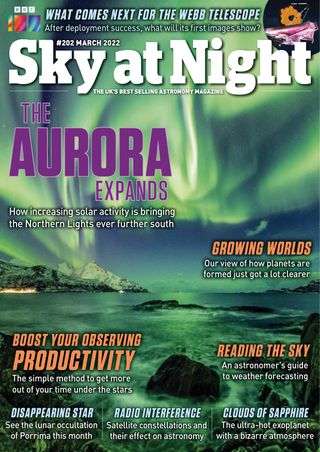
This aurora season has proved a good one so far, particularly for aurora watchers in the UK, with numerous newspaper reports of Northern Lights seen in the UK since September. This is likely due to an uptick in solar activity as part of the solar cycle, but before we go into that, let's think about what causes the aurora in general.
The aurora is an incredible light show caused by charged particles accelerated into our upper atmosphere. This acceleration process is driven by the Sun, so the changing power - or activity - of the Sun affects the aurora we see.
When we are young we often think of the Sun as a uniform yellow ball in the sky, but look closely at NASA pictures and you'll see that the Sun's surface is anything but uniform. The Sun is made of plasma, an electrically charged gas of mostly hydrogen and helium. The surface is a bit like a boiling pan of water, with hot material welling up and cooler material dropping down. This motion is stirred up because the Sun also rotates at different speeds at its poles and equator, making for turbulent flows. Magnetic fields are generated, and are twisted into loops emerging from the surface by this rotation.
Some of the Sun's plasma is also released into space - the Sun's atmosphere expanding out in all directions. This is called the solar wind, and it is this that drives the aurora on Earth. In addition to the ordinary outflow of particles, the Sun also throws off extra particles when twisted magnetic loops break and fling out solar matter.

Cette histoire est tirée de l'édition March 2022 de BBC Sky at Night Magazine.
Abonnez-vous à Magzter GOLD pour accéder à des milliers d'histoires premium sélectionnées et à plus de 9 000 magazines et journaux.
Déjà abonné ? Se connecter
PLUS D'HISTOIRES DE BBC Sky at Night Magazine
BBC Sky at Night Magazine
MOONWATCH
January's top lunar feature to observe

2 mins
January 2026
BBC Sky at Night Magazine
Speed up your processing workflow
How to use Photoshop's Actions tool to drastically cut your processing time
3 mins
January 2026
BBC Sky at Night Magazine
Chasing Canada's polar lights
With solar maximum peaking and a new Moon promising dark skies, Jamie Carter travels to Churchill, Manitoba to hunt the Northern Lights - and dodge polar bears – in Canada's far north
7 mins
January 2026
BBC Sky at Night Magazine
Beyond Pluto: The search for the hidden planets
Could one – or even two - undiscovered planets lurk at the edges of our Solar System? Nicky Jenner explores how close we are to finding the elusive 'Planet 9'
6 mins
January 2026
BBC Sky at Night Magazine
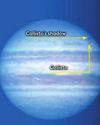
Jupiter moon events
Jupiter is a magnificent planet to observe.
2 mins
January 2026
BBC Sky at Night Magazine
What samples from space have taught us
Alastair Gunn explains what scientists have learnt in the 20 years since the first unmanned mission brought materials back from alien worlds
3 mins
January 2026
BBC Sky at Night Magazine
The Milky Way as you've never seen it before
This is the largest low-frequency radio colour image of our Galaxy ever assembled
1 min
January 2026
BBC Sky at Night Magazine
Merger of ‘impossibly' massive black holes explained
Scientists discover how enormous, fast-spinning black holes can exist after all
1 mins
January 2026
BBC Sky at Night Magazine
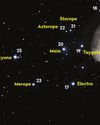
Lunar occultation of the Pleiades
BEST TIME TO SEE: 27 January from 20:30 UT
1 min
January 2026
BBC Sky at Night Magazine
The Universe's expansion may be slowing down
New study suggests current theories of dark energy could be wrong
1 mins
January 2026
Translate
Change font size